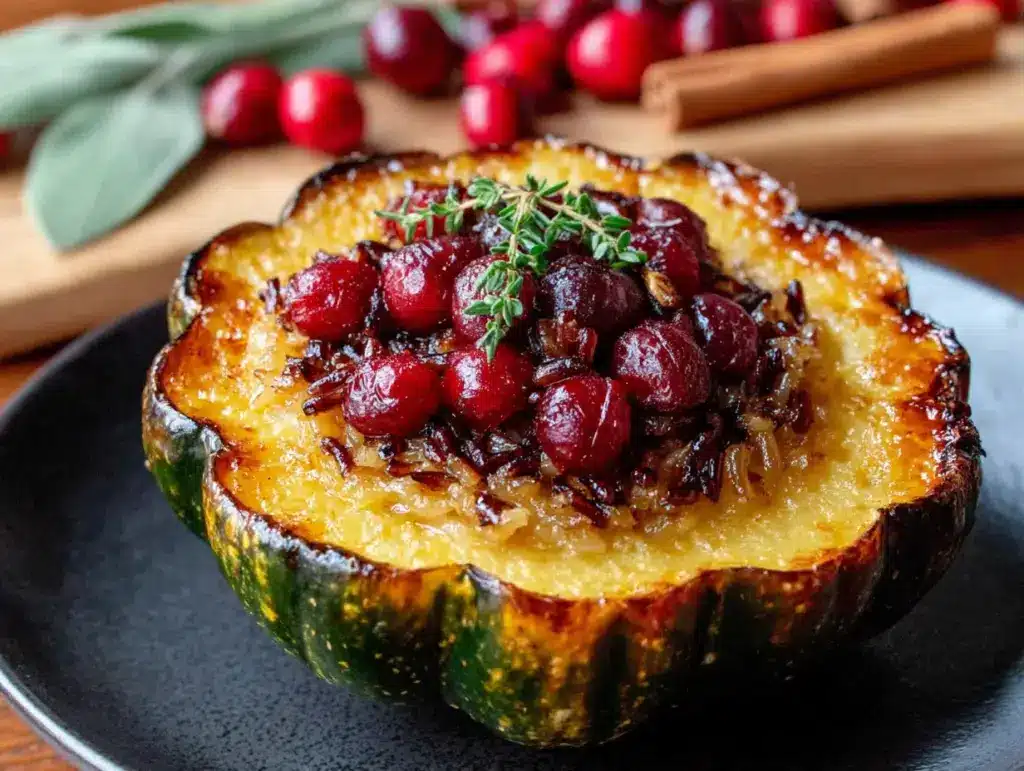
I had claimed for years that I hated squash. Any squash. The yellow stuff that showed up in sad casseroles? No thanks. The orange mush that everyone got excited about in November? Hard pass. For a solid decade, I was that person at the fall potluck who politely filled their plate with everything except the dish that had “squash” in the title. My family thought I was being dramatic. Maybe I was. But I had my reasons—mostly involving bland, watery textures and a complete lack of seasoning.
Then last Tuesday, I made this stuffed acorn squash “just for myself” because my husband was working late and the kids had already eaten. I figured I’d throw together something quick with the wild rice leftover from Sunday dinner and the lone acorn squash sitting on my counter. Honestly, I wasn’t expecting much. I was just hungry and trying to use up what we had. But somewhere between the nutty smell of the rice hitting the pan and the moment I pulled those golden squash halves out of the oven, something shifted.
I plated one half, sat down, and took a bite. And then another. And then I heard little footsteps. My seven-year-old, who had already brushed her teeth, stood there with her head cocked. “What is that?” she asked. Before I could answer, she’d grabbed a fork and stolen a bite right off my plate. Then she asked for her own serving. At 8 PM. On a school night. That’s when I knew this recipe was different. It’s not just another version of stuffed squash—it’s the one that made a self-proclaimed squash hater (and her picky kid) ask for seconds.
Why You’ll Love This Recipe
This isn’t your average stuffed squash situation. I’ve tested this recipe at least seven times to get the texture and flavor just right, and here’s what makes it stand out from the dozens of other versions floating around the internet.
- Kid-Approved Without Being Dumbed Down: The filling is savory, slightly sweet from dried cranberries, and has a satisfying chew from the wild rice. My kids don’t even notice they’re eating something healthy.
- Budget-Friendly Ingredients: Acorn squash is usually under $2 each at most grocery stores, and everything else is probably already in your pantry. No special trips to fancy markets required.
- Comes Together in Under an Hour: You can prep the filling while the squash roasts, so the whole thing is ready in about 50 minutes. Perfect for a Tuesday night when you’re tired but still want something that feels special.
- Leftovers That Actually Reheat Well: This is a big deal in my house. The squash stays tender, not mushy, and the filling keeps its texture. I’ve eaten this for lunch three days in a row and enjoyed it more each time.
- Naturally Gluten-Free and Vegetarian: No weird substitutions needed. It just happens to be both, which makes it perfect for mixed-diet households.
What really sets this recipe apart is the technique. Instead of boiling the rice separately and stuffing it into raw squash, I par-cook the rice in the same pan where I sauté the aromatics. That extra step lets the rice soak up all the flavor from the onions, garlic, and herbs before it even hits the squash. The result is a filling that tastes cohesive, not like separate ingredients thrown together.
This is the kind of recipe that makes you close your eyes after the first bite. It’s comfort food that somehow feels both hearty and light, special enough for a holiday table but simple enough for a regular weeknight. And honestly? It might just convert a few squash skeptics in your house too.
What Ingredients You Will Need
This recipe uses simple, wholesome ingredients that come together to create something surprisingly complex. Most of these are pantry staples, and the ones that aren’t are easy to find and swap out.
For the Squash
- 2 medium acorn squash (look for ones that feel heavy for their size and have firm, unblemished skin)
- 2 tablespoons olive oil (for brushing the cut sides)
- Salt and black pepper (for seasoning the squash halves before roasting)
For the Wild Rice Filling
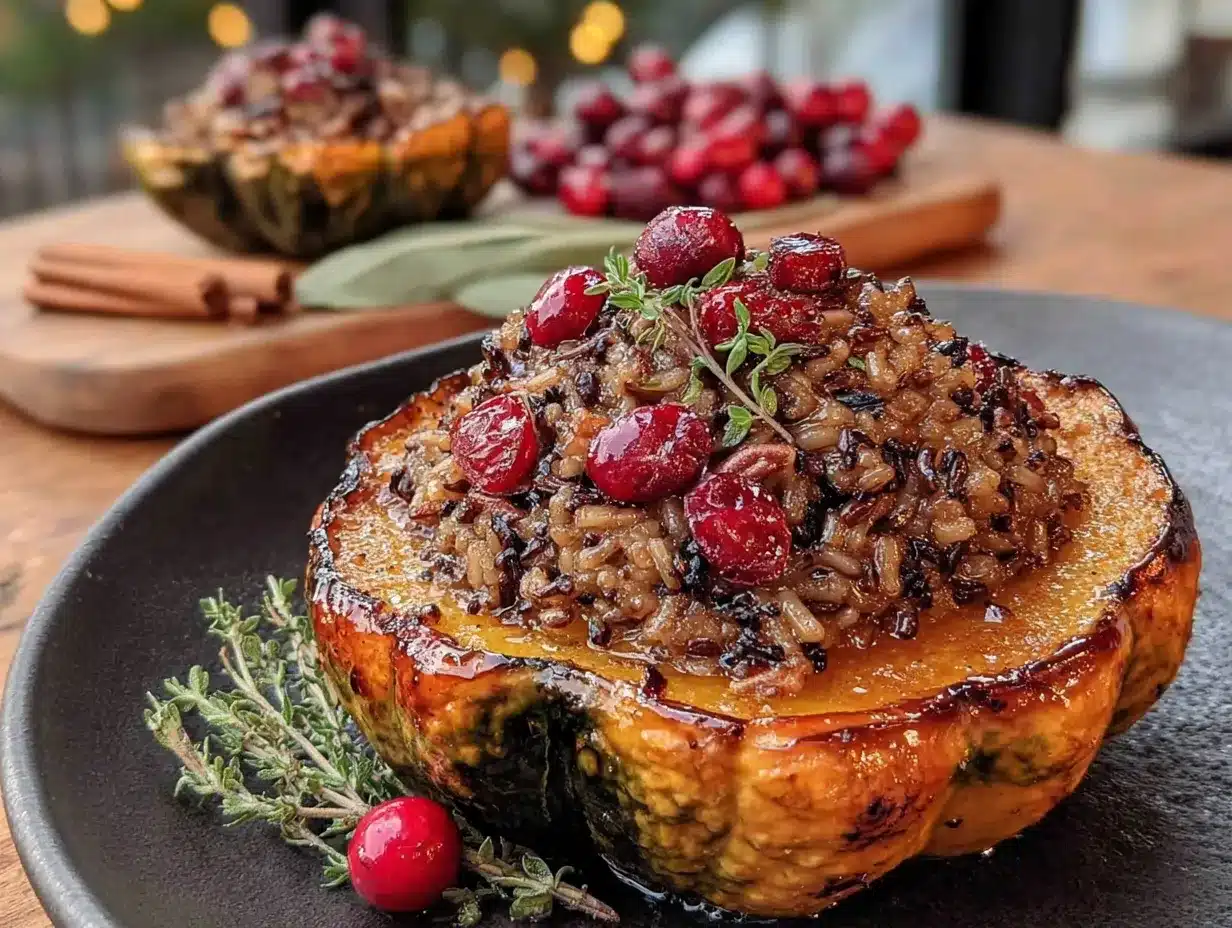
- 1 cup wild rice blend (I prefer the Lundberg brand for its consistent texture; a blend of wild rice and brown rice works perfectly)
- 2 cups vegetable broth (or chicken broth if you’re not keeping it vegetarian; use low-sodium so you can control the salt)
- 1 tablespoon olive oil (for sautéing)
- 1 medium yellow onion, diced (about 1 cup)
- 2 cloves garlic, minced (adds that savory backbone)
- 2 celery stalks, diced (about 1/2 cup; adds crunch and earthiness)
- 1 medium apple, diced (Honeycrisp or Granny Smith work best; the sweetness balances the savory elements)
- 1/3 cup dried cranberries (adds pops of sweetness and chewy texture)
- 1/4 cup chopped pecans (toasted if you have time; adds nuttiness and crunch)
- 1 teaspoon dried sage (the quintessential fall herb that ties everything together)
- 1/2 teaspoon dried thyme (earthy and subtle)
- 1/2 teaspoon salt (adjust to taste)
- 1/4 teaspoon black pepper
- 1/4 cup fresh parsley, chopped (for brightness and color at the end)
For the Topping (Optional but Recommended)
- 1/4 cup grated Parmesan cheese (or nutritional yeast for a dairy-free version; adds a salty, umami crust)
- 2 tablespoons panko breadcrumbs (for a little crunch on top)
Ingredient Note: If you can’t find a wild rice blend, use 1/2 cup wild rice and 1/2 cup brown rice. Cook them together—the wild rice takes a bit longer, but they’ll both be done around the same time. And if dried cranberries aren’t your thing, chopped dried apricots or golden raisins work beautifully here.
Equipment Needed
You don’t need a fancy kitchen to make this recipe work. Here’s what I use, plus a few alternatives if you’re working with what you’ve got.
- Sharp chef’s knife: Acorn squash has a tough skin, and a dull knife is a recipe for frustration (and possibly a trip to urgent care). A good 8-inch chef’s knife makes cutting through the squash much safer.
- Large baking sheet: A rimmed sheet pan works best to catch any juices that might leak from the squash while roasting. If you don’t have one, a 9×13 baking dish will work in a pinch.
- Medium saucepan with lid: For cooking the wild rice. A heavy-bottomed pot prevents scorching.
- Large skillet: For sautéing the aromatics and toasting the rice. A 12-inch skillet gives you plenty of room to stir everything without spilling.
- Mixing bowl: For combining the filling ingredients before stuffing the squash.
- Aluminum foil: For tenting the squash if the tops brown too quickly. I learned this the hard way after my first batch came out looking like charcoal on top.
- Parchment paper: Optional, but it makes cleanup so much easier. I buy the pre-cut sheets because I’m lazy and they fit my baking sheet perfectly.
Budget Tip: You don’t need a fancy rice cooker for this. A regular saucepan with a tight-fitting lid does the exact same job. Save your money for good-quality dried herbs—they make a real difference in the final flavor.
Preparation Method
Let’s get cooking. I’ve broken this down into clear steps with time estimates and visual cues so you know exactly what to look for at each stage.
Step 1: Preheat and Prep the Squash (5 minutes)
Preheat your oven to 400°F (200°C). Line a baking sheet with parchment paper if you’re using it. Carefully cut each acorn squash in half from stem to tip using a sharp chef’s knife. Scoop out the seeds and stringy pulp with a spoon—a metal spoon works better than a plastic one here. Brush the cut sides and the cavity with olive oil, then season generously with salt and pepper. Place the squash halves cut-side down on the baking sheet. This helps them steam slightly as they roast, keeping them tender.
Step 2: Roast the Squash (30-35 minutes)
Roast the squash for 30 to 35 minutes, until the flesh is fork-tender but still holds its shape. You should be able to pierce the skin side easily with a fork, but the squash shouldn’t be collapsing. While the squash roasts, start the filling. Pro tip: Don’t skip the cut-side-down step. I tried roasting them cut-side up once, and the tops dried out before the bottoms were done.
Step 3: Cook the Wild Rice (25-30 minutes)
In a medium saucepan, combine the wild rice blend and vegetable broth. Bring to a boil over high heat, then reduce to a simmer, cover, and cook for 25 to 30 minutes, until the rice is tender and the liquid is absorbed. Some grains will have split open—that’s normal and desirable. Fluff with a fork and set aside. If there’s excess liquid, drain it off before adding the rice to the filling.
Step 4: Sauté the Aromatics (8-10 minutes)
While the rice cooks, heat 1 tablespoon of olive oil in a large skillet over medium heat. Add the diced onion and celery and cook for 5 to 6 minutes, stirring occasionally, until the onion is translucent and the celery has softened. Add the minced garlic and cook for another minute until fragrant. You want the kitchen to smell like something good is happening—if it doesn’t, your heat might be too low.
Step 5: Toast the Rice and Build the Filling (5 minutes)
Add the cooked wild rice to the skillet with the aromatics. Stir to combine, then let it cook undisturbed for 2 to 3 minutes. This toasts the rice slightly and gives it a nuttier flavor. Add the diced apple, dried cranberries, chopped pecans, dried sage, dried thyme, salt, and pepper. Stir everything together and cook for another 2 minutes until the apple softens slightly but still has some bite. Remove from heat and stir in the fresh parsley. Taste and adjust seasoning—you might want a little more salt or a pinch of black pepper.
Step 6: Stuff the Squash (5 minutes)
When the squash halves are done roasting, carefully flip them over using tongs. They’ll be hot, so watch your fingers. Divide the filling evenly among the four squash halves, mounding it slightly in the center. If you’re using the optional topping, mix the Parmesan and panko together and sprinkle over the filling.
Step 7: Final Bake (10-15 minutes)
Return the stuffed squash to the oven and bake for another 10 to 15 minutes, until the filling is heated through and the topping is golden and crispy. If the topping is browning too quickly, tent the baking sheet loosely with foil. Let the squash rest for 5 minutes before serving—this helps the filling set and prevents burns.
Cooking Tips & Techniques
I’ve made this recipe enough times to know exactly where things can go wrong. Here’s what I’ve learned, often the hard way.
Don’t Overcook the Squash in the First Roast. The squash will continue cooking during the final bake with the filling. If you roast it until it’s completely soft in the first round, it’ll fall apart when you try to stuff it. Aim for fork-tender but still firm enough to hold its shape. I usually check mine at the 25-minute mark just to be safe.
Toast Your Rice. This is the step that separates good stuffed squash from great stuffed squash. Letting the cooked rice sit in the hot skillet for a few minutes before adding the other ingredients develops a nutty flavor that you just can’t get otherwise. Don’t rush this step—I did once when I was in a hurry, and the filling tasted flat.
Cut the Apple Small. A 1/4-inch dice is ideal. Big chunks of apple create uneven texture and can make the filling difficult to eat. Small pieces distribute evenly and soften just enough without turning to mush.
Use a Rimmed Baking Sheet. Acorn squash can release liquid as it roasts, and you don’t want that running all over your oven. A rimmed sheet pan catches everything and makes cleanup infinitely easier. I learned this after a particularly smoky oven incident that I’m still not proud of.
Let It Rest. I know you’ll be hungry, but those 5 minutes of resting time are crucial. The filling sets, the squash firms up slightly, and the flavors meld together. Plus, you won’t burn your mouth on the first bite. Trust me on this one.
Variations & Adaptations
One of the best things about this recipe is how flexible it is. Here are some ways to make it your own.
Make It Meatier
If your family needs some protein in every meal, add 1/2 pound of cooked Italian sausage (casings removed) or ground turkey to the filling. Brown the meat in the skillet before adding the onion and celery, then proceed with the recipe as written. The sausage adds a lovely fennel note that pairs beautifully with the sage.
Go Vegan
This recipe is already vegetarian, but making it vegan is easy. Skip the Parmesan topping or use nutritional yeast instead. The filling is naturally dairy-free, so you’re really just swapping out that one ingredient. I’ve made it both ways, and honestly, I don’t miss the cheese.
Switch Up the Grains
Not a fan of wild rice? Quinoa works beautifully here. Cook it in vegetable broth for extra flavor, and reduce the cooking time to about 15 minutes. Farro is another great option—it has a similar chewy texture to wild rice and holds up well in the filling.
Seasonal Swaps
In the fall, dried cranberries and apples are perfect. But in the winter, try dried cherries and pears. In the spring, swap in chopped dried apricots and a handful of fresh spinach wilted into the filling. The base recipe is forgiving enough to handle whatever you have on hand.
Make It Ahead
You can roast the squash and prepare the filling up to two days in advance. Store them separately in the refrigerator, then assemble and bake when you’re ready to serve. This is a lifesaver for holiday dinners or busy weeknights when you want something special without the last-minute chaos.
Serving & Storage Suggestions
This stuffed squash is a complete meal on its own, but here’s how to round it out if you’re feeding a crowd.
Serving Temperature: Serve hot, straight from the oven. The contrast between the warm, tender squash and the slightly crunchy topping is part of the magic. Let it rest for 5 minutes first, though—I’ve burned my tongue more times than I care to admit.
What to Serve With It: A simple green salad with a tangy vinaigrette cuts through the richness of the squash beautifully. I also love serving it with a side of roasted Brussels sprouts or steamed green beans. If you’re feeding a crowd, a crusty loaf of bread is never a bad idea.
Storage: Leftover stuffed squash keeps well in an airtight container in the refrigerator for up to 4 days. The flavors actually get better as they meld together overnight. Reheat individual portions in the microwave for 1 to 2 minutes, or reheat the whole batch in a 350°F oven for 10 to 15 minutes.
Freezer Instructions: You can freeze the stuffed squash for up to 3 months. Assemble the squash completely but don’t bake it. Wrap each half tightly in plastic wrap, then in foil. When you’re ready to eat, thaw overnight in the refrigerator, then bake as directed, adding about 10 minutes to the final bake time since you’re starting from cold.
How Flavors Develop: The squash itself becomes more tender and sweet over time, and the filling absorbs more of the squash’s natural moisture. I honestly prefer the leftovers—they taste even more cohesive than the fresh version.
Nutritional Information & Benefits
Here’s the approximate nutritional breakdown for one stuffed squash half (without the Parmesan topping):
| Nutrient | Amount |
|---|---|
| Calories | 320 |
| Protein | 8g |
| Carbohydrates | 52g |
| Fiber | 8g |
| Fat | 10g |
| Saturated Fat | 1g |
| Sodium | 450mg |
Health Benefits: Acorn squash is packed with vitamin A (great for eye health) and vitamin C (immune support). The wild rice adds fiber and B vitamins, while the pecans provide healthy fats and magnesium. This is one of those rare recipes that feels indulgent but is actually really good for you.
Dietary Considerations: This recipe is naturally gluten-free (just double-check your broth and dried cranberries for any hidden gluten) and vegetarian. It’s also low in saturated fat and high in fiber, making it a heart-healthy choice. If you’re watching your sodium, use low-sodium broth and go easy on the added salt.
Potential Allergens: The pecans and optional Parmesan are the main allergens here. For a nut-free version, swap the pecans for pumpkin seeds or leave them out entirely. For a dairy-free version, skip the Parmesan or use nutritional yeast.
Conclusion
This stuffed acorn squash has become a fall staple in my house, and I don’t see that changing anytime soon. It’s the recipe that made me rethink everything I thought I knew about squash—and it might just do the same for you. The combination of tender roasted squash, nutty wild rice, sweet apples, and savory herbs is one of those flavor marriages that just works.
I love that it’s flexible enough to adapt to whatever you have in your pantry, yet impressive enough to serve at a holiday dinner. And honestly? Seeing my kids ask for seconds of something that’s actually good for them is a win I’ll take every single time.
If you make this recipe, I’d love to hear how it turned out. Leave a comment below and let me know what variations you tried, or tag me in your photos on social media. Did your picky eater surprise you? Did you discover a new favorite combination? I’m genuinely curious. And if you’re looking for more fall-friendly meals that the whole family will love, check out my recipe for cozy chicken and wild rice soup—it uses a similar flavor profile and is just as comforting on a chilly evening.
Happy cooking, friends. Here’s to finding new favorites in the most unexpected places.
Frequently Asked Questions
Can I use a different type of squash?
Absolutely. Butternut squash works well—just cut it in half lengthwise and scoop out the seeds. You may need to adjust the roasting time since butternut squash is denser. Spaghetti squash is also an option, but the texture is quite different and the filling won’t stay contained as neatly.
Do I have to use wild rice?
Not at all. Brown rice, quinoa, farro, or even couscous all work beautifully. Just adjust the cooking time and liquid ratio based on what you’re using. The key is to use a grain that has some texture and chew to stand up to the squash.
Can I make this in a slow cooker?
I haven’t tested it in a slow cooker, but I imagine it would work. Roast the squash first, prepare the filling, stuff the squash, and place them in the slow cooker on low for 2 to 3 hours. The texture won’t be quite the same—the squash will be softer—but it should still taste great.
How do I cut acorn squash safely?
Use a sharp chef’s knife and a stable cutting board. Place the squash on its side and carefully cut off a thin slice from the bottom so it sits flat. Then cut it in half from stem to tip. If the skin is particularly tough, you can microwave the whole squash for 2 minutes to soften it slightly before cutting.
Can I freeze the filling separately?
Yes! The filling freezes beautifully on its own. Make a double batch, freeze half in an airtight container, and you’ll have a quick meal starter ready to go. Thaw overnight in the refrigerator, stuff into fresh roasted squash, and bake as directed.
Pin This Recipe!
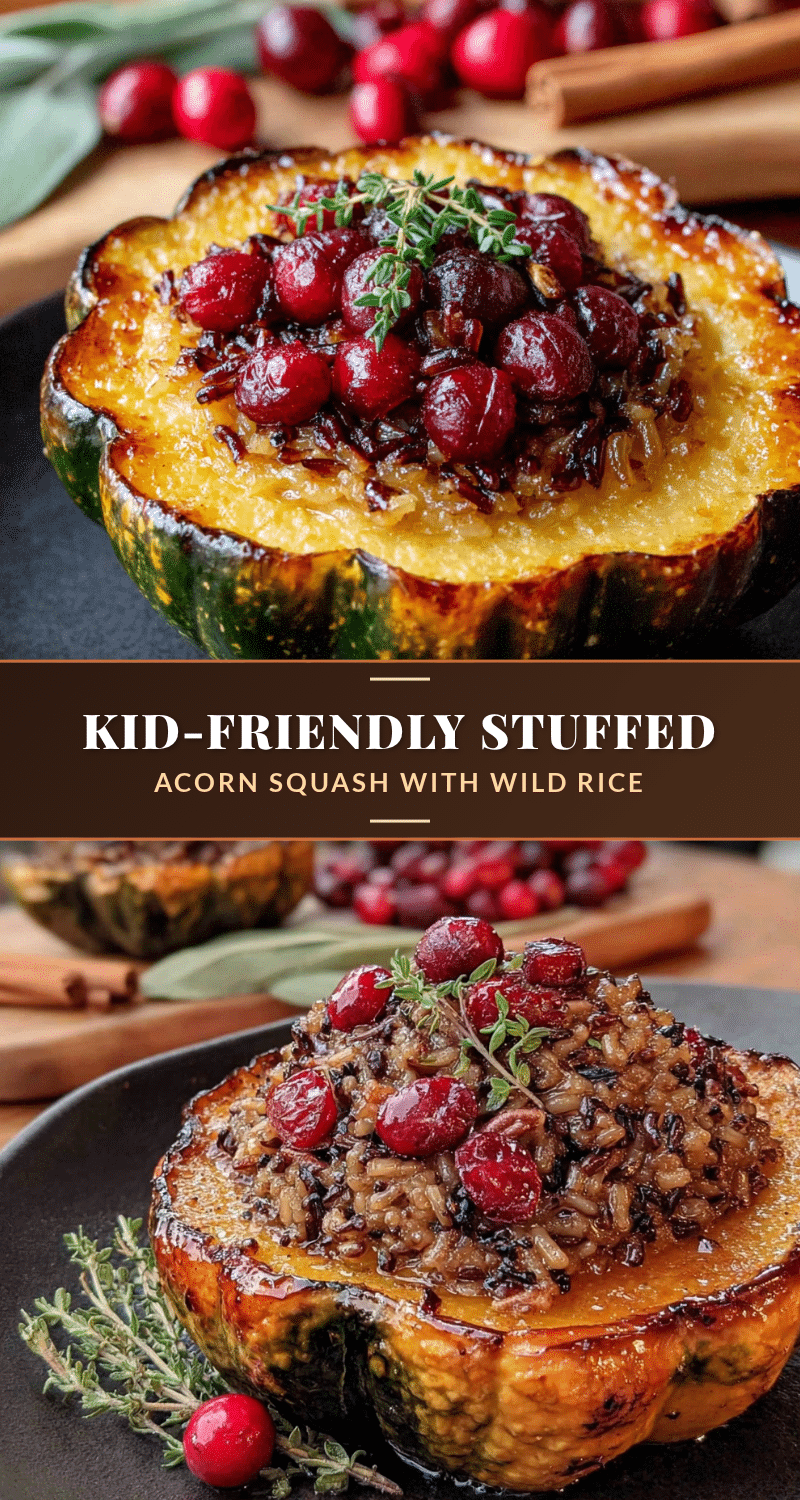

Kid-Friendly Stuffed Acorn Squash with Wild Rice: Easy Fall Dinner
- Total Time: 1 hour 5 minutes
- Yield: 4 servings 1x
Description
This stuffed acorn squash features tender roasted squash halves filled with a savory wild rice blend, sweet apples, dried cranberries, and crunchy pecans. It’s a naturally gluten-free and vegetarian fall dinner that even picky eaters love.
Ingredients
- 2 medium acorn squash
- 2 tablespoons olive oil (for brushing squash)
- Salt and black pepper (for seasoning squash)
- 1 cup wild rice blend
- 2 cups vegetable broth (or chicken broth, low-sodium)
- 1 tablespoon olive oil (for sautéing)
- 1 medium yellow onion, diced (about 1 cup)
- 2 cloves garlic, minced
- 2 celery stalks, diced (about 1/2 cup)
- 1 medium apple, diced (Honeycrisp or Granny Smith)
- 1/3 cup dried cranberries
- 1/4 cup chopped pecans (toasted if desired)
- 1 teaspoon dried sage
- 1/2 teaspoon dried thyme
- 1/2 teaspoon salt
- 1/4 teaspoon black pepper
- 1/4 cup fresh parsley, chopped
- 1/4 cup grated Parmesan cheese (optional topping)
- 2 tablespoons panko breadcrumbs (optional topping)
Instructions
- Preheat oven to 400°F (200°C). Line a baking sheet with parchment paper.
- Cut each acorn squash in half from stem to tip. Scoop out seeds and stringy pulp. Brush cut sides and cavity with olive oil; season with salt and pepper. Place cut-side down on baking sheet.
- Roast squash for 30-35 minutes until fork-tender but still holding shape.
- While squash roasts, combine wild rice blend and vegetable broth in a medium saucepan. Bring to a boil, reduce to simmer, cover, and cook for 25-30 minutes until tender and liquid is absorbed. Fluff with fork.
- In a large skillet, heat 1 tablespoon olive oil over medium heat. Add diced onion and celery; cook 5-6 minutes until onion is translucent. Add minced garlic and cook 1 minute until fragrant.
- Add cooked wild rice to skillet; cook undisturbed 2-3 minutes to toast slightly. Add diced apple, dried cranberries, chopped pecans, dried sage, dried thyme, salt, and pepper. Cook 2 minutes until apple softens slightly. Remove from heat; stir in fresh parsley. Adjust seasoning.
- When squash halves are done, carefully flip them cut-side up using tongs. Divide filling evenly among the four halves, mounding slightly.
- If using optional topping, mix Parmesan and panko; sprinkle over filling.
- Return stuffed squash to oven and bake 10-15 minutes until filling is heated through and topping is golden. If topping browns too quickly, tent with foil.
- Let rest 5 minutes before serving.
Notes
Don’t overcook squash in first roast; it continues cooking during final bake. Toast the rice for nuttier flavor. Cut apple into small 1/4-inch dice. Use a rimmed baking sheet to catch juices. Let rest 5 minutes before serving. Leftovers keep in refrigerator up to 4 days; reheat in microwave or oven. Can be frozen for up to 3 months (assemble without baking, wrap tightly, thaw overnight, then bake with extra 10 minutes).
- Prep Time: 15 minutes
- Cook Time: 50 minutes
- Category: Main Course
- Cuisine: American
Nutrition
- Serving Size: 1 stuffed squash hal
- Calories: 320
- Sugar: 12
- Sodium: 450
- Fat: 10
- Saturated Fat: 1
- Carbohydrates: 52
- Fiber: 8
- Protein: 8
Keywords: stuffed acorn squash, wild rice, fall dinner, kid-friendly, gluten-free, vegetarian, healthy, easy