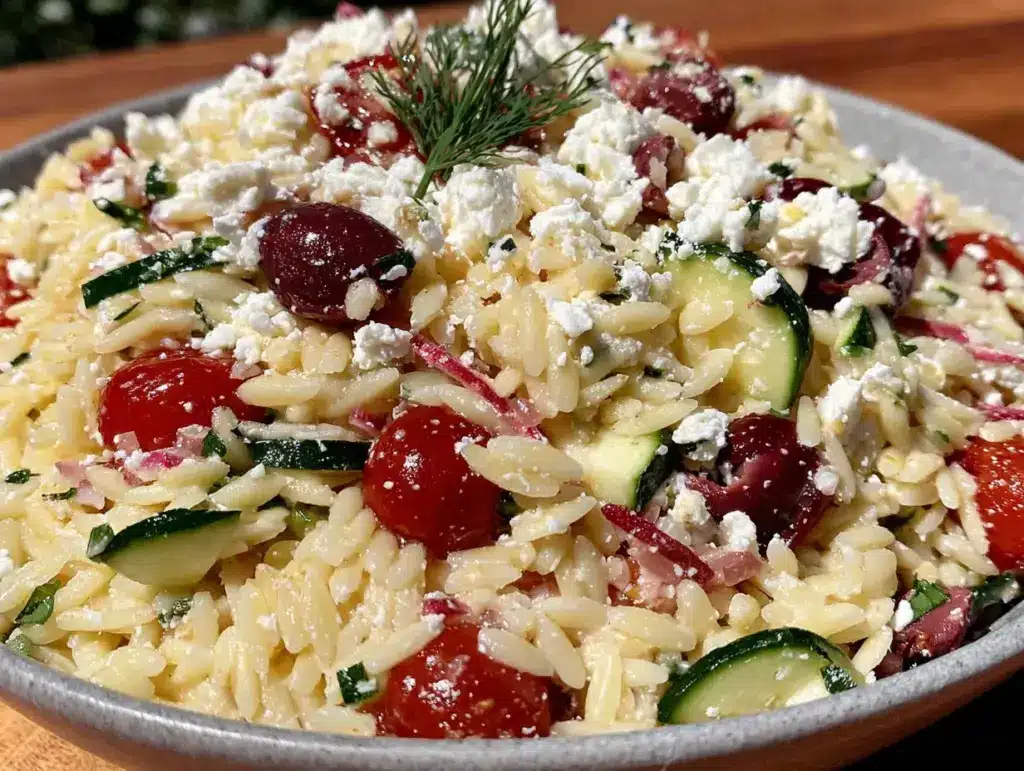
That first bite of cold, briny feta against sweet, roasted red pepper — the way the lemon vinaigrette soaks into the warm orzo, turning it into something almost creamy — it still takes me straight to my neighbor Maria’s tiny, sun-drenched patio in Astoria. She wasn’t one for precise recipes, you know? She’d just grab a handful of this, a pinch of that, tasting from her fingers. I remember watching her, thinking there was no way I could ever replicate that perfect, bright, salty-sour balance. But I tried. Oh, I tried. And after maybe six or seven attempts (and a few that were just plain sad), I finally got it. This Fresh Greek Orzo Pasta Salad with Feta is that version — the one that finally made Maria nod and say “not bad” with a little smile.
It’s funny how some dishes just become part of your summer rotation without you even deciding. This orzo salad is one of those. It shows up at every barbecue, every picnic, every lazy Sunday lunch where you don’t want to turn on the oven. Honestly, it’s the kind of recipe that feels almost too simple to write down, but then you taste it and realize — no, this needs to be documented. This needs to be shared. Because the difference between a good Greek pasta salad and a great one is all in the little details. The quality of the feta. The way you chop the herbs. The patience to let it sit for just a bit before serving.
So here it is. My version of that Astoria afternoon, adapted for busy weeknights and hungry crowds. No fuss, no complicated steps — just honest, bold Mediterranean flavors that come together in about 25 minutes. I think you’re really going to love this one.
Why You’ll Love This Recipe
Let’s be real for a second — there are a million Greek pasta salad recipes floating around out there. So why should this one earn a spot in your recipe box? Well, I’ve tested this one more times than I care to admit, tweaking the ratios, swapping ingredients, and serving it to anyone who’d give me honest feedback. Here’s what makes it stand out:
- Quick & Easy : Comes together in under 25 minutes, perfect for busy weeknights or last-minute potluck invites. The pasta cooks while you chop — that’s pretty much the whole strategy.
- Simple Ingredients : No fancy grocery trips needed. You probably already have the olive oil, lemon, and oregano in your kitchen right now.
- Perfect for Meal Prep : This salad actually gets better after a day in the fridge. The flavors meld together beautifully, making it an ideal make-ahead option. I often prep a big batch alongside my Greek chickpea salad jars for the week.
- Crowd-Pleaser : It’s one of those rare dishes that satisfies both the picky eaters and the foodies at the table. Kids love the orzo, adults love the feta.
- Unbelievably Delicious : The texture combo here is next-level — tender pasta, crunchy cucumber, creamy feta, and briny olives all in one bite. It’s comfort food that somehow feels light and fresh.
What makes this recipe different from the rest? It’s the vinaigrette, honestly. Most recipes use a simple lemon-olive oil situation, which is fine, but mine adds a tiny splash of red wine vinegar and a whisper of Dijon mustard for depth. It emulsifies beautifully and clings to every piece of orzo. Plus, I use a technique of marinating the red onion in the dressing for a few minutes before adding everything else — it takes the sharp edge off and makes the whole salad taste more cohesive.
This isn’t just another Greek pasta salad. It’s the one that makes you close your eyes after the first bite. It’s comfort food reimagined — healthier, faster, but with the same soul-soothing satisfaction. Perfect for impressing guests without stress, or turning a simple dinner into something memorable.
What Ingredients You Will Need
This recipe uses simple, wholesome ingredients to deliver bold flavor and satisfying texture without the fuss. Most of these are pantry staples or easy to find at any grocery store. Let’s break it down — I’ll share a few brand preferences and substitution tips along the way.
- Orzo pasta – 1 cup (200g) : This rice-shaped pasta is the heart of the dish. I prefer De Cecco or Barilla for best texture — they hold up well and don’t turn mushy. Feel free to use whole wheat or gluten-free orzo if needed, just adjust cooking time according to package directions.
- English cucumber – 1 medium, diced : English cucumbers have thinner skins and fewer seeds, so you don’t need to peel them. If using regular cucumbers, I’d recommend peeling and seeding them first to avoid a watery salad.
- Cherry tomatoes – 1 cup (150g), halved : Look for firm, ripe tomatoes. In summer, I love using Sun Gold or Sweet 100s for their intense sweetness. In winter, grape tomatoes work great too.
- Red bell pepper – 1 medium, diced : Adds color and crunch. You could swap in yellow or orange for variety. Roasted red peppers from a jar also work beautifully in a pinch.
- Kalamata olives – 1/2 cup (80g), halved : I recommend buying pitted kalamatas to save time. For a milder flavor, try Castelvetrano olives instead.
- Red onion – 1/2 small, thinly sliced : Soaking the slices in cold water for 5 minutes before using helps tame their bite. Or just let them marinate in the dressing — that’s my preferred method.
- Feta cheese – 1 cup (150g), crumbled : Splurge on a block of good quality feta in brine, not the pre-crumbled stuff. It’s creamier and more flavorful. My go-to is Mt. Vikos or Valbreso.
- Fresh parsley – 1/4 cup, chopped : Flat-leaf parsley has better flavor than curly. Don’t skip it — it adds a fresh, grassy note that balances the salty feta.
- Fresh dill – 2 tablespoons, chopped : Optional but highly recommended. Dill and feta are a classic pairing.
For the Lemon Vinaigrette:
- Extra virgin olive oil – 1/3 cup (80ml) : Use a good quality one here — it’s the backbone of the dressing. I like California Olive Ranch or Kirkland Signature.
- Fresh lemon juice – 3 tablespoons (45ml) : Always use fresh, never bottled. The brightness makes a huge difference.
- Red wine vinegar – 1 tablespoon (15ml) : Adds a subtle tang that rounds out the lemon. You can substitute white wine vinegar or even apple cider vinegar.
- Dijon mustard – 1 teaspoon : Helps emulsify the dressing and adds a tiny kick. Maille is my favorite brand.
- Dried oregano – 1 teaspoon : Use Greek oregano if you can find it — it’s more aromatic and less bitter.
- Garlic – 1 small clove, minced : Fresh garlic is non-negotiable here. Powdered just doesn’t give the same punch.
- Salt and black pepper – to taste
Equipment Needed
You don’t need anything fancy for this recipe, which is part of its charm. Here’s what you’ll need:
- Large pot for boiling pasta (4-5 quart capacity is perfect)
- Colander for draining the orzo
- Chef’s knife and cutting board
- Large mixing bowl (I use a 3-quart bowl)
- Small jar or bowl for the vinaigrette — a mason jar works brilliantly for shaking it up
- Measuring cups and spoons
- Wooden spoon or spatula for stirring
If you don’t have a jar for the dressing, a small bowl and whisk work just fine. And honestly, you could even shake it in a sealed container. I’ve done that more times than I’d like to admit! For the pasta, any pot will do — just make sure it’s big enough for the orzo to move around freely so it doesn’t clump.
Preparation Method
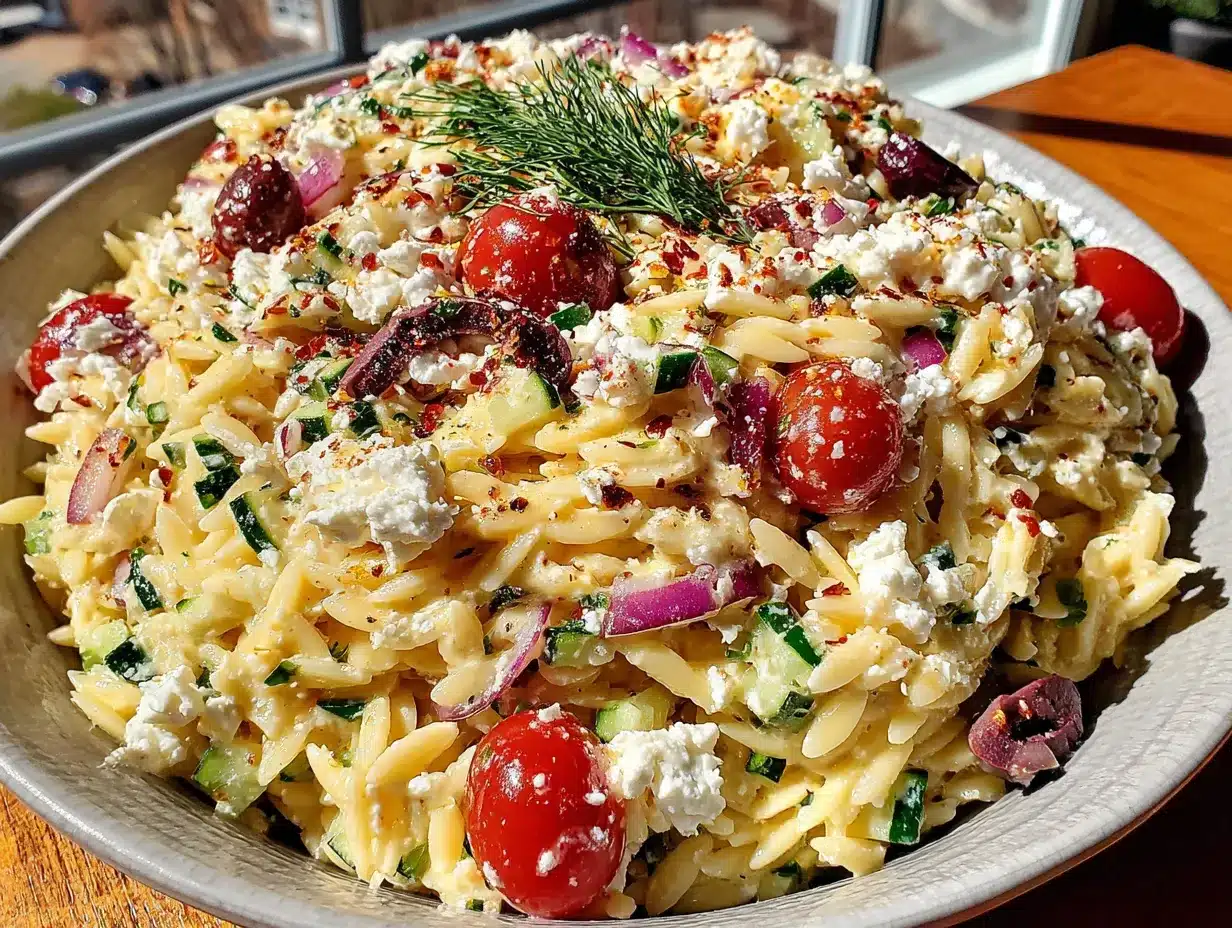
Alright, let’s get cooking. This comes together quickly, so I recommend prepping all your ingredients before you start — it makes the whole process smoother and more enjoyable.
- Cook the orzo. Bring a large pot of salted water to a rolling boil (about 2 tablespoons of salt per 4 cups of water). Add the orzo and cook according to package directions, usually 8-10 minutes, until al dente. Stir occasionally to prevent sticking. Drain in a colander and rinse briefly with cold water to stop the cooking process. Shake off excess water and set aside to cool slightly.
- While the pasta cooks, make the vinaigrette. In a small jar or bowl, combine the olive oil, lemon juice, red wine vinegar, Dijon mustard, dried oregano, minced garlic, and a pinch of salt and pepper. If using a jar, screw the lid on tight and shake vigorously for about 20 seconds until emulsified. If using a bowl, whisk continuously while drizzling in the olive oil. Taste and adjust seasoning — it should be bright and tangy with a hint of garlic.
- Marinate the red onion. Place the thinly sliced red onion in the bottom of your large mixing bowl. Pour about 2 tablespoons of the vinaigrette over them and toss to coat. Let them sit while you prep the rest of the veggies — this takes the sharp edge off and infuses them with flavor.
- Prep the vegetables. Dice the cucumber, halve the cherry tomatoes, dice the bell pepper, and halve the kalamata olives. Chop the parsley and dill (if using). Keep everything separate for now.
- Combine the salad. Add the cooled orzo to the bowl with the marinated onions. Add the cucumber, tomatoes, bell pepper, olives, parsley, and dill. Pour the remaining vinaigrette over everything. Toss gently but thoroughly with a wooden spoon or spatula until everything is evenly coated.
- Add the feta. Gently fold in the crumbled feta cheese, reserving a small handful for topping. Be careful not to overmix — you want distinct pieces of feta throughout, not a mushy mess.
- Let it rest. This is the hardest part! Cover the bowl and let the salad sit at room temperature for at least 15-20 minutes before serving. This allows the orzo to absorb the dressing and the flavors to meld. If you can wait 30 minutes, even better.
- Finish and serve. Give it one last gentle stir, taste, and adjust salt and pepper if needed. Transfer to a serving platter or bowl, top with the reserved feta and a sprinkle of fresh herbs. Serve at room temperature or slightly chilled.
Pro tip from my kitchen: If you’re making this ahead, reserve a little extra dressing to toss in just before serving. The orzo will absorb some of the dressing as it sits, so a fresh drizzle brings it back to life.
Cooking Tips & Techniques
Over the years, I’ve made this salad more times than I can count — and I’ve definitely made my share of mistakes along the way. Here are the lessons I learned so you don’t have to repeat them:
Don’t overcook the orzo. This is the number one mistake. Orzo goes from perfectly al dente to mushy in about 30 seconds. Set a timer and start checking a minute before the package says. You want it tender but with a slight bite — it’ll continue to soften slightly as it absorbs the dressing.
Salt your pasta water generously. I know it sounds like a lot, but this is your only chance to season the orzo from the inside out. The water should taste like the sea. Trust me, underseasoned pasta water leads to bland salad.
Rinse the orzo with cold water. This stops the cooking immediately and removes excess starch that can make the salad gummy. Some pasta purists will tell you never to rinse pasta, but for cold salads, it’s absolutely the right move.
Let the salad rest. I cannot stress this enough. A freshly assembled Greek orzo salad tastes good, but one that’s rested for 20-30 minutes tastes incredible. The flavors marry, the orzo drinks up the vinaigrette, and everything becomes more cohesive. This is also why it’s such a great option for simple meal prep — it actually gets better with time.
Don’t add all the feta at once. Reserve a bit for the top. It makes the presentation prettier and gives you those lovely, distinct bites of creamy, salty cheese rather than having it all mixed into oblivion.
One failure I’ll never forget: I once made this for a potluck and used low-fat feta. Big mistake. It was dry, crumbly, and basically flavorless. The whole salad fell flat. Full-fat feta in brine is non-negotiable for the best results. Don’t make my mistake!
Variations & Adaptations
One of the best things about this salad is how adaptable it is. Here are some variations I’ve tried and loved:
Add protein. Grilled chicken, shrimp, or even chickpeas turn this into a complete meal. I love adding leftover crispy parmesan air fryer chicken cutlets sliced on top — the crunch contrasts beautifully with the tender orzo.
Make it vegan. Skip the feta or use a high-quality vegan feta. Add a cup of cooked chickpeas for protein and creaminess. The dressing is already vegan-friendly!
Swap the pasta. No orzo on hand? Use small shells, ditalini, or even couscous. Just adjust cooking times accordingly. For a low-carb option, try cauliflower rice — sauté it briefly and let it cool before assembling.
Change up the vegetables. In spring, add blanched asparagus and peas. In summer, grilled zucchini and corn are amazing. In fall, try roasted butternut squash cubes. The base recipe is so forgiving that you can really use whatever’s in season.
Add a protein twist. I once made this with chopped salami and pepperoncini for a more Italian-inspired version. It was a hit at a game day gathering. Speaking of which, these would pair wonderfully with crispy Super Bowl queso chicken taquito pops for a fun spread.
Make it spicy. Add a pinch of red pepper flakes to the vinaigrette or toss in some chopped banana peppers for a tangy kick.
Serving & Storage Suggestions
This salad is best served at room temperature or slightly chilled — straight from the fridge it’s a bit muted, so let it sit out for 10-15 minutes before serving if you’ve refrigerated it.
Presentation tip: Serve in a wide, shallow bowl rather than a deep one. It shows off all the colorful ingredients and makes the salad look more inviting. Top with the reserved feta, a sprinkle of fresh dill or parsley, and maybe a few extra kalamata olives arranged artfully on top.
What to serve with it: This orzo salad is incredibly versatile. It’s perfect alongside grilled meats like lamb chops, chicken souvlaki, or even a simple steak. For a vegetarian meal, pair it with Mediterranean quinoa bowls for a hearty, plant-based dinner. It also works beautifully as a side for burgers, hot dogs, or sandwiches at a barbecue.
Storage: Keep leftovers in an airtight container in the refrigerator for up to 4 days. The flavors will continue to develop, and it might even taste better on day two! Just be aware that the orzo will absorb more dressing over time, so the salad will be a bit less saucy. If that bothers you, make a little extra vinaigrette to freshen it up before serving.
Freezing: I don’t recommend freezing this salad. The vegetables will become watery and the texture of the orzo will suffer. It’s really best enjoyed fresh or within a few days.
Reheating: Honestly, I prefer this salad cold or at room temperature. But if you want it warm, microwave individual portions for about 30 seconds — just enough to take the chill off without cooking the vegetables.
Nutritional Information & Benefits
Here’s an approximate nutritional breakdown per serving (based on 6 servings):
- Calories: 320
- Protein: 9g
- Carbohydrates: 32g
- Fiber: 3g
- Fat: 18g
- Saturated Fat: 5g
- Sodium: 480mg
Health highlights: This salad is packed with good-for-you ingredients. The olive oil provides heart-healthy monounsaturated fats, while the vegetables offer a range of vitamins and antioxidants. Feta cheese is lower in fat and calories than many other cheeses, and it’s a good source of calcium and protein. The cucumbers and tomatoes are hydrating and rich in vitamin C and K.
Dietary considerations: This recipe is vegetarian and can easily be made gluten-free by using gluten-free orzo. It’s also naturally nut-free and egg-free. If you’re watching your sodium, use low-sodium feta and go easy on the added salt — the olives and feta already bring plenty of saltiness.
My personal take: I love that this salad feels indulgent but is actually pretty balanced. It’s the kind of dish that satisfies a craving without leaving you feeling heavy. Perfect for those days when you want something delicious that also makes you feel good about what you’re eating.
Conclusion
This Fresh Greek Orzo Pasta Salad with Feta has become a staple in my kitchen for good reason. It’s quick, it’s forgiving, and it delivers every single time — whether I’m bringing it to a potluck, serving it alongside grilled chicken for a weeknight dinner, or just eating it straight from the bowl for lunch. The combination of tender orzo, crunchy vegetables, creamy feta, and that bright, tangy vinaigrette is honestly hard to beat.
I hope you give this recipe a try and make it your own. Add your favorite veggies, swap in different herbs, throw in some protein — it’s one of those dishes that welcomes experimentation. And when you do make it, I’d love to hear how it turned out. Drop a comment below, share your tweaks, or tag me in your photos. There’s something special about knowing this little Astoria-inspired salad is finding its way into kitchens everywhere.
Happy cooking, friends. Here’s to simple food that tastes like summer.
Frequently Asked Questions
Can I make this Greek orzo pasta salad ahead of time?
Absolutely! In fact, it’s even better the next day. The flavors have time to meld and the orzo absorbs more of the vinaigrette. Just give it a good stir before serving and add a splash of fresh dressing if it seems dry.
What can I substitute for orzo pasta?
Small shell pasta, ditalini, couscous, or even quinoa work great. Just cook according to package directions and let cool before adding to the salad. For a low-carb option, try cauliflower rice.
How do I keep the orzo from getting mushy?
Cook it al dente — firm to the bite — and rinse with cold water immediately after draining to stop the cooking process. Also, don’t overdress the salad; you can always add more vinaigrette later if needed.
Can I add chicken or other protein to this salad?
Yes! Grilled chicken, shrimp, chickpeas, or even sliced salami are all great additions. I especially love it with leftover grilled chicken or crispy air fryer chicken cutlets sliced on top.
How long does this salad last in the fridge?
Stored in an airtight container, it will keep for up to 4 days. The texture is best within the first 2-3 days. I don’t recommend freezing it, as the vegetables will become watery when thawed.
Pin This Recipe!
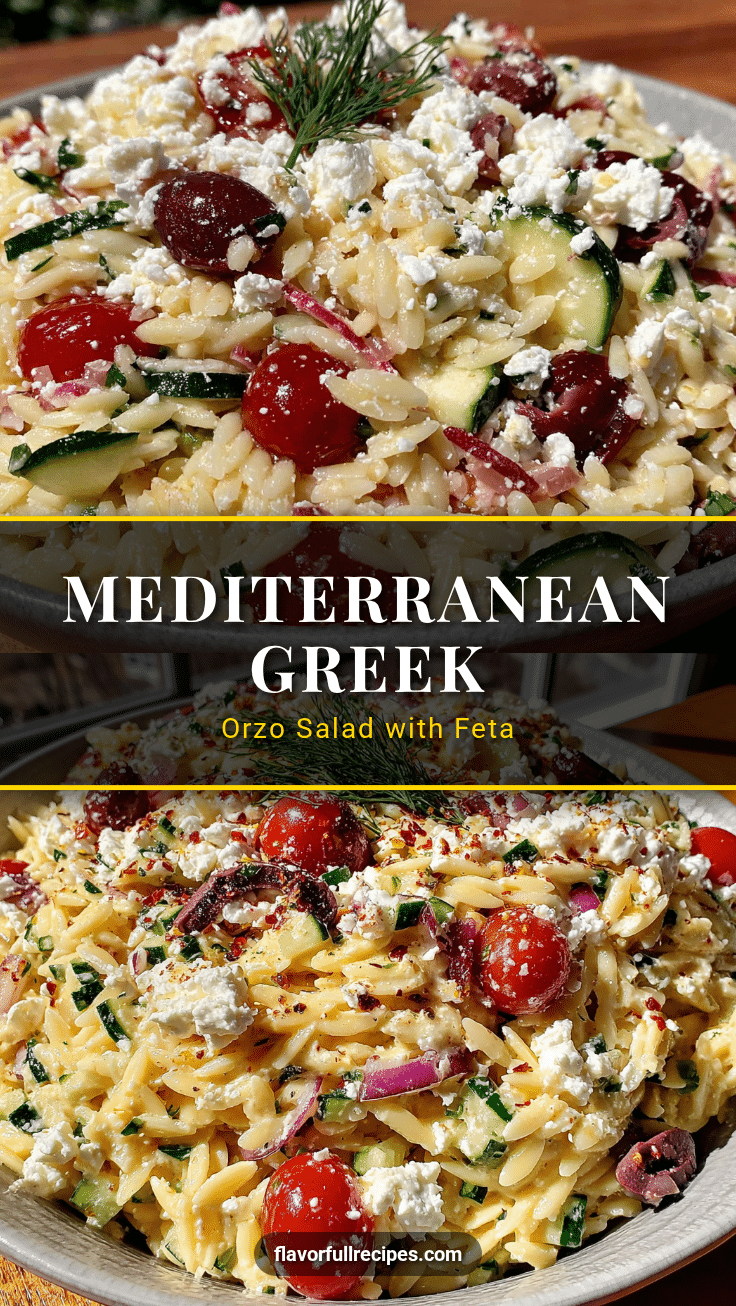
Best Greek Orzo Pasta Salad with Feta – Easy Recipe
- Total Time: 25 minutes
- Yield: 6 servings 1x
Description
A fresh and vibrant Greek orzo pasta salad with creamy feta, crunchy vegetables, and a tangy lemon vinaigrette. Ready in under 25 minutes, it’s perfect for potlucks, meal prep, or a light summer meal.
Ingredients
- 1 cup (200g) orzo pasta
- 1 medium English cucumber, diced
- 1 cup (150g) cherry tomatoes, halved
- 1 medium red bell pepper, diced
- 1/2 cup (80g) Kalamata olives, halved
- 1/2 small red onion, thinly sliced
- 1 cup (150g) feta cheese, crumbled
- 1/4 cup fresh parsley, chopped
- 2 tablespoons fresh dill, chopped (optional)
- 1/3 cup (80ml) extra virgin olive oil
- 3 tablespoons (45ml) fresh lemon juice
- 1 tablespoon (15ml) red wine vinegar
- 1 teaspoon Dijon mustard
- 1 teaspoon dried oregano
- 1 small garlic clove, minced
- Salt and black pepper to taste
Instructions
- Cook the orzo: Bring a large pot of salted water to a rolling boil. Add orzo and cook according to package directions (8-10 minutes) until al dente. Drain and rinse with cold water to stop cooking. Set aside to cool slightly.
- Make the vinaigrette: In a small jar or bowl, combine olive oil, lemon juice, red wine vinegar, Dijon mustard, dried oregano, minced garlic, and a pinch of salt and pepper. Shake or whisk until emulsified. Adjust seasoning to taste.
- Marinate the red onion: Place thinly sliced red onion in a large mixing bowl. Pour about 2 tablespoons of vinaigrette over them and toss to coat. Let sit while prepping other vegetables.
- Prep the vegetables: Dice cucumber, halve cherry tomatoes, dice bell pepper, halve olives, and chop parsley and dill.
- Combine the salad: Add cooled orzo to the bowl with marinated onions. Add cucumber, tomatoes, bell pepper, olives, parsley, and dill. Pour remaining vinaigrette over everything and toss gently to coat.
- Add the feta: Gently fold in crumbled feta, reserving a small handful for topping. Be careful not to overmix.
- Let it rest: Cover the bowl and let the salad sit at room temperature for 15-20 minutes (or up to 30 minutes) to allow flavors to meld.
- Finish and serve: Give a final gentle stir, adjust salt and pepper if needed. Transfer to a serving platter, top with reserved feta and fresh herbs. Serve at room temperature or slightly chilled.
Notes
For best results, use full-fat feta in brine, not pre-crumbled. Let the salad rest for at least 15-20 minutes before serving to allow flavors to meld. If making ahead, reserve extra dressing to refresh before serving. Store leftovers in an airtight container in the refrigerator for up to 4 days. Not recommended for freezing.
- Prep Time: 15 minutes
- Cook Time: 10 minutes
- Category: Salad
- Cuisine: Greek
Nutrition
- Serving Size: 1 serving (about 1.5
- Calories: 320
- Sugar: 4
- Sodium: 480
- Fat: 18
- Saturated Fat: 5
- Carbohydrates: 32
- Fiber: 3
- Protein: 9
Keywords: Greek orzo pasta salad, feta, easy pasta salad, Mediterranean salad, summer salad, potluck recipe