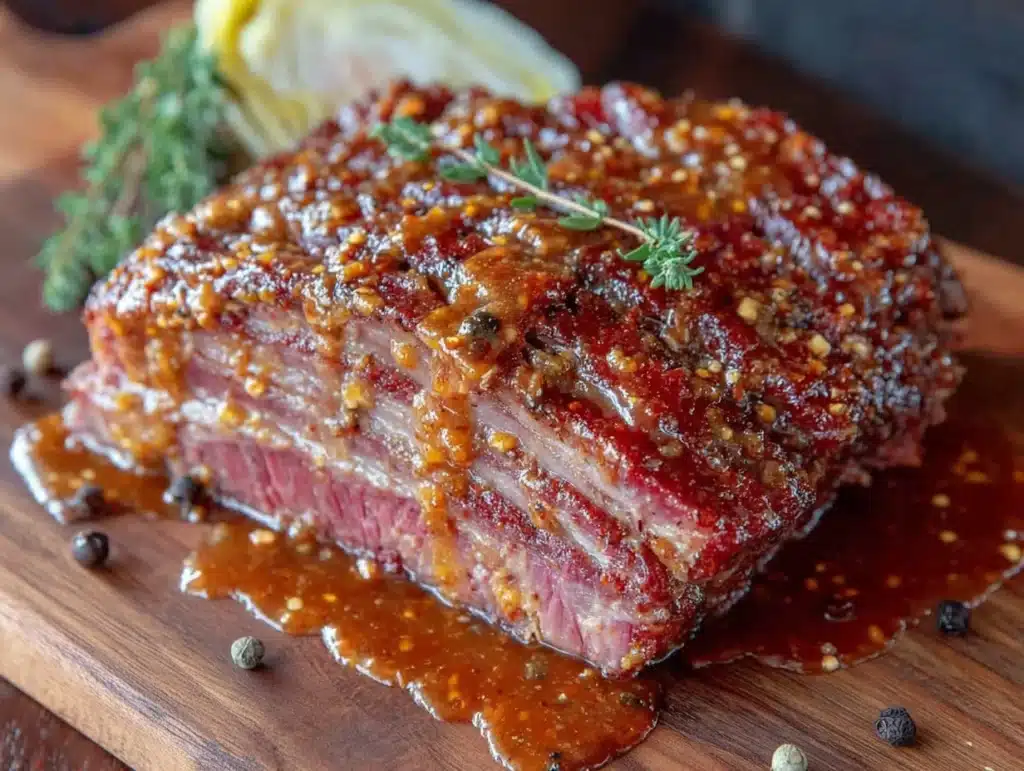
I was standing in line at the hardware store—of all places, buying a new showerhead—when the man behind me, holding a single lightbulb and looking profoundly unimpressed with my plumbing choices, started talking about how to cook corned beef. He was probably seventy, wearing a faded flannel shirt with a hole in the elbow, and he had the kind of voice that sounded like he’d been yelling at dogs for forty years. “You’re boiling it, aren’t you?” he said, not as a question. I hadn’t even mentioned corned beef. I was just standing there, minding my own business, trying to decide between chrome and brushed nickel. But he had me pegged. I mean, honestly, I had been boiling it. That’s what my mom did, and her mom before her. Boil it until it’s gray and sad, then eat it with mustard and pretend it’s fine. This man—let’s call him Frank, because that’s what the name on his credit card said when he paid for his lightbulb—told me I was doing it all wrong. He told me about a Guinness glaze. He told me about low heat and patience. He told me, with the kind of authority that only comes from making the same dish for fifty years, that corned beef could actually be tender. Honestly, I thought he was a little crazy. But I was also intrigued. So I went home, bought a brisket, and decided to try it his way. That was three years ago, and I haven’t boiled a piece of corned beef since. This is that recipe. And let me tell you—it is a game-changer.
Why You’ll Love This Recipe
This isn’t your grandmother’s corned beef and cabbage. I mean, no disrespect to grandma, but this version is so much more. It’s richer, more flavorful, and honestly, it’s the kind of meal that makes you feel like you actually know what you’re doing in the kitchen. Here’s why this recipe stands out:
- Incredibly Tender: The slow braising process, combined with the magic of Guinness, breaks down the brisket until it’s fork-tender. No more dry, stringy meat.
- Rich, Complex Flavor: The Guinness glaze adds a depth of flavor that plain boiled beef just can’t touch. It’s slightly sweet, a little bitter, and perfectly savory.
- One-Pot Wonder: Everything—the meat, the vegetables, the glaze—cooks in a single pot. Less cleanup, more time to relax.
- Perfect for St. Patrick’s Day or Any Day: While it’s a classic for the holiday, this meal is hearty enough for a cold winter Sunday dinner any time of year.
- Impressive Without the Stress: This looks like a fancy, complicated dish, but the hands-on time is minimal. The oven does all the heavy lifting.
- Leftovers are Legendary: If you’re lucky enough to have any left, the sandwiches the next day are almost better than the original meal.
What makes this recipe different from the rest? It’s the glaze. Most recipes just boil the meat with the vegetables, and you end up with a bland, watery result. Here, we use the Guinness to create a rich, sticky glaze that caramelizes on the brisket, and we braise the cabbage in the same flavorful liquid. It’s a simple change, but it makes all the difference. I’ve served this to friends who swore they didn’t like corned beef, and they went back for seconds. It’s that good.
What Ingredients You Will Need
This recipe uses simple, wholesome ingredients to deliver bold flavor and satisfying texture. Most of these are pantry staples or easy to find at any grocery store, especially around St. Patrick’s Day. The key is to use good quality ingredients, as the flavors are simple and need to shine.
- Corned Beef Brisket (3-4 pounds): Look for a flat-cut brisket, which is leaner and slices more neatly. It usually comes with a spice packet—don’t throw it away! We’ll use it. I personally prefer the brand Grey Owl for its consistent marbling and flavor.
- Guinness Draught (1 can or bottle, 11.2 oz / 330 ml): This is the star of the show. The stout adds a deep, roasty, slightly bitter note that balances the saltiness of the beef. Don’t use a non-alcoholic version; the alcohol cooks off, leaving only the flavor. If you must substitute, use a dark, non-alcoholic stout or a strong black coffee mixed with a tablespoon of molasses.
- Brown Sugar (1/2 cup, packed / 100 g): Light or dark brown sugar works. This creates the sticky, sweet glaze that caramelizes on the brisket. Dark brown sugar will give a deeper, more molasses-like flavor.
- Whole Grain Mustard (2 tablespoons): This adds a tangy, slightly spicy kick that cuts through the richness of the beef. Dijon mustard can be used in a pinch, but whole grain gives a better texture.
- Apple Cider Vinegar (2 tablespoons): The acidity helps to tenderize the meat and brighten up the overall flavor. White vinegar can be used, but apple cider is milder and adds a hint of fruitiness.
- Onion (1 large, quartered): Adds sweetness and depth to the braising liquid.
- Garlic (4 cloves, smashed): An essential aromatic. Don’t bother mincing it finely; just smash the cloves with the side of your knife to release their flavor.
- Whole Black Peppercorns (1 teaspoon): Adds a subtle warmth and spice.
- Bay Leaves (2): A classic aromatic for braised meats. They add a subtle, herbal note.
- Spice Packet from the Corned Beef: This usually contains mustard seeds, coriander, and other pickling spices. It adds an authentic flavor that’s hard to replicate.
- Green Cabbage (1 medium head, cut into 8 wedges): Look for a firm, heavy head of cabbage. The outer leaves should be crisp and not wilted.
- Carrots (4-5 large, peeled and cut into 2-inch chunks): Adds sweetness and color. You can also use baby carrots to save time.
- Potatoes (1.5 pounds, halved if large): Yukon Gold or red potatoes hold their shape well during braising. Russets will get too mushy.
- Fresh Parsley (for garnish, optional): Adds a pop of color and freshness right before serving.
Equipment Needed
You don’t need a lot of fancy gear for this recipe, which is part of its charm. A few key pieces will make the process smooth and easy.
- Large Dutch Oven or Heavy-Bottomed Pot (6-8 quarts): This is the most important tool. You need a pot that can go from the stovetop to the oven and has a tight-fitting lid. I use a Le Creuset that I’ve had for years, but a Lodge enameled cast iron pot is a fantastic budget-friendly alternative. If you don’t have a Dutch oven, a large, oven-safe stockpot with a lid will work.
- Sharp Chef’s Knife: For trimming any excess fat from the brisket and cutting the vegetables. A dull knife is more dangerous than a sharp one!
- Cutting Board: A large, sturdy board for prep work.
- Measuring Cups and Spoons: For accurate measurements of the glaze ingredients.
- Tongs: For safely moving the hot brisket and vegetables.
- Foil: For tenting the meat while it rests.
Pro Tip: If your pot doesn’t have a lid, you can use a double layer of heavy-duty aluminum foil to create a tight seal. Just crimp it around the edges of the pot. I’ve done this in a pinch, and it works perfectly.
Preparation Method
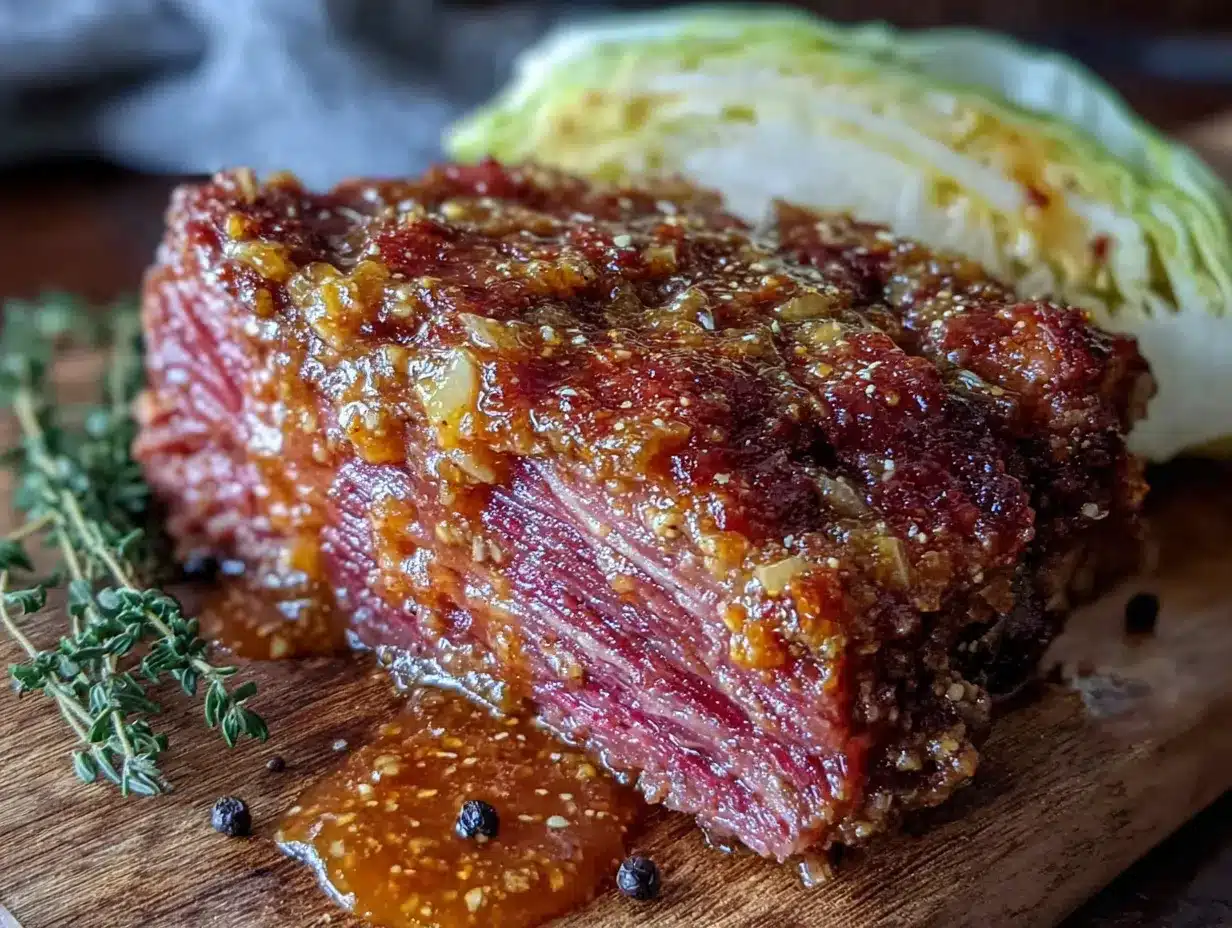
This is a “set it and forget it” kind of recipe, but there are a few key steps to get right. Follow these, and you’ll have a perfect meal.
- Prep the Brisket (15 minutes): Take the corned beef out of its packaging. Rinse it under cold water to remove any excess brine. Pat it completely dry with paper towels. This is important—a dry surface helps the glaze stick. If there’s a thick layer of fat (more than 1/4 inch), trim some of it off, but leave a thin layer to keep the meat moist. Place the brisket fat-side up in your Dutch oven.
- Make the Glaze (5 minutes): In a small bowl, whisk together the Guinness, brown sugar, whole grain mustard, and apple cider vinegar. Pour this mixture over the brisket. It won’t cover it completely, and that’s okay. Sprinkle the contents of the spice packet over the top of the brisket. Add the quartered onion, smashed garlic cloves, peppercorns, and bay leaves to the pot around the meat.
- Braise the Brisket (3-3.5 hours): Put the lid on the Dutch oven and place it in a preheated 300°F (150°C) oven. Let it cook, undisturbed, for 3 hours. Don’t be tempted to open the oven and peek! Every time you open the door, you lose heat and steam. After 3 hours, the brisket should be fork-tender. If it’s still tough, give it another 30 minutes. The internal temperature should be around 190-200°F (88-93°C).
- Add the Vegetables (30 minutes): Carefully remove the pot from the oven. Using tongs, transfer the brisket to a cutting board and tent it loosely with foil. It needs to rest. Add the cabbage wedges, carrot chunks, and potato halves to the pot. Stir them gently into the braising liquid. Return the pot to the oven (without the brisket) and cook for another 25-30 minutes, or until the vegetables are tender when pierced with a fork.
- Glaze the Brisket (5 minutes): While the vegetables are cooking, spoon about 1/2 cup of the braising liquid from the pot into a small saucepan. Bring it to a simmer over medium-high heat. Let it cook for 3-4 minutes, until it reduces slightly and becomes syrupy. Brush this glaze all over the rested brisket.
- Slice and Serve (10 minutes): Slice the brisket against the grain into 1/4-inch thick slices. This is crucial for tenderness. If you slice with the grain, the meat will be tough and stringy. Arrange the sliced beef on a platter with the braised vegetables. Spoon a little more of the reduced braising liquid over the top. Garnish with fresh parsley, if desired.
My Personal Tip: I once forgot to rinse the brisket, and it was so salty it was almost inedible. Don’t skip that step! Also, if you want a deeper glaze, you can place the sliced brisket under the broiler for 2-3 minutes after brushing it with the reduced liquid. Just watch it carefully so it doesn’t burn.
Cooking Tips & Techniques
I’ve made this recipe probably a dozen times now, and I’ve learned a few things the hard way. Here are my best tips to ensure your success.
- Low and Slow is the Law: Don’t rush this. The low temperature of 300°F (150°C) is what breaks down the tough connective tissue in the brisket. If you try to cook it at 350°F, you’ll end up with dry, tough meat. Patience is your best friend here.
- Don’t Skip the Rinse: I know I mentioned it, but it’s worth repeating. The brine that corned beef is packed in is incredibly salty. Rinsing it removes a significant amount of that salt, allowing the other flavors to shine through.
- The “Fork Test” is Everything: Don’t rely solely on time. Every brisket is different. The best way to know it’s done is to insert a fork into the thickest part. If it goes in with very little resistance and the meat starts to pull apart, it’s ready.
- Resting is Non-Negotiable: Letting the brisket rest for at least 10-15 minutes after braising allows the juices to redistribute throughout the meat. If you slice it immediately, all those delicious juices will run out onto the cutting board, leaving you with dry meat.
- Slice Against the Grain: Look at the cooked brisket. You’ll see lines running through the meat—that’s the grain. Slice perpendicular to those lines. This shortens the muscle fibers, making each bite incredibly tender.
- The Glaze Makes the Dish: Don’t just pour the braising liquid over the meat. Reducing it into a glaze concentrates the flavors and creates a beautiful, sticky coating that’s absolutely addictive. It’s the difference between good and unforgettable.
A Mistake I Made: The first time I made this, I added the cabbage at the very beginning with the brisket. By the time the meat was done, the cabbage was a mushy, sulfurous mess. Adding it at the end, just long enough to cook through, is the way to go. It keeps a little bit of texture and doesn’t stink up your whole house.
Variations & Adaptations
This recipe is a fantastic base, but don’t be afraid to make it your own. Here are a few ways I’ve adapted it over the years.
- Spicy Guinness Glaze: Add 1-2 teaspoons of sriracha or a pinch of red pepper flakes to the glaze mixture before pouring it over the brisket. The heat pairs beautifully with the sweetness of the brown sugar and the richness of the stout.
- Honey-Mustard Version: Replace the brown sugar with 1/3 cup of honey. This creates a lighter, more floral glaze that’s still wonderfully sticky. Use a grainy mustard or a spicy brown mustard for extra kick.
- Vegetarian “Corned Beef” and Cabbage: This is a great option for St. Patrick’s Day if you’re not eating meat. Replace the brisket with a large head of cauliflower (cut into thick steaks) or a block of extra-firm tofu (pressed and sliced). Braise it in the same Guinness glaze for about 45 minutes to an hour, until it’s tender and flavorful. Add the vegetables as directed.
- Slow Cooker Method: If you don’t want to use the oven, this works beautifully in a slow cooker. Follow steps 1 and 2, then place everything in the slow cooker. Cook on low for 8-10 hours or on high for 4-5 hours. Add the vegetables in the last 30-45 minutes of cooking. The glaze won’t be as sticky, but the meat will be incredibly tender. You can transfer the cooking liquid to a pan and reduce it on the stovetop for a better glaze.
- Instant Pot Adaptation: For a faster version, use the “Meat/Stew” setting on your Instant Pot. Cook the brisket with the glaze and aromatics for 90 minutes at high pressure. Do a natural release for 15 minutes, then quick release the remaining pressure. Remove the brisket, add the vegetables, and cook on high pressure for another 3-4 minutes. Reduce the liquid for the glaze as directed.
Serving & Storage Suggestions
This meal is a complete one-pot dinner, but how you serve it can make it feel even more special.
- Serving: I like to serve the sliced brisket on a large platter, surrounded by the braised vegetables. Spoon a generous amount of the reduced braising liquid over everything. A sprinkle of fresh, chopped parsley adds a beautiful pop of green. For a traditional touch, serve with a side of creamy horseradish sauce or a dollop of spicy brown mustard. A crusty loaf of Irish soda bread is perfect for sopping up the juices.
- Temperature: This is best served hot, straight from the oven. The meat should be steaming, and the vegetables should be tender and glistening.
- Storage: Leftovers are a gift. Store the sliced brisket and vegetables separately in airtight containers in the refrigerator for up to 4 days. The flavors actually meld and deepen overnight, making the leftovers taste even better.
- Reheating: The best way to reheat is gently. Place the sliced brisket and vegetables in a baking dish with a splash of beef broth or water. Cover with foil and warm in a 300°F (150°C) oven for 15-20 minutes, until heated through. You can also reheat individual portions in the microwave, but the meat might be a little drier.
- Freezing: This freezes well. Let the brisket cool completely, then wrap it tightly in plastic wrap and then in foil. Freeze for up to 3 months. Thaw overnight in the refrigerator before reheating. The vegetables don’t freeze as well—they tend to get mushy—so I recommend freezing only the meat and making fresh vegetables when you’re ready to serve.
The Best Leftover Sandwich: Pile the sliced corned beef on rye bread with Swiss cheese, a generous smear of Russian dressing, and some of the leftover braised cabbage. Grill it in a buttered pan until the bread is golden and the cheese is melted. It’s a Reuben sandwich, and it’s the best reason to make extra corned beef.
Nutritional Information & Benefits
While this is a hearty, indulgent meal, it does have some nutritional value. Here’s a rough estimate per serving (based on 6 servings, not including the potatoes).
- Calories: ~450-550
- Protein: ~35g
- Fat: ~25g
- Carbohydrates: ~25g
- Fiber: ~5g
Health Benefits: Corning beef is a good source of protein, iron, and B vitamins, particularly B12, which is essential for energy and nerve function. Cabbage is a cruciferous vegetable packed with vitamin C, vitamin K, and fiber, which is great for digestion. Carrots are rich in beta-carotene, which supports eye health. The Guinness, believe it or not, contains antioxidants and a small amount of B vitamins.
Dietary Considerations: This recipe is naturally gluten-free if you use a gluten-free stout or beer (check your labels, as some stouts contain barley). It’s also dairy-free. It is high in sodium due to the brining process, so if you’re watching your salt intake, be sure to rinse the brisket thoroughly and don’t add any extra salt to the cooking liquid.
My Wellness Perspective: I don’t believe in “good” or “bad” foods. This is a celebratory meal, meant to be enjoyed with family and friends. It’s rich and satisfying, and it fills you up in a way that a salad just can’t. I pair it with a simple side salad or some steamed green beans to add a little more color and nutrients to the plate. Balance is everything.
Conclusion
Honestly, I still think about Frank from the hardware store sometimes. I wonder if he knows that he changed the way I make corned beef forever. This recipe is more than just a meal—it’s a reminder to keep an open mind, even when you’re just trying to buy a showerhead. The Guinness glaze, the slow braise, the tender meat that falls apart at the touch of a fork—it’s all worth it. I hope you give this recipe a try and see for yourself what a difference a few simple changes can make. Don’t be afraid to customize it, make it your own, and share it with the people you love. And if you do make it, please come back and let me know how it turned out. Did you add your own twist? Did your family love it? I’d love to hear your story. Leave a comment below, and happy cooking!
Frequently Asked Questions
Can I use a different type of beer?
Yes, you can! A dark stout or porter is ideal because it has a rich, roasty flavor that complements the beef. You can also use a brown ale or a doppelbock. Avoid light lagers or IPAs, as their flavors are too delicate or too hoppy for this dish.
My corned beef is too salty. What did I do wrong?
This is the most common issue. You likely didn’t rinse the brisket thoroughly enough before cooking. Next time, soak the brisket in cold water for 30-60 minutes before rinsing, or boil it in fresh water for 5 minutes, then discard the water and start the recipe. This will draw out a significant amount of salt.
Can I make this recipe in a slow cooker?
Absolutely! This is a great slow cooker meal. Follow the instructions in the “Variations & Adaptations” section above. The meat will be incredibly tender, but you may need to reduce the cooking liquid on the stovetop to get a good glaze.
How do I know when the brisket is done?
The best test is the “fork test.” Insert a fork into the thickest part of the brisket. If it goes in easily and the meat starts to pull apart, it’s done. You can also use a meat thermometer; it should register between 190-205°F (88-96°C).
Can I add other vegetables to the pot?
Of course! Turnips, parsnips, and rutabagas are all great additions. If you want to add them, cut them into similar-sized chunks as the carrots and potatoes and add them at the same time. Just be mindful not to overcrowd the pot, as the vegetables need room to cook evenly.
Pin This Recipe!
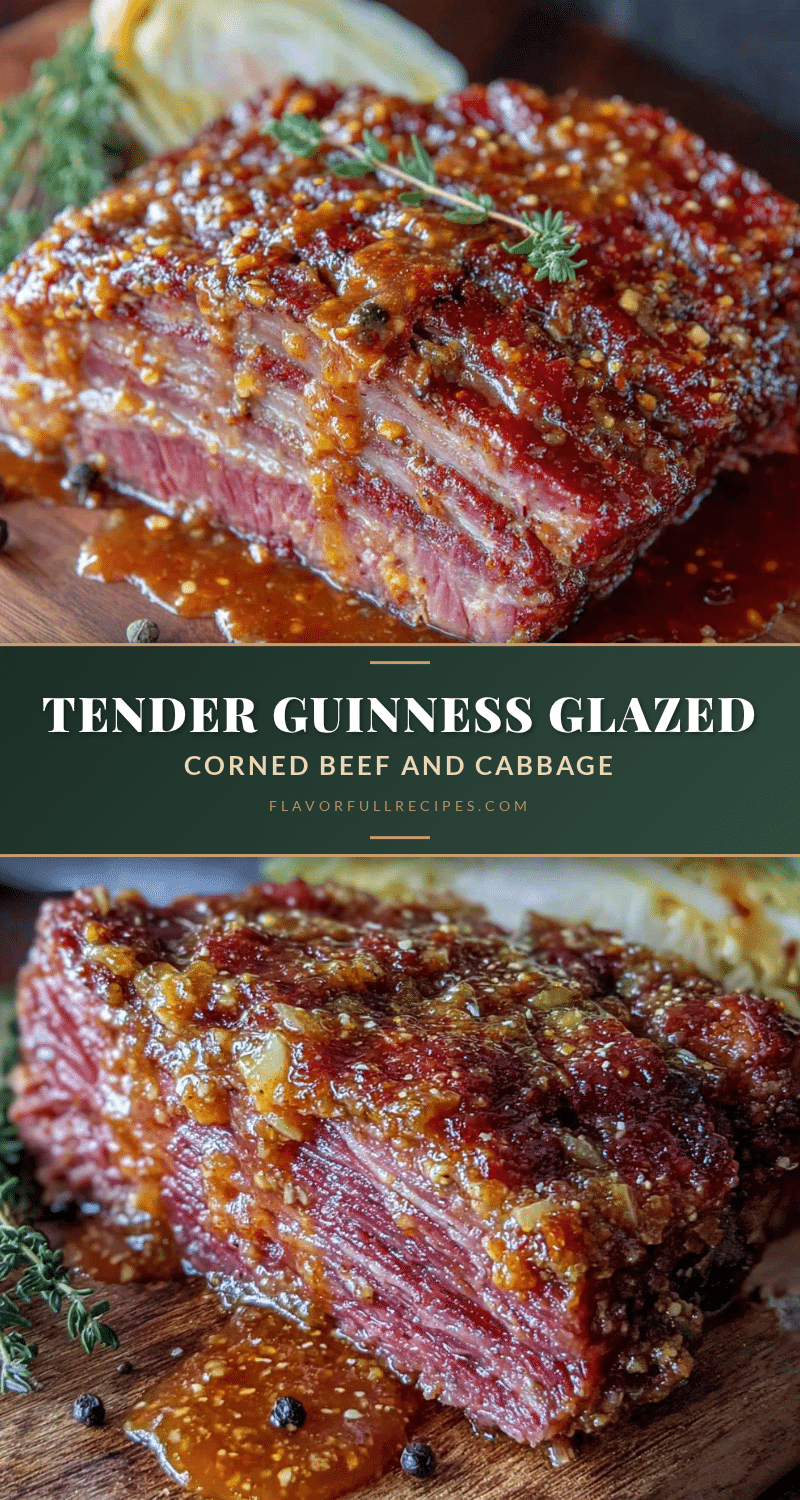
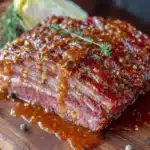
Tender Guinness Glazed Corned Beef and Cabbage: Easy One-Pot Dinner
- Total Time: 3 hours 45 minutes
- Yield: 6 servings 1x
Description
This isn’t your grandmother’s corned beef and cabbage. A rich Guinness glaze and slow braising transform the brisket into fork-tender perfection, all cooked in one pot for an impressive yet stress-free meal.
Ingredients
- 3–4 pounds corned beef brisket (flat-cut, with spice packet)
- 1 can or bottle Guinness Draught (11.2 oz / 330 ml)
- 1/2 cup packed brown sugar (100 g)
- 2 tablespoons whole grain mustard
- 2 tablespoons apple cider vinegar
- 1 large onion, quartered
- 4 cloves garlic, smashed
- 1 teaspoon whole black peppercorns
- 2 bay leaves
- 1 spice packet from corned beef
- 1 medium head green cabbage, cut into 8 wedges
- 4–5 large carrots, peeled and cut into 2-inch chunks
- 1.5 pounds Yukon Gold or red potatoes, halved if large
- Fresh parsley for garnish (optional)
Instructions
- Preheat oven to 300°F (150°C).
- Rinse corned beef brisket under cold water to remove excess brine. Pat completely dry with paper towels. Trim any thick fat layer (over 1/4 inch), leaving a thin layer. Place brisket fat-side up in a large Dutch oven.
- In a small bowl, whisk together Guinness, brown sugar, whole grain mustard, and apple cider vinegar. Pour over brisket. Sprinkle spice packet contents over top. Add quartered onion, smashed garlic, peppercorns, and bay leaves to the pot around the meat.
- Cover pot with lid and braise in preheated oven for 3 to 3.5 hours, until brisket is fork-tender (internal temperature 190-200°F / 88-93°C). Do not open oven during cooking.
- Carefully remove pot from oven. Transfer brisket to a cutting board and tent loosely with foil. Let rest.
- Add cabbage wedges, carrot chunks, and potato halves to the pot. Stir gently into braising liquid. Return pot to oven (without brisket) and cook for 25-30 minutes, until vegetables are tender.
- While vegetables cook, spoon about 1/2 cup braising liquid from pot into a small saucepan. Bring to a simmer over medium-high heat and cook for 3-4 minutes until syrupy. Brush this glaze over the rested brisket.
- Slice brisket against the grain into 1/4-inch thick slices. Arrange on a platter with braised vegetables. Spoon more reduced braising liquid over top. Garnish with fresh parsley if desired.
Notes
Rinse the brisket thoroughly to reduce saltiness. Don’t add cabbage at the beginning; it will become mushy. For a deeper glaze, place sliced brisket under broiler for 2-3 minutes after brushing with reduced liquid. Resting the meat is essential for juiciness.
- Prep Time: 15 minutes
- Cook Time: 3 hours 30 minutes
- Category: Main Course
- Cuisine: Irish-American
Nutrition
- Serving Size: 1 serving (about 1/6
- Calories: 500
- Sugar: 12
- Sodium: 1200
- Fat: 25
- Saturated Fat: 9
- Carbohydrates: 25
- Fiber: 5
- Protein: 35
Keywords: corned beef and cabbage, Guinness corned beef, one-pot dinner, St. Patrick's Day, braised brisket, Irish recipe