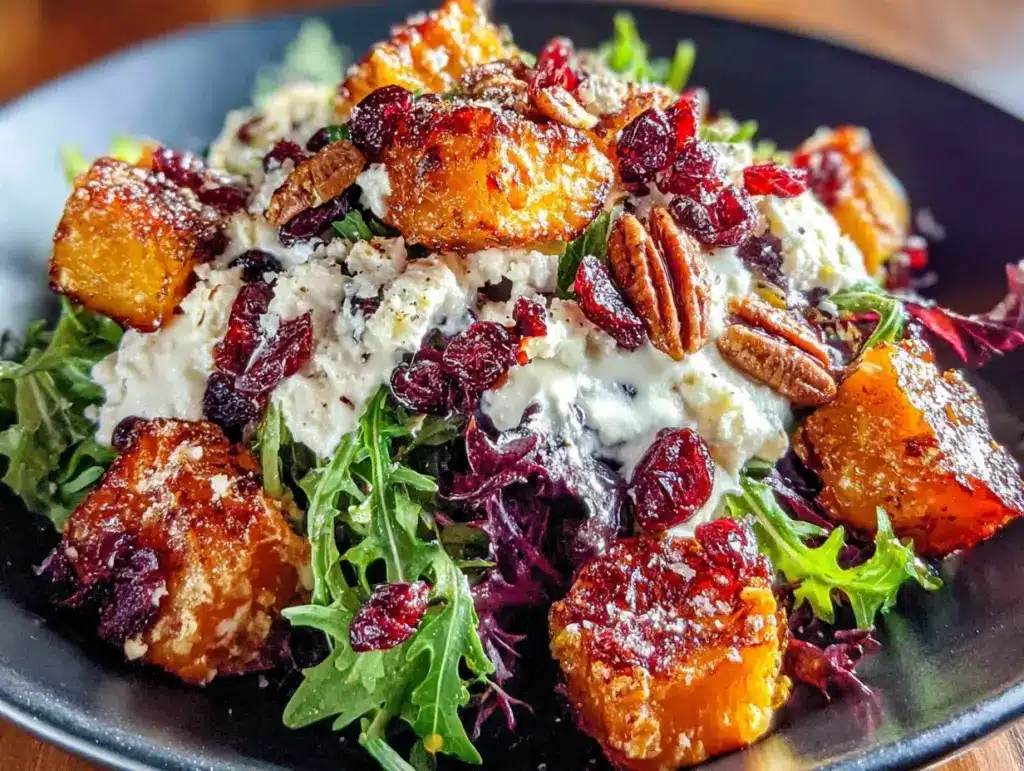
The neighborhood potluck was in six hours and I’d completely forgotten. I mean, completely. I was standing in my kitchen at 1 PM on a Saturday, staring at a half-empty fridge, knowing full well that by 7 PM, I’d be walking into a room full of people who had probably spent two days perfecting their dishes. My neighbor Karen always brings those little puff pastry things that look like they came from a magazine. Last year, someone actually brought a whole roasted pig. And me? I had a butternut squash that was starting to look a little sad, a bag of cranberries I’d bought on a whim, and exactly zero ideas. I almost just grabbed a bottle of wine and called it a day, honestly.
But then I remembered this thing I’d thrown together last fall for a small dinner — just roasted squash, some greens, a quick dressing. It had been good, but not “show up to a potluck where everyone judges you silently” good. So I started panic-roasting. I chopped that squash up, drizzled it with maple syrup (the good stuff, not the pancake kind), and threw it in the oven while I rummaged through my pantry for anything that could pass as intentional. Found some pecans, a pomegranate I’d forgotten about, and a block of feta that was still good. I mean, barely, but good enough.
The thing is, when you’re under pressure, you don’t overthink. You just do. And somehow, that panic-salad turned into the thing everyone asked me for. People were coming up to me with their forks, asking what was in it. Karen asked for the recipe — twice. I stood there, a little stunned, holding my sad little plastic bowl that was now empty, wondering how the dish I threw together in a frenzy ended up being the one that stole the whole night. And honestly? I’ve been making it ever since. Maybe you’ve been there — that moment when you’re sure you’ve got nothing, and somehow you end up with everything.
Why You’ll Love This Recipe
Let me tell you why this salad has become my secret weapon for every gathering. I’ve tested this recipe at least a dozen times — for Thanksgiving, for casual Sunday dinners, for that one time my in-laws showed up unannounced — and it never fails. It’s the kind of dish that makes people think you spent hours in the kitchen, when really, you just let the oven do the heavy lifting.
- Quick & Easy : The active prep time is about 15 minutes. The oven does the rest. Perfect for when you’re scrambling before a party.
- Simple Ingredients : No trips to a specialty store. Squash, greens, nuts, cheese, and a few pantry staples. You probably have most of this right now.
- Perfect for Gatherings : This salad travels beautifully, sits at room temperature without wilting, and feeds a crowd. It’s basically designed for potlucks and dinner parties.
- Crowd-Pleaser : I’ve watched self-proclaimed salad-haters go back for seconds. The maple roasted squash is sweet and caramelized, and the tangy dressing cuts right through it.
- Unbelievably Delicious : The combination of warm squash, crunchy pecans, creamy feta, and that bright pomegranate pop — it’s a texture party in your mouth.
What makes this different from every other autumn salad out there? It’s the balance. So many salads are either too sweet or too tart, too soggy or too dry. This one hits every note. The squash is roasted until the edges are crispy but the inside is soft. The dressing has just enough maple to feel festive without being cloying. And the feta adds that salty bite that makes everything work. I’ve had people tell me it’s the only salad they actually crave. That’s not something you hear every day, you know?
This is the recipe you bring when you want to impress but also want to actually enjoy the party instead of stressing in the kitchen. It’s comfort food that happens to be healthy — the kind that makes you close your eyes after the first bite and forget you’re eating vegetables.
What Ingredients You Will Need
This recipe uses simple, wholesome ingredients that come together to create something genuinely special. Most of these are fall pantry staples, which makes this salad perfect for the season. Here’s what you’ll need and why each one matters.
For the Maple Roasted Squash
- 1 medium butternut squash (about 2 pounds), peeled, seeded, and cut into 1-inch cubes — Look for one that feels heavy for its size and has a firm, unblemished skin. I’ve found that pre-cut squash from the store works in a pinch, but it never gets quite as caramelized as when you cut it yourself.
- 2 tablespoons olive oil — A good quality extra virgin olive oil makes a difference here. It helps the squash roast evenly and adds a subtle fruity note.
- 2 tablespoons pure maple syrup — Not the pancake syrup! Use the real stuff. Grade A dark amber is my go-to for roasting because it has a deeper flavor that stands up to the heat.
- 1/2 teaspoon salt — I prefer kosher salt for roasting. It distributes more evenly than table salt.
- 1/4 teaspoon black pepper — Freshly ground is always better, but pre-ground works in a hurry.
- 1/4 teaspoon cinnamon — This is optional, but it adds a warm, cozy note that screams autumn.
For the Salad Base
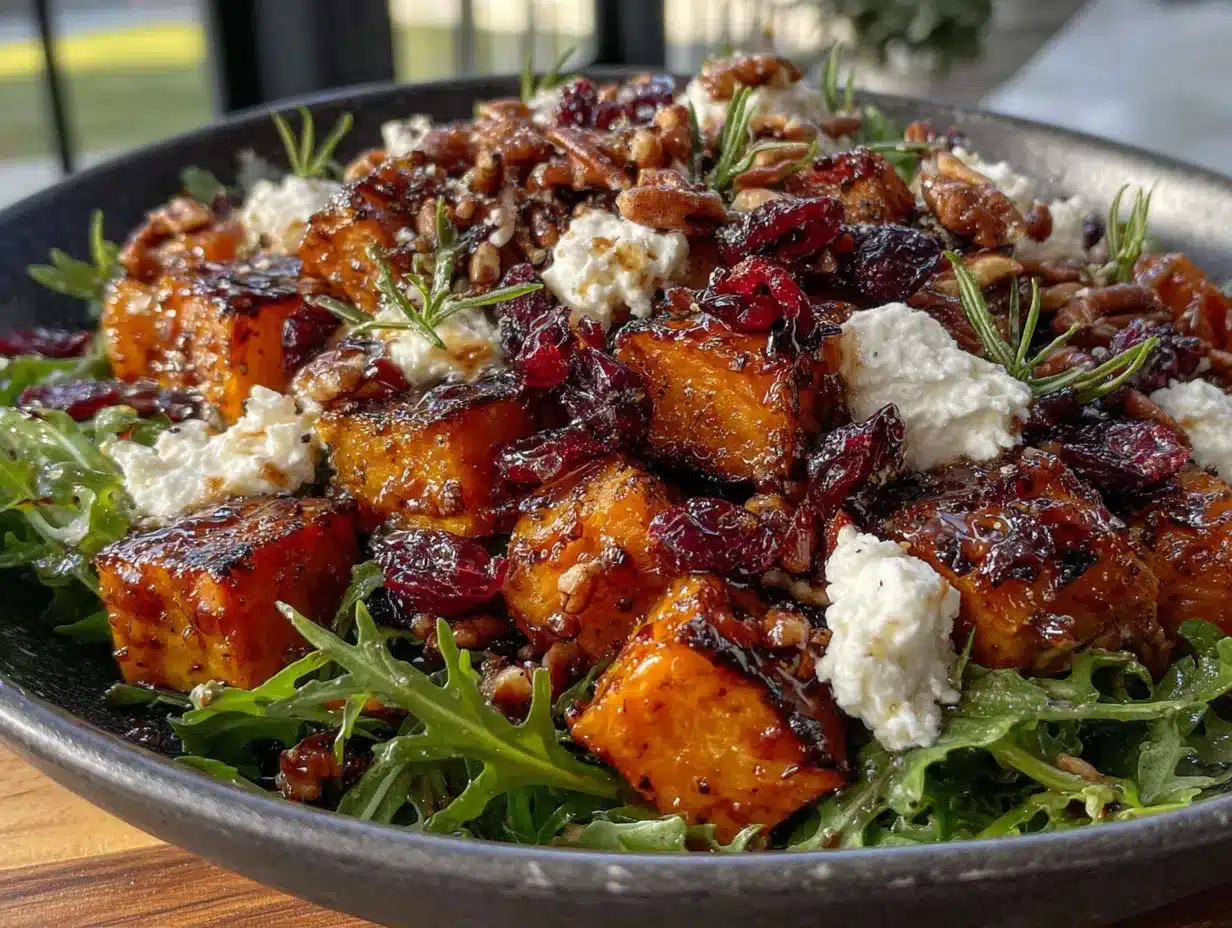
- 5 ounces mixed greens — I use a blend of baby spinach, arugula, and frisée. The peppery arugula balances the sweet squash beautifully. You can also use just baby kale or spring mix.
- 1/2 cup dried cranberries — Look for unsweetened or lightly sweetened ones. The tartness is key here. I prefer Craisins brand for consistent texture.
- 1/2 cup pecans, roughly chopped — Toast them lightly in a dry pan for 3-4 minutes before adding. It wakes up their flavor and makes them extra crunchy.
- 1/2 cup crumbled feta cheese — Use a block of feta and crumble it yourself. The pre-crumbled stuff has a drier texture and less flavor. I recommend the sheep’s milk feta from Trader Joe’s for a creamy, tangy bite.
- 1/2 cup pomegranate arils — These little jewels add a pop of color and a burst of tart-sweet juice. You can buy them pre-seeded or seed a fresh pomegranate yourself. If pomegranates aren’t in season, dried cherries are a good substitute.
For the Maple Balsamic Dressing
- 3 tablespoons olive oil — A mild, fruity olive oil works best here so it doesn’t overpower the other flavors.
- 2 tablespoons balsamic vinegar — Use a decent quality one. The syrupy, aged kind is too thick and sweet for this dressing.
- 1 tablespoon pure maple syrup — Same as above — real maple syrup only.
- 1 teaspoon Dijon mustard — This helps emulsify the dressing and adds a subtle tang. Grey Poupon is my standby.
- 1 small garlic clove, minced — Just a hint of garlic in the background. Don’t skip it — it rounds out the sweetness.
- Salt and pepper to taste
Equipment Needed
You don’t need a fancy kitchen to pull this off. Here’s what you’ll need:
- Baking sheet — A half-sheet pan is ideal. Line it with parchment paper for easy cleanup. If you don’t have parchment, a light coating of cooking spray works too.
- Chef’s knife and cutting board — A sharp knife makes cutting squash much safer and easier. I learned that the hard way after a close call with a dull blade.
- Vegetable peeler — A Y-peeler is my favorite for squash. It’s faster and gives you more control than a standard straight peeler.
- Large mixing bowl — For tossing the salad. Go big so you can mix without spilling.
- Small bowl or jar — For making the dressing. A mason jar works perfectly — just shake it up.
- Whisk or fork — For emulsifying the dressing if you’re not using a jar.
- Measuring spoons — For accuracy, especially with the maple syrup and vinegar.
If you don’t have a baking sheet, a rimmed baking dish works. Just watch the cooking time — it might take a few minutes longer since the heat circulates differently. And if you’re short on time, you can buy pre-chopped squash from the grocery store. It won’t be quite as pretty, but it’ll taste the same.
Preparation Method
Alright, let’s get cooking. This recipe comes together in about 45 minutes total, but most of that is hands-off roasting time. Here’s how to do it.
- Preheat your oven to 400°F (200°C). Line a baking sheet with parchment paper. This is the temperature sweet spot for caramelizing squash without burning it. Trust me on this — I’ve tried 375°F and the squash takes forever to get soft, and 425°F gives you burnt edges before the inside is done.
- Prep the squash. Peel the butternut squash with a vegetable peeler. Cut off the stem end and the bottom. Slice it in half lengthwise and scoop out the seeds with a spoon. Cut the flesh into 1-inch cubes. Try to make them uniform in size so they roast evenly. This is the most time-consuming part, but it goes faster once you get into a rhythm. I usually put on a podcast and zone out.
- Toss the squash with oil and maple syrup. In a large bowl, combine the cubed squash, olive oil, maple syrup, salt, pepper, and cinnamon if using. Toss until every piece is coated. Spread the squash in a single layer on the prepared baking sheet. Don’t overcrowd — if the pieces are touching too much, they’ll steam instead of roast. Use two sheets if you need to.
- Roast for 25-30 minutes, flipping halfway through. You want the squash to be tender when pierced with a fork and have golden-brown, caramelized edges. The smell at this point is absolutely ridiculous — sweet and warm and cozy. Let the squash cool on the baking sheet for about 10 minutes. It will continue to soften as it cools.
- While the squash roasts, make the dressing. In a small bowl or mason jar, combine the olive oil, balsamic vinegar, maple syrup, Dijon mustard, minced garlic, and a pinch of salt and pepper. Whisk vigorously or shake the jar until the dressing is emulsified and creamy. Taste it and adjust the seasoning. If it’s too tart, add a little more maple syrup. If it’s too sweet, add a splash more vinegar. Set it aside.
- Toast the pecans. In a dry skillet over medium heat, add the chopped pecans. Stir them constantly for 3-4 minutes until they’re fragrant and lightly browned. Watch them carefully — they go from toasted to burnt in about 30 seconds. Remove them from the pan immediately so they don’t keep cooking.
- Assemble the salad. In a large mixing bowl, add the mixed greens, dried cranberries, toasted pecans, crumbled feta, and pomegranate arils. Add the warm (not hot) roasted squash on top. Drizzle about half the dressing over the salad and toss gently. You want everything evenly coated but not soggy. Add more dressing as needed. I usually use about three-quarters of it and save the rest for later.
- Serve immediately or let it sit. This salad is actually great at room temperature, so you can make it ahead and let it hang out for a bit. Just wait to add the dressing until right before serving if you’re making it more than 30 minutes ahead.
A quick note: if you’re bringing this to a gathering, I recommend keeping the dressing separate and tossing the salad just before serving. The greens stay crisp, and the squash stays firm. Nobody wants a soggy salad, you know?
Cooking Tips & Techniques
I’ve made this salad enough times to learn a few things the hard way. Let me save you some trouble.
Don’t skip the squash prep. I know peeling and cubing a butternut squash feels like a workout, but it’s worth it. The texture of freshly roasted squash is way better than anything pre-cut. That said, if you’re in a rush, the pre-cut stuff from the store works. Just pat it dry with paper towels before tossing it with oil — the excess moisture from the packaging can make it steam instead of roast.
Roast the squash in a single layer. This is non-negotiable. If the pieces are crowded, they release steam and never get that beautiful caramelization. I learned this the hard way when I tried to cram everything onto one sheet pan. The squash came out pale and sad. Use two pans if you have to.
Warm squash on cold greens is a game-changer. The slight warmth from the squash slightly wilts the greens, making them more tender and flavorful. But don’t use hot squash — it’ll turn the greens into a wilted mess. Let it cool for at least 10 minutes after roasting.
Toast your nuts. This is one of those small steps that makes a huge difference. Raw pecans are fine, but toasted pecans are aromatic, crunchy, and nutty. It takes three minutes and transforms the salad. I’ve forgotten to do this before, and the salad just felt flat.
Season the dressing generously. The dressing needs enough salt and pepper to balance the sweetness of the maple and squash. Taste it before adding it to the salad. If it tastes flat, add a pinch of salt. If it’s too sharp, add a touch more maple. A well-balanced dressing is the difference between a good salad and a great one.
Make it ahead for better flavor. Here’s a secret: this salad actually tastes better after it’s sat for a bit. The flavors meld together, and the dressing soaks into the squash just enough. If you’re serving it at a party, you can assemble everything except the greens and dressing a few hours ahead. Add the greens and dressing right before serving.
Variations & Adaptations
One of the best things about this salad is how flexible it is. Here are some ways to switch it up based on what you have or who you’re feeding.
Dietary Adaptations:
– Vegan: Skip the feta and use a vegan feta or crumbled tofu that’s been marinated in lemon juice and salt. Or just leave it out entirely — the salad is still delicious without it.
– Gluten-Free: This recipe is naturally gluten-free, so no changes needed. Just double-check your balsamic vinegar and Dijon mustard labels to be safe.
– Nut-Free: Swap the pecans for roasted pumpkin seeds or sunflower seeds. They add the same crunch without the allergens.
Seasonal Swaps:
– Fall: Use roasted delicata squash instead of butternut. You don’t even have to peel it — the skin is edible and gets crispy in the oven. It’s a game-changer for prep time.
– Winter: Swap the pomegranate arils for dried cherries or chopped dried figs. Add some shaved Brussels sprouts for extra texture.
– Spring/Summer: Use grilled peaches or nectarines instead of roasted squash. Swap the cranberries for fresh blueberries. It’s a completely different salad but just as good.
Flavor Twists:
– Spicy: Add a pinch of red pepper flakes to the dressing or toss the roasted squash with a little cayenne before roasting. The heat pairs beautifully with the sweet maple.
– Herby: Toss in a handful of fresh parsley or mint leaves before serving. The freshness cuts through the richness.
– Extra Protein: Add grilled chicken, roasted chickpeas, or crumbled crispy bacon on top. It turns the salad into a full meal.
I tried a version last Thanksgiving with roasted sweet potatoes instead of squash and added some crispy fried onions on top. It was a hit. Honestly, this salad is hard to mess up — it’s more of a template than a strict recipe.
Serving & Storage Suggestions
This salad is designed for gatherings, so let’s talk about how to serve it like a pro.
Serving Temperature: This salad is best at room temperature. The warm squash and cool greens create a lovely contrast. If you’re serving it straight from the fridge, let it sit out for 15-20 minutes first. Cold dressing can taste dull, and cold squash loses some of its sweetness.
Presentation Tips: For a dinner party, I like to arrange the salad on a large platter instead of tossing it all in a bowl. Lay the greens down first, then scatter the squash, cranberries, pecans, feta, and pomegranate arils on top. Drizzle the dressing over everything. It looks gorgeous and intentional, like something from a magazine. For potlucks, a large glass bowl works perfectly — people can see all the layers.
What to Serve Alongside: This salad pairs beautifully with almost anything. It’s a great side for roasted chicken, grilled salmon, or a hearty pasta bake. For a fall-themed dinner, serve it alongside a warm butternut squash soup and some crusty bread. If you’re building a holiday menu, it goes perfectly with roasted turkey or a glazed ham.
Storage: If you have leftovers (which is rare, but possible), store the salad and dressing separately. The undressed salad will keep in the fridge for up to 2 days. The dressing keeps for up to a week in a sealed jar. When you’re ready to eat the leftovers, let the salad come to room temperature and add fresh dressing. The squash might be a little softer, but it’s still tasty.
Reheating: I don’t recommend reheating the whole salad — the greens will turn into a sad, wilted mess. But if you want to warm up the squash separately, pop it in a 350°F oven for 5-7 minutes. Then add it back to the cold greens. The contrast is actually really nice.
Flavor Development: Here’s something interesting — the flavors in this salad actually get better after a few hours. The dressing soaks into the squash just a little, and the cranberries plump up slightly. If you’re making this for a party, you can assemble everything (except the greens) a few hours ahead and just add the greens and dressing right before serving. It’s one less thing to stress about.
Nutritional Information & Benefits
Let’s be real — this salad is good for you, but it tastes like a treat. Here’s the breakdown per serving (about 1/6 of the recipe):
| Nutrient | Amount |
|---|---|
| Calories | 285 |
| Total Fat | 18g |
| Saturated Fat | 4g |
| Cholesterol | 15mg |
| Sodium | 320mg |
| Total Carbohydrates | 30g |
| Dietary Fiber | 6g |
| Sugars | 16g |
| Protein | 6g |
| Vitamin A | 180% DV |
| Vitamin C | 35% DV |
| Calcium | 15% DV |
| Iron | 10% DV |
Health Benefits: Butternut squash is packed with vitamin A (hello, healthy eyes and glowing skin) and fiber, which keeps you full and happy. Pomegranate arils are loaded with antioxidants — they’re basically little ruby-colored superfoods. Pecans provide healthy fats that are good for your heart. And the greens? They’re a solid dose of vitamins K, C, and folate. Even the maple syrup, in small amounts, contains antioxidants and minerals like zinc and manganese. So yes, you can feel good about eating this salad. It’s basically a multivitamin that tastes like dessert.
Dietary Considerations: This recipe is naturally gluten-free and can easily be made vegan by omitting the feta or using a plant-based alternative. It’s also relatively low in added sugar — most of the sweetness comes from the squash and pomegranate. If you’re watching your sodium, use a low-sodium feta or reduce the salt in the dressing.
Conclusion
Look, I’m not going to tell you this salad will change your life. But I will tell you that it’s the recipe I’ve made more times than I can count, and I’m still not tired of it. It’s the one I bring when I need to impress, the one I make when I want to feel like I’ve got my act together, and the one I turn to when I just want something that tastes like fall in a bowl.
The best part? It’s forgiving. You can swap ingredients, adjust the dressing, add or subtract things, and it still works. It’s a recipe that grows with you — the more you make it, the more you’ll find your own little tweaks and tricks.
So go ahead. Grab that squash, that bag of cranberries, that lonely pomegranate sitting in your fruit bowl. Throw it all together. And when someone asks you for the recipe — and they will — just smile and tell them it’s your little secret.
I’d love to hear how it turns out for you! Drop a comment below and tell me what variations you tried, or tag me in your photos. Happy cooking, friends!
Frequently Asked Questions
Can I make this salad ahead of time?
Yes! You can roast the squash and make the dressing up to 2 days ahead. Store them separately in the fridge. When you’re ready to serve, bring the squash to room temperature, assemble the greens and toppings, and toss with the dressing. Just don’t dress the salad more than 30 minutes before serving, or the greens will get soggy.
What can I use instead of butternut squash?
Any winter squash works here. Delicata squash is my favorite substitute because you don’t have to peel it. Acorn squash, kabocha, or even sweet potatoes are all great options. Just adjust the roasting time based on the size of your cubes — smaller pieces cook faster.
How do I keep the pecans from getting soggy in the salad?
Toast them fresh and add them right before serving. If you’re making the salad ahead, store the pecans separately and sprinkle them on top at the last minute. Nobody likes a sad, soft nut in their salad.
Is this salad suitable for meal prep?
Sort of. You can prep all the components in advance — roast the squash, make the dressing, toast the pecans, and wash the greens. But don’t assemble the whole salad until you’re ready to eat. Store everything in separate containers in the fridge, and you’ll have grab-and-go salad for 2-3 days. Just add the dressing and pecans right before eating.
Can I use a different cheese instead of feta?
Absolutely. Goat cheese is a fantastic substitute — it’s creamy and tangy in a similar way. Blue cheese adds a bold, funky note that pairs surprisingly well with the sweet squash. Even shaved Parmesan works in a pinch. Just avoid anything too mild, like mozzarella, which will get lost in the mix.
Pin This Recipe!
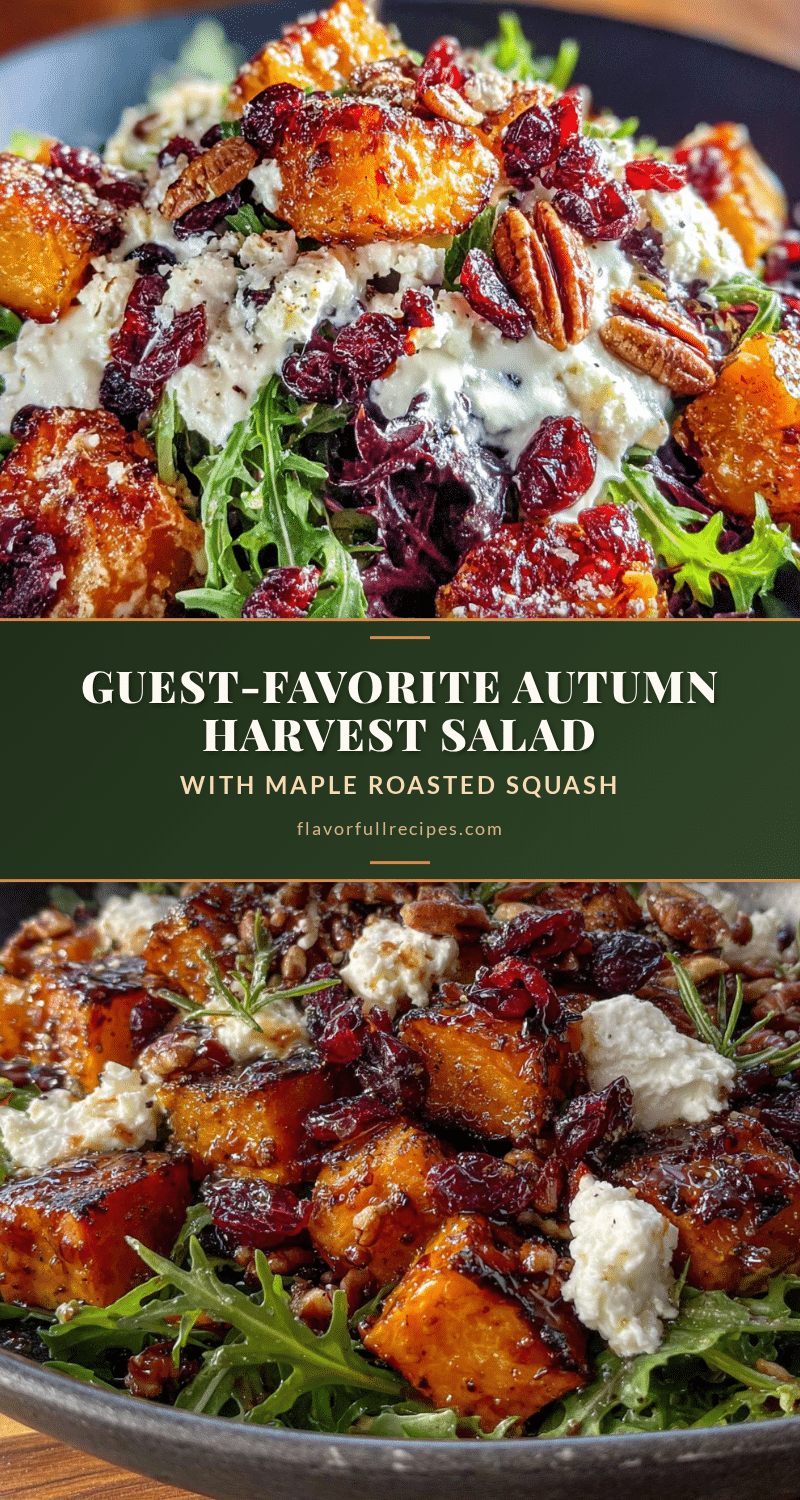
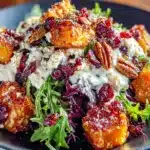
Best Autumn Harvest Salad with Maple Roasted Squash
- Total Time: 45 minutes
- Yield: 6 servings 1x
Description
A stunning autumn salad featuring maple-roasted butternut squash, mixed greens, dried cranberries, toasted pecans, crumbled feta, and pomegranate arils, all tossed in a maple balsamic dressing. Perfect for potlucks, holiday gatherings, or a cozy weeknight dinner.
Ingredients
- 1 medium butternut squash (about 2 pounds), peeled, seeded, and cut into 1-inch cubes
- 2 tablespoons olive oil
- 2 tablespoons pure maple syrup
- 1/2 teaspoon salt
- 1/4 teaspoon black pepper
- 1/4 teaspoon cinnamon (optional)
- 5 ounces mixed greens (baby spinach, arugula, and frisée blend)
- 1/2 cup dried cranberries
- 1/2 cup pecans, roughly chopped
- 1/2 cup crumbled feta cheese
- 1/2 cup pomegranate arils
- 3 tablespoons olive oil (for dressing)
- 2 tablespoons balsamic vinegar
- 1 tablespoon pure maple syrup (for dressing)
- 1 teaspoon Dijon mustard
- 1 small garlic clove, minced
- Salt and pepper to taste
Instructions
- Preheat your oven to 400°F (200°C). Line a baking sheet with parchment paper.
- Prep the squash: Peel the butternut squash with a vegetable peeler. Cut off the stem end and the bottom. Slice it in half lengthwise and scoop out the seeds with a spoon. Cut the flesh into 1-inch cubes.
- Toss the squash with oil and maple syrup: In a large bowl, combine the cubed squash, olive oil, maple syrup, salt, pepper, and cinnamon if using. Toss until every piece is coated. Spread the squash in a single layer on the prepared baking sheet.
- Roast for 25-30 minutes, flipping halfway through, until the squash is tender and has golden-brown, caramelized edges. Let cool on the baking sheet for about 10 minutes.
- While the squash roasts, make the dressing: In a small bowl or mason jar, combine the olive oil, balsamic vinegar, maple syrup, Dijon mustard, minced garlic, and a pinch of salt and pepper. Whisk vigorously or shake the jar until emulsified. Adjust seasoning to taste.
- Toast the pecans: In a dry skillet over medium heat, add the chopped pecans. Stir constantly for 3-4 minutes until fragrant and lightly browned. Remove from pan immediately.
- Assemble the salad: In a large mixing bowl, add the mixed greens, dried cranberries, toasted pecans, crumbled feta, and pomegranate arils. Add the warm roasted squash on top. Drizzle about half the dressing over the salad and toss gently. Add more dressing as needed.
- Serve immediately or let sit at room temperature. If making ahead, keep dressing separate and add just before serving.
Notes
For best results, keep dressing separate until serving to prevent soggy greens. The salad is great at room temperature, making it ideal for gatherings. To make vegan, omit feta or use vegan feta. For nut-free, substitute pecans with roasted pumpkin seeds or sunflower seeds.
- Prep Time: 15 minutes
- Cook Time: 30 minutes
- Category: Salad
- Cuisine: American
Nutrition
- Serving Size: 1/6 of recipe
- Calories: 285
- Sugar: 16
- Sodium: 320
- Fat: 18
- Saturated Fat: 4
- Carbohydrates: 30
- Fiber: 6
- Protein: 6
Keywords: autumn harvest salad, maple roasted squash, butternut squash salad, fall salad, potluck salad, holiday salad, maple balsamic dressing