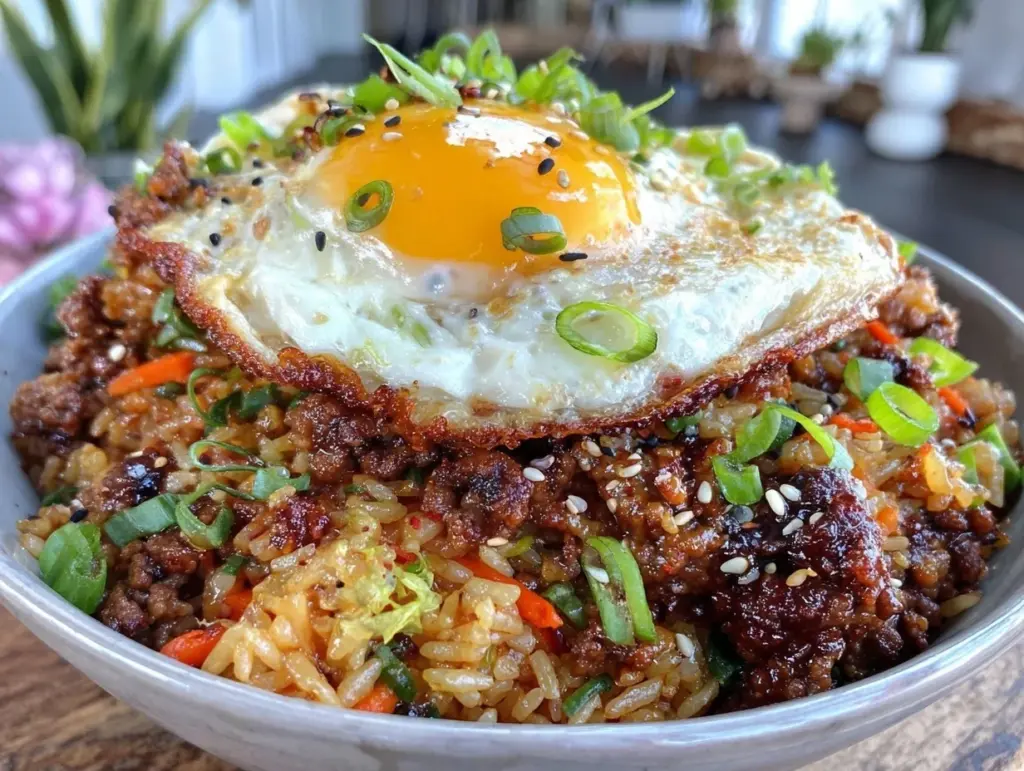
“You sure this is going to be good?” my roommate muttered skeptically as I dumped leftover beef and rice into a hot skillet, tossing in a splash of gochujang and soy sauce. Truth be told, I wasn’t exactly aiming for a masterpiece that night. It was just one of those evenings where the fridge was half-empty, and I needed dinner fast. Somehow, this quick Korean beef fried rice bowl with fried egg turned out to be a total game-changer. The sizzle of the meat hitting the pan, the sweet-spicy aroma of the sauce melding with the rice, and that glorious runny egg on top—it all came together in under 20 minutes.
Honestly, I made it on a whim, thinking it’d be a one-off meal. But the way the flavors hit that perfect note kept me coming back. Each bite reminded me how sometimes the easiest dishes are the ones that stick with you the longest. I still catch myself craving this bowl on busy nights or when I want something comforting but not complicated.
The fried egg topping? Pure magic. That rich yolk weaving through the savory rice and beef is what seals the deal every single time. Plus, it’s a quick trick I learned from making other skillet meals like my easy crockpot Korean-inspired beef bulgogi bowls, where a simple egg adds that cozy finish. If you’re juggling a hectic schedule but want a meal that feels like a little treat, this recipe quietly promises exactly that.
Why You’ll Love This Quick Korean Beef Fried Rice Bowl Recipe with Easy Fried Egg Topping
Having tested this recipe countless times (sometimes twice in one week, no joke), I’ve learned why it’s become a staple in my kitchen:
- Quick & Easy: From chopping to plate in under 25 minutes—ideal for nights when you can’t waste time but still want something satisfying.
- Simple Ingredients: No need for exotic items; most of what you need is probably already in your pantry or fridge. Plus, you can swap ingredients with ease.
- Perfect for Weeknights and Casual Dinners: Whether you’re cooking solo or feeding a small crew, it’s just the right amount of fuss-free flavor.
- Crowd-Pleaser: The familiar savory-sweet combo with that runny fried egg on top is a hit for both kids and adults alike.
- Unbelievably Delicious: The texture contrast between the tender beef, fluffy rice, and silky egg yolk is downright addictive.
This isn’t just another beef fried rice bowl. What sets it apart is the balance of Korean flavors—the subtle heat from gochujang, the umami from soy sauce, and the slight caramelization from frying the beef just right. Plus, the fried egg topping isn’t an afterthought; it’s the crowning glory that brings everything together in a way that feels comforting and a bit indulgent.
I find myself reaching for this recipe when I want a meal that hits all the right notes without the stress. It’s like comfort food but with a little Korean kick, perfect for impressing guests or keeping things cozy at home. If you’ve enjoyed recipes like my cabbage roll soup with ground beef and rice, you’ll appreciate how this fried rice bowl brings similar warmth with a quick skillet twist.
What Ingredients You Will Need
This quick Korean beef fried rice bowl calls for simple, everyday ingredients that come together to create bold, satisfying flavors without any fuss. Most are pantry staples or easy to find at any grocery store.
- Ground beef: About 1 pound (450 g), preferably lean to reduce excess grease but still juicy enough for flavor.
- Cooked rice: 3 cups (about 600 g), day-old rice works best for that perfect fried rice texture.
- Gochujang (Korean chili paste): 2 tablespoons, adds that signature sweet-spicy kick. If you don’t have it, a mix of sriracha and a touch of honey works in a pinch.
- Soy sauce: 2 tablespoons, I like low-sodium to keep the salt balanced.
- Sesame oil: 1 teaspoon, for that nutty aroma that screams Korean cooking.
- Garlic: 3 cloves, minced, because garlic is king in Korean dishes.
- Green onions: 2 stalks, sliced thinly for freshness and crunch.
- Vegetable oil or neutral oil: 2 tablespoons, for cooking the beef and rice.
- Eggs: 4 large, room temperature, for frying on top of each bowl.
- Optional toppings: Sesame seeds for garnish, kimchi on the side if you like a tangy punch.
I usually pick ground beef from trusted brands like Organic Valley or local butchers when possible for quality. The gochujang brand matters too; Chung Jung One is a favorite for consistent flavor and heat. If it’s summer, swapping green onions for fresh herbs like cilantro or basil gives a nice twist.
For those avoiding gluten, tamari can replace soy sauce, and coconut aminos work as a soy-free alternative. Using brown rice instead of white rice is easy for a whole-grain option without changing the recipe much.
Equipment Needed
- Large skillet or wok: A non-stick or cast iron skillet works great for even heat and easy flipping of ingredients.
- Spatula or wooden spoon: For stirring and breaking up the beef.
- Small bowl: To whisk eggs before frying or just crack them directly into the pan.
- Medium mixing bowl: Useful if you want to mix the sauce separately before adding it to the beef.
- Knife and cutting board: For chopping garlic and green onions.
If you don’t have a wok, a deep frying pan will do just fine. I’ve used budget-friendly non-stick pans and even my trusty cast iron for a bit of extra sear on the beef. Just make sure your pan is hot enough — that’s key for getting those nice browned bits that make fried rice sing. Cleaning tips? For cast iron, a quick wipe with paper towels after it cools keeps the seasoning intact, while non-stick pans usually just need a gentle wash with soap.
Preparation Method
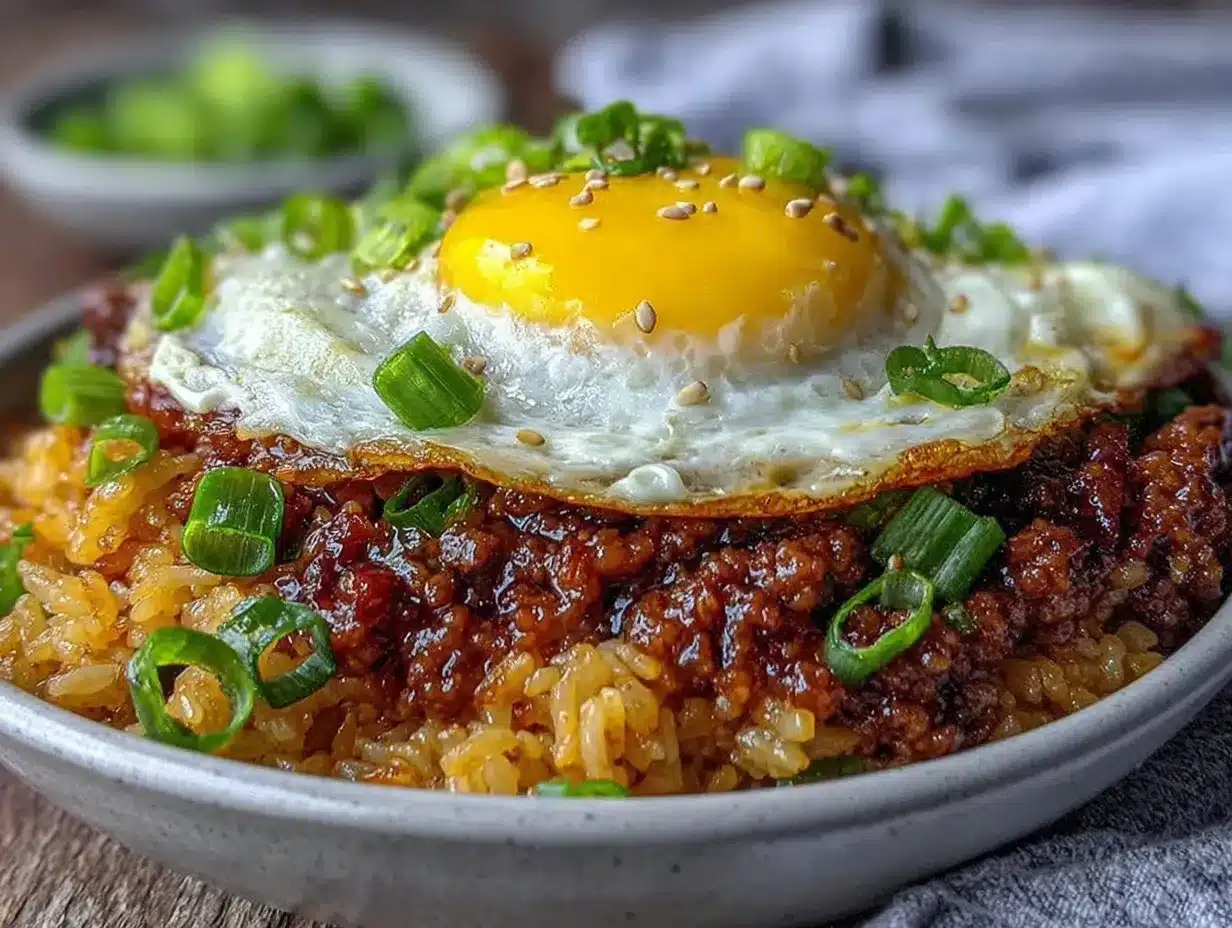
- Prep your ingredients: Mince the garlic and slice the green onions thinly. Crack eggs into separate bowls if you want to keep things tidy. Have your cooked rice ready; if freshly made, spread it out on a tray to cool slightly and dry out a bit (this helps avoid mushiness).
- Cook the beef: Heat 1 tablespoon of vegetable oil in a large skillet over medium-high heat. Add the ground beef, breaking it apart with your spatula. Cook about 5–7 minutes until browned and cooked through. Drain any excess fat if needed.
- Add garlic and sauce: Stir in the minced garlic, cook for 30 seconds until fragrant. Then add the gochujang and soy sauce, stirring until the beef is coated evenly. Cook for another 1–2 minutes to let the flavors meld.
- Fry the rice: Push the beef to one side of the skillet. Add remaining tablespoon of oil, then the rice. Stir-fry the rice, mixing it with beef constantly, about 4–5 minutes. You’ll notice the rice starts to get slightly crispy edges—that’s what you want.
- Finish with sesame oil and green onions: Drizzle the sesame oil over the rice and beef. Toss in the sliced green onions and stir for 30 seconds to combine. Taste and adjust seasoning if you’d like a touch more soy or gochujang.
- Fry the eggs: In a separate smaller skillet, heat a teaspoon of oil over medium heat. Crack eggs carefully and fry sunny-side up. Cook until whites are set but yolks are still runny, about 2–3 minutes. Season lightly with salt.
- Assemble the bowls: Scoop the beef fried rice into bowls and top each with a fried egg. Sprinkle sesame seeds if desired and serve immediately.
Pro tip: If your rice feels clumpy, break it apart gently with your fingers before frying. Also, don’t overcrowd your pan—if you have a lot of rice, fry in batches for better texture. The gochujang’s sweetness can vary by brand, so start with less and add more to taste.
Cooking Tips & Techniques
One thing I’ve learned is that the secret to a great fried rice bowl is in the heat and timing. Cooking over medium-high heat lets the beef get a nice sear without steaming the rice. If your skillet isn’t hot enough, your rice will turn soggy instead of crispy and golden.
Don’t skip resting the rice if it’s freshly cooked—day-old rice or rice cooled in the fridge works best because it’s drier and fries up nicely. When frying the egg, patience is key. Let the whites fully set before flipping or serving; otherwise, you risk a messy bowl.
Another tip: Use a spatula to gently press the rice against the pan occasionally. This little trick helps create those tasty browned bits that make fried rice so delightful.
Sometimes I’ve accidentally added too much soy sauce or gochujang, making the dish overly salty or spicy. It’s easy to fix by stirring in a splash of water or adding a bit more rice to balance it out.
Multitasking helps here—while the beef cooks, prep your garlic and green onions so you can add them right away. That keeps the process flowing and dinner on the table faster.
Variations & Adaptations
This quick Korean beef fried rice bowl is super flexible. Here are some ways to make it your own:
- Vegetarian version: Swap ground beef with crumbled firm tofu or cooked mushrooms. Add a bit of soy sauce and smoked paprika for depth.
- Spicy kick: Add sliced fresh chili peppers or a drizzle of extra gochujang for more heat. Alternatively, mix in some kimchi either during cooking or as a topping.
- Seasonal veggies: Stir in shredded carrots, peas, or chopped spinach while frying the rice to boost nutrition and color.
- Different protein: Use thinly sliced chicken or pork instead of beef. Adjust cooking times accordingly to avoid dryness.
- Low-carb option: Replace rice with cauliflower rice for a lighter bowl.
Personally, I once tried mixing in leftover vegetable beef soup broth as a splash during frying, which gave a subtle richness without watering down the flavor. It’s a neat way to use up extras and add complexity.
Serving & Storage Suggestions
Serve this Korean beef fried rice bowl piping hot with the fried egg atop so the yolk can mix in as you eat. A sprinkle of toasted sesame seeds and a few extra green onions on top adds a nice touch.
It pairs beautifully with simple sides like pickled cucumbers or a crisp Asian slaw to cut through the richness. If you want something heartier, steamed or sautéed greens like bok choy make a great companion.
Leftovers keep well in an airtight container in the fridge for up to 3 days. When reheating, add a splash of water or oil to the pan and warm over medium heat, stirring frequently to prevent sticking. The fried egg is best freshly made, but you can store it separately and reheat gently in a pan or microwave.
Flavors actually deepen after resting, so sometimes the bowl tastes even better the next day. Just be sure to reheat thoroughly to enjoy that fresh-from-the-skillet vibe.
Nutritional Information & Benefits
This quick Korean beef fried rice bowl offers a balanced mix of protein, carbs, and fats, making it a filling and satisfying meal. A rough estimate per serving (serves 4):
| Calories | 450-500 kcal |
|---|---|
| Protein | 25-30 g |
| Carbohydrates | 45-50 g |
| Fat | 15-18 g |
| Fiber | 2-3 g |
The beef provides iron and zinc, essential for energy and immune function, while the eggs add vitamin D and healthy fats. Gochujang contains fermented chili paste, which has probiotics that can support digestion. Swapping in brown rice boosts fiber, making it a bit friendlier for blood sugar control.
Note: Contains soy and eggs, so keep that in mind for allergies. Gluten-free options are easy by using tamari and checking the gochujang label.
Conclusion
This quick Korean beef fried rice bowl with fried egg topping is one of those recipes that quietly wins you over with its simplicity and flavor. It’s flexible enough to suit different tastes, yet reliably comforting and satisfying. I love how it comes together in a snap yet feels like a thoughtful, complete meal.
Whether you’re a busy weeknight warrior or just craving that perfect savory-sweet bowl, this recipe delivers without the fuss. Try tweaking the spice level or adding your favorite veggies to make it truly yours. And if you give it a go, I’d love to hear how you made it your own!
There’s a reason this dish keeps popping up on my table—and my mind—long after the last bite.
Frequently Asked Questions
Can I use fresh rice instead of day-old rice for this recipe?
Yes, but spread it out to cool and dry slightly before frying to avoid clumping. Day-old rice is ideal because it’s drier and fries better.
What can I substitute for gochujang if I don’t have it?
A mix of sriracha and a touch of honey or brown sugar works okay in a pinch, though it won’t have the exact depth. You can also find milder chili pastes depending on your taste.
Is it possible to make this recipe gluten-free?
Absolutely. Use tamari or a gluten-free soy sauce alternative and check your gochujang label, as some brands contain wheat.
Can I prepare this recipe ahead of time?
The beef and rice can be cooked ahead and stored separately. Fry the eggs fresh before serving for best texture and flavor.
What’s a good side dish to serve with this Korean beef fried rice bowl?
Simple sides like kimchi, pickled cucumbers, or steamed greens such as bok choy complement the dish well and add freshness.
Pin This Recipe!
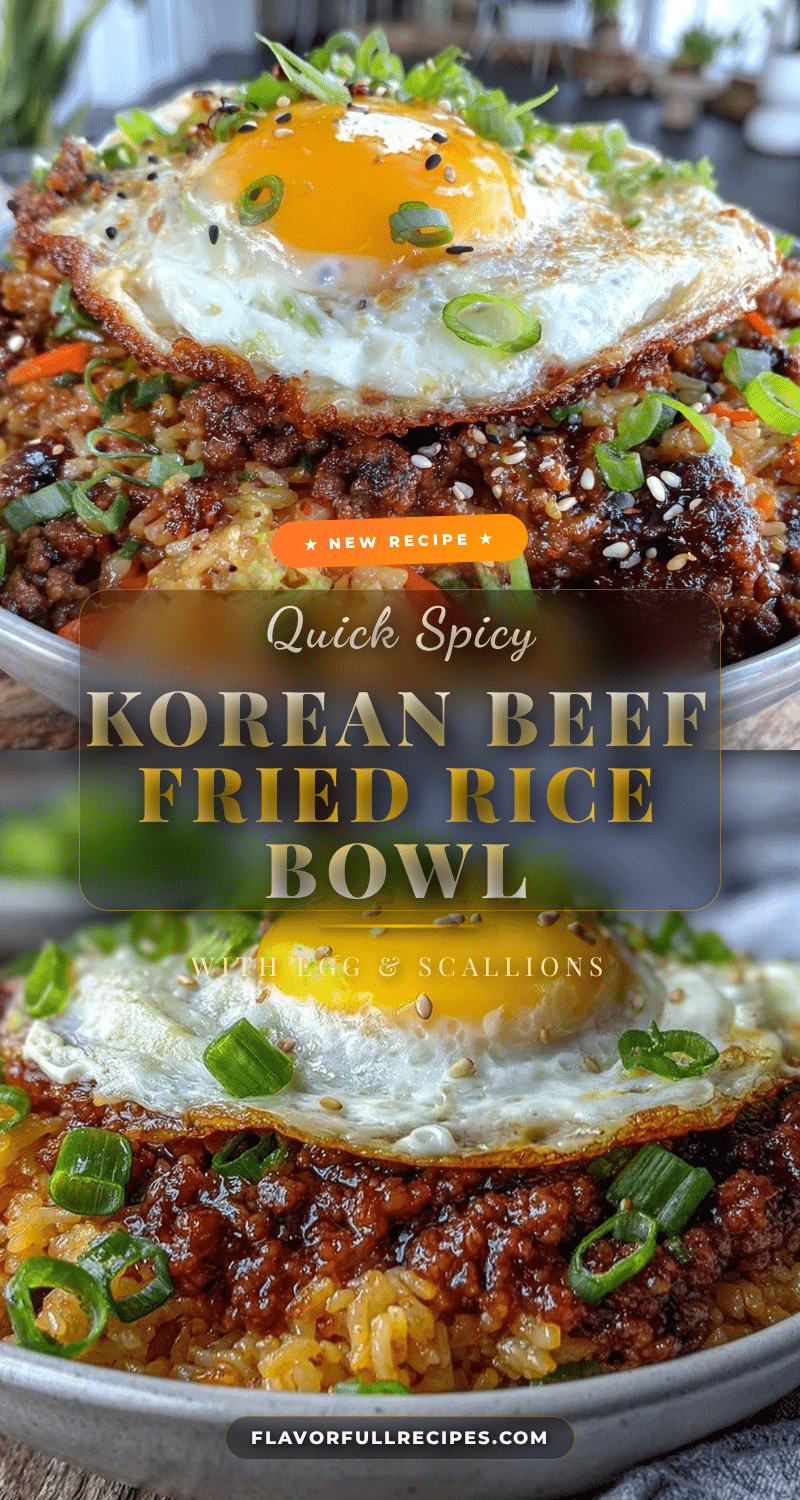
Quick Korean Beef Fried Rice Bowl Recipe with Easy Fried Egg Topping
- Total Time: 25 minutes
- Yield: 4 servings 1x
Description
A quick and easy Korean beef fried rice bowl topped with a runny fried egg, combining savory, sweet, and spicy flavors in under 25 minutes. Perfect for weeknights and casual dinners.
Ingredients
- 1 pound lean ground beef
- 3 cups cooked rice (day-old rice preferred)
- 2 tablespoons gochujang (Korean chili paste) or substitute with sriracha and honey
- 2 tablespoons low-sodium soy sauce (or tamari for gluten-free)
- 1 teaspoon sesame oil
- 3 cloves garlic, minced
- 2 stalks green onions, sliced thinly
- 2 tablespoons vegetable or neutral oil
- 4 large eggs, room temperature
- Optional toppings: sesame seeds for garnish, kimchi on the side
Instructions
- Prep your ingredients: mince the garlic and slice the green onions thinly. Crack eggs into separate bowls if desired. Have cooked rice ready; if freshly made, spread it out to cool and dry slightly.
- Heat 1 tablespoon vegetable oil in a large skillet over medium-high heat. Add ground beef, breaking it apart with a spatula. Cook 5–7 minutes until browned and cooked through. Drain excess fat if needed.
- Stir in minced garlic and cook for 30 seconds until fragrant. Add gochujang and soy sauce, stirring until beef is evenly coated. Cook 1–2 minutes to meld flavors.
- Push beef to one side of skillet. Add remaining 1 tablespoon oil, then add rice. Stir-fry rice with beef constantly for 4–5 minutes until rice develops slightly crispy edges.
- Drizzle sesame oil over rice and beef. Toss in sliced green onions and stir for 30 seconds. Adjust seasoning with more soy sauce or gochujang if desired.
- In a separate small skillet, heat 1 teaspoon oil over medium heat. Crack eggs carefully and fry sunny-side up until whites are set but yolks remain runny, about 2–3 minutes. Lightly season with salt.
- Assemble bowls by scooping beef fried rice and topping each with a fried egg. Sprinkle sesame seeds if desired and serve immediately.
Notes
Use day-old rice for best texture; if using fresh rice, cool and dry it before frying. Adjust gochujang amount to taste as sweetness and heat vary by brand. Fry eggs sunny-side up with runny yolks for best flavor. For gluten-free, use tamari and check gochujang label. Leftovers keep well refrigerated for up to 3 days; reheat with a splash of water or oil.
- Prep Time: 10 minutes
- Cook Time: 15 minutes
- Category: Main Course
- Cuisine: Korean
Nutrition
- Serving Size: 1 bowl with 1 fried
- Calories: 475
- Sugar: 3
- Sodium: 700
- Fat: 16.5
- Saturated Fat: 6
- Carbohydrates: 47.5
- Fiber: 2.5
- Protein: 27.5
Keywords: Korean beef fried rice, quick dinner, fried egg topping, gochujang recipe, easy weeknight meal, Korean comfort food