I figured a charcuterie board was mostly about cured meats, hard cheeses, and pickled things—a savory project I’d get to after the main course was handled. It took about one blistering afternoon in July, with nectarines threatening to bruise in the fruit bowl and a kitchen too hot for the oven, for that assumption to fall apart completely. I was staring at a pile of stone fruit—peaches, plums, apricots, a few cherries—and the idea of turning on the stove felt like a personal insult. So I grabbed a wooden board instead.
That first Fresh Summer Stone Fruit Charcuterie Board was a happy accident. It wasn’t planned for a party or a blog post. It was just lunch for myself, arranged on a slab of acacia wood because the fruit looked too pretty to chop into a salad. I added some prosciutto from the fridge, a wedge of brie that was getting soft, and a handful of almonds I’d forgotten about. The contrast—sweet, tart, salty, creamy—was ridiculous. I sat there eating it with my fingers, thinking, why don’t I do this more often?
This board has since become my go-to for summer gatherings. It works for lazy afternoons, for dinner with a glass of rosé, for when friends show up unexpectedly and you want something that looks like you tried but actually took ten minutes. The key is letting the fruit do the heavy lifting. A ripe peach at its peak needs nothing more than a slice and a spot on the board. It’s honest food, arranged without fuss. And honestly, it might be the best way to eat summer fruit—right there, in a single, shareable meal.
Why You’ll Love This Summer Stone Fruit Charcuterie Board
I’ve made this board more times than I can count, and it never fails to get that little pause—the one where someone takes a bite and just stops for a second. That’s the power of ripe stone fruit paired with the right savory elements. Here’s why this recipe works:
- No Cooking Required: This is a no-recipe recipe. You don’t turn on the oven, the stove, or even a microwave. It’s just assembly, which is perfect for hot days when you want to keep the kitchen cool.
- Simple, Flexible Ingredients: You don’t need a specialty grocery store. Most supermarkets carry stone fruit in summer, and the rest is just good cheese, cured meat, and pantry staples like nuts and honey.
- Perfect for Entertaining: Whether it’s a casual get-together, a picnic, or a dinner party starter, this board scales up or down effortlessly. It’s impressive without being stressful.
- Crowd-Pleaser: I’ve served this to kids who usually avoid cheese and adults who are “not into fruit.” Everyone finds something to love. The combination of sweet peaches and salty prosciutto is almost universally adored.
- Unbelievably Delicious: The texture and flavor combo is next-level comfort food. You get the juicy burst of a ripe plum, the creaminess of burrata, the crunch of toasted almonds, and the saltiness of cured meat—all in one bite. It’s balanced and satisfying.
What makes this board different from the rest is the focus on the fruit itself. Instead of just adding grapes or dried figs as an afterthought, the stone fruit is the star. I pick varieties that are at peak ripeness and let their natural sweetness contrast with savory companions. It’s not just another cheese board—it’s your best summer board.
This recipe is the kind that makes you close your eyes after the first bite. It’s comfort food reimagined for the season—lighter, fresher, but with the same soul-soothing satisfaction. Perfect for impressing guests without stress, or turning a simple afternoon snack into something memorable.
What Ingredients You Will Need
This recipe uses simple, seasonal ingredients to deliver bold flavor and satisfying texture without the fuss. You’ll want to choose stone fruit that is ripe but still firm enough to slice and arrange. Here’s what you’ll need:
Stone Fruit (The Star of the Board)
- Peaches – 2 large, ripe but firm, sliced into wedges (yellow or white peaches both work; yellow are slightly more tart)
- Plums – 2 large, any variety (black, red, or Italian prune plums), sliced into wedges
- Nectarines – 2 large, sliced into wedges (leave the skin on for color and texture)
- Apricots – 4-5, halved or quartered (they add a lovely tartness and smaller bite)
- Cherries – 1 cup, stem-on (sweet Bing or Rainier cherries add a pop of color and sweetness)
Cheeses (The Creamy Counterpoint)
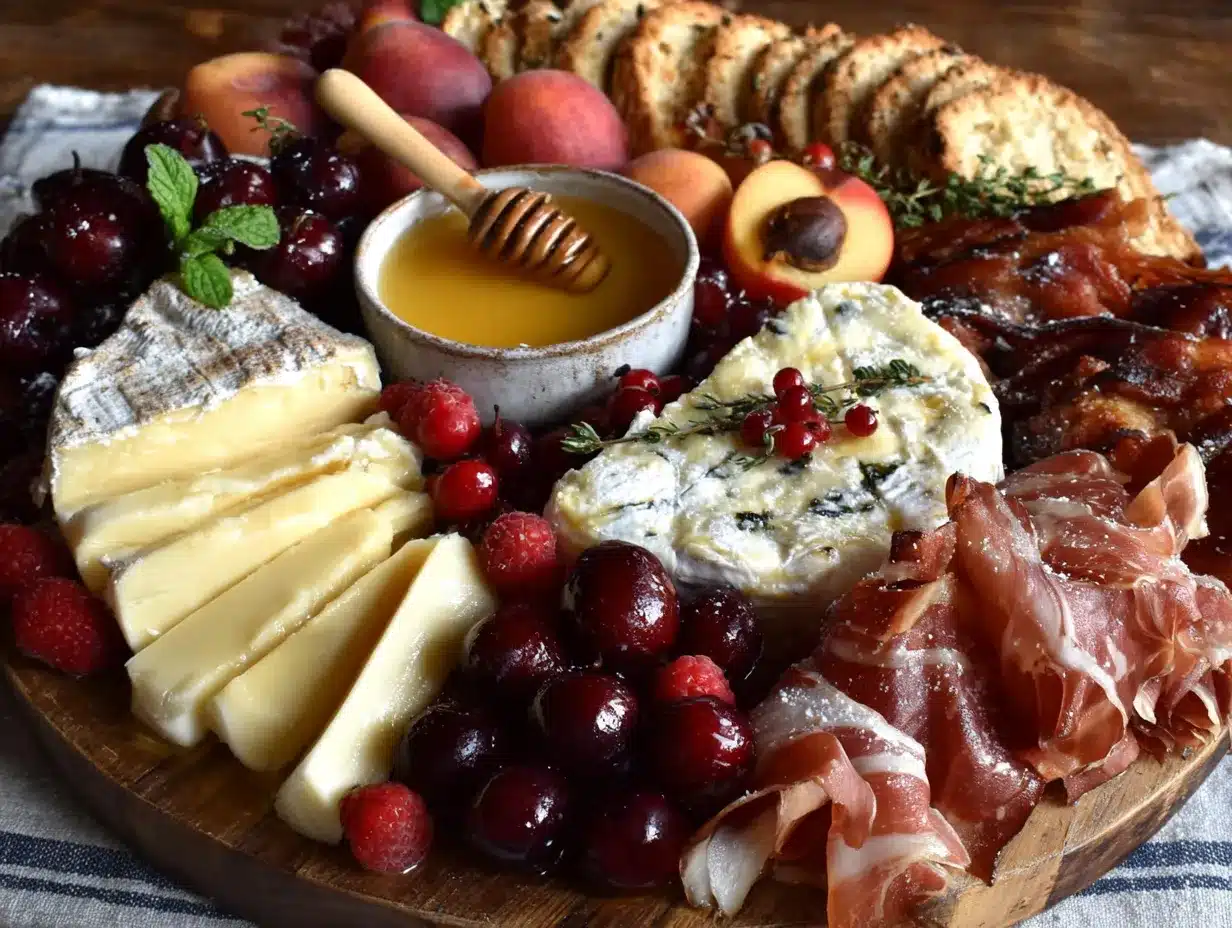
- Burrata – 8 ounces (1 ball), at room temperature (its creamy center pairs beautifully with fruit)
- Aged Gouda – 4 ounces, sliced into thin wedges (adds a nutty, slightly crystalline texture)
- Goat Cheese Log – 4 ounces, sliced into rounds or crumbled (tangy and creamy, a great contrast to sweet fruit)
Cured Meats (The Salty Bite)
- Prosciutto – 4 ounces, thinly sliced (I recommend Prosciutto di Parma for its delicate sweetness)
- Soppressata – 4 ounces, sliced into thin rounds (spicy, robust, and holds up to the fruit)
Crunch & Sweetness (For Texture and Contrast)
- Toasted Almonds – ½ cup (I prefer Marcona almonds for their buttery texture, but regular toasted almonds work great)
- Honey – 2-3 tablespoons, for drizzling (try a local wildflower honey for floral notes)
- Fresh Basil or Mint Leaves – A small handful, for garnish (adds a fresh, aromatic finish)
Accompaniments (Optional but Recommended)
- Baguette or Crostini – 1 small baguette, sliced and lightly toasted (or use gluten-free crackers)
- Fig Jam or Stone Fruit Preserves – 3 tablespoons, for spreading (adds another layer of fruitiness)
- Olives – ½ cup Castelvetrano or Kalamata olives (briny contrast to the sweet fruit)
Substitution Guidance: If stone fruit isn’t in season, swap in fresh figs, sliced apples, or pears. For a dairy-free board, use vegan cheese alternatives and skip the burrata. The almonds can be swapped for walnuts or pistachios. If you don’t have prosciutto, use serrano ham or even a good quality salami.
Equipment Needed
- Large Wooden Board or Slate Platter – At least 12×16 inches, to give everything room. I love my acacia wood board from World Market, but a large cutting board works perfectly.
- Sharp Chef’s Knife – For slicing fruit and cheese cleanly. A dull knife will bruise the fruit.
- Small Bowls or Ramekins – For honey, jam, and olives. Keeps the board tidy and prevents sticky spills.
- Cheese Knives or Spreaders – At least two, so guests don’t cross-contaminate flavors.
- Cutting Board – For prepping fruit and meats separately.
- Serving Tongs or Small Forks – For the cured meats and olives.
Budget-friendly option: A large baking sheet lined with parchment paper works in a pinch. It won’t look as rustic, but it’ll taste just as good. If you don’t have small bowls, use tea cups or even small glass jars for the honey and jam.
Maintenance tip: Wooden boards should be hand-washed and oiled regularly with food-grade mineral oil to prevent cracking. Avoid soaking them, especially after cutting fruit, as the acidity can damage the wood over time.
Preparation Method
This is where the magic happens. The goal is to create a board that looks abundant and effortless, with every element easily reachable. Follow these steps for a beautiful arrangement:
- Prep Your Fruit (10 minutes): Wash all stone fruit and cherries gently under cool water. Pat dry with a clean kitchen towel. Slice peaches, plums, and nectarines into even wedges—about 8 wedges per fruit. Leave the skin on for color and texture. Halve the apricots. Keep cherries whole with stems on for a pretty presentation. Tip: If your fruit is very ripe, slice it just before serving to prevent browning.
- Prep the Cheese (5 minutes): Take burrata out of the fridge 20 minutes before serving to bring it to room temperature—it’s creamier that way. Slice the aged Gouda into thin wedges, about ¼ inch thick. Slice the goat cheese log into rounds, about ½ inch thick. Warning: Burrata is delicate. Handle it gently so it doesn’t break open before you’re ready.
- Prep the Meats (3 minutes): Separate the prosciutto slices and loosely fold each slice into a ribbon or a small rose. For soppressata, simply lay the slices flat or fold them in half. Tip: Let the meats sit out for 10 minutes so they aren’t cold when served.
- Toast the Almonds (5 minutes): Heat a dry skillet over medium heat. Add the almonds and toast, stirring frequently, until golden and fragrant—about 3-4 minutes. Remove immediately to a plate to cool. Watch carefully; nuts burn fast.
- Assemble the Board (10 minutes): Place your wooden board or platter on a clean work surface. Start with the small bowls: place them in the corners or along the edges of the board. Fill one with honey, one with fig jam (if using), and one with olives. Pro tip: Position bowls first so you can arrange everything else around them.
- Add the Cheese: Place the burrata in the center of the board—it’s the visual anchor. Arrange the aged Gouda wedges in a fan shape to one side, and the goat cheese rounds on the other. Sensory cue: The burrata should look plump and slightly jiggly, with a soft, creamy center waiting to be broken.
- Add the Meats: Arrange the prosciutto ribbons in a loose pile near the cheese. Place the soppressata slices in a separate cluster. Don’t stack them flat—let them have volume so they’re easy to pick up.
- Add the Fruit: Scatter the sliced peaches, plums, nectarines, and apricots around the board, filling the gaps. Group similar colors together for visual appeal—yellow peaches next to orange apricots, deep red plums near the cherries. Leave the cherries whole and scatter them like jewels.
- Fill the Gaps: Sprinkle the toasted almonds in the empty spaces. Tuck fresh basil or mint leaves here and there for color. If using baguette slices, arrange them in a neat row along one edge of the board.
- Final Touch: Drizzle a little honey over the burrata and some of the fruit wedges. Serve immediately. The board should look abundant but not cluttered—every element should be visible and reachable.
Cooking Tips & Techniques
Over the years, I’ve made a few mistakes with fruit boards—and learned a lot from them. Here are my best tips for a perfect Fresh Summer Stone Fruit Charcuterie Board:
- Don’t Overcrowd the Board: A crowded board looks messy and makes it hard for guests to pick things up. Leave about 10% of the board empty. It’s better to refill a board halfway through a party than to pile everything on at once.
- Slice Fruit Just Before Serving: Stone fruit oxidizes and browns quickly once cut. Slice everything within 30 minutes of serving. If you need to prep ahead, toss the slices in a little lemon juice to slow browning—but honestly, they’re best fresh.
- Balance Temperatures: Cheese and meat should be served at room temperature for maximum flavor. Take them out of the fridge 20-30 minutes before assembling. Fruit should be cool but not ice-cold—cold fruit loses its aroma.
- Use Contrasting Textures: The magic of this board is the interplay of textures. You have juicy fruit, creamy cheese, crunchy nuts, and chewy meat. Make sure each category is represented. If you skip the almonds, you lose that essential crunch.
- My Biggest Failure: I once used underripe peaches because they were the only ones at the store. The board looked beautiful, but the fruit was hard and sour. It ruined the whole experience. Always taste your fruit before you buy it. A ripe peach should yield slightly to gentle pressure and smell sweet at the stem.
- Timing Strategy: Set out the board about 15 minutes before guests arrive. This gives the cheese time to soften slightly and the fruit to come to the perfect temperature. I like to assemble the board, then pour myself a glass of wine and let it sit for 10 minutes before serving.
Variations & Adaptations
One of the best things about this board is how flexible it is. Here are some ways to switch it up:
- Seasonal Variation: In late summer, swap in figs and blackberries for some of the stone fruit. In early fall, use sliced apples and pears with a sharp cheddar instead of Gouda. The structure stays the same—just change the fruit and cheese to match the season.
- Dietary Adaptation (Vegan): Replace burrata and goat cheese with a good quality vegan cashew cheese or almond ricotta. Use a vegan honey alternative like agave or maple syrup. The rest of the board—fruit, nuts, olives, baguette—is naturally plant-based.
- Spicy Twist: Add a drizzle of hot honey (regular honey infused with chili flakes) over the burrata and fruit. The heat contrasts beautifully with the sweetness. I’ve also added a small bowl of pickled jalapeños for guests who like a kick.
- Flavor Variation (Herbaceous): Replace the basil with fresh thyme or rosemary sprigs. Add a few dollops of herbed goat cheese or a spreadable rosemary-infused cheese. It gives the board a more savory, garden-fresh feel.
- My Personal Variation: I once added a small bowl of balsamic glaze to the board. Drizzling it over ripe peaches and burrata was a revelation. The tangy-sweet balsamic cuts through the creaminess and makes every bite more complex. I’ve included it ever since.
Serving & Storage Suggestions
This board is best served immediately, but with a little planning, you can enjoy it over several days—or repurpose the leftovers into something new.
- Serving Temperature: Serve the board at room temperature. The cheese and meat will be more flavorful, and the fruit will taste juicier. If the board has been sitting out for more than 2 hours, refrigerate any leftovers.
- Presentation: Place the board in the center of the table so everyone can reach it. I like to put out small plates and napkins, plus a few extra cheese knives. For a more formal look, arrange the fruit in a rainbow pattern—red plums, orange apricots, yellow peaches, green herbs.
- Complementary Dishes: This board pairs beautifully with a crisp rosé or a light Sauvignon Blanc. For a non-alcoholic option, try a sparkling water with a splash of peach juice. If you’re serving this as a starter, follow it with a simple summer salad or a rustic heirloom tomato galette for a full meal.
- Storage: Store leftover fruit and cheese separately in airtight containers in the refrigerator. The fruit will last 1-2 days, but it’s best eaten fresh. Cheese can be wrapped in wax paper and stored for up to a week. Cured meats should be wrapped tightly and used within 3-4 days.
- Reheating: This board doesn’t require reheating, but if you have leftover baguette slices, you can crisp them in a 350°F oven for 5 minutes. The almonds can be re-toasted in a dry skillet for a minute or two.
- Flavor Development: The flavors don’t really improve with time—this is a fresh board meant to be eaten right away. However, leftover sliced fruit is fantastic in yogurt or oatmeal the next morning. The cheese and meat can be repurposed into a Mediterranean bowl for lunch.
Nutritional Information & Benefits
This board is as nutritious as it is delicious. Here’s a rough estimate per serving (assuming 6-8 servings):
- Calories: Approximately 350-450 per serving (depending on portion sizes)
- Protein: 15-20 grams (from cheese and meat)
- Healthy Fats: 20-25 grams (from almonds, cheese, and olive oil in the meat)
- Carbohydrates: 25-30 grams (mostly natural sugars from fruit)
- Fiber: 4-6 grams (from fruit and almonds)
Health Benefits: Stone fruit like peaches, plums, and nectarines are rich in vitamins A and C, antioxidants, and fiber. They support skin health, digestion, and immune function. Almonds provide healthy monounsaturated fats and vitamin E, while cheese offers calcium and protein. This board is naturally gluten-free (if you skip the baguette) and can be made dairy-free with substitutions.
Dietary Considerations: This recipe is naturally low in added sugar, high in protein, and packed with fresh produce. It’s a great option for those following a Mediterranean diet. I love that I can serve this to guests with different dietary needs without making separate dishes—everyone can pick and choose what works for them.
Potential Allergens: Contains dairy (cheese), tree nuts (almonds), and gluten (baguette). Always check labels on cured meats for potential additives.
Conclusion
This Fresh Summer Stone Fruit Charcuterie Board is the kind of recipe that makes you look like a genius with minimal effort. It’s perfect for those hot summer days when you want something beautiful and satisfying without turning on the stove. The key is letting the fruit shine—choose ripe, fragrant stone fruit and pair it with creamy cheese, salty meat, and crunchy nuts. That’s it. That’s the whole trick.
I love this board because it feels like summer on a platter. It’s meant to be shared, to be eaten with your hands, to spark conversation. Whether you’re hosting a backyard barbecue or just treating yourself to a fancy lunch, this board delivers. Don’t be afraid to customize it based on what’s at the market—swap in figs, add a drizzle of balsamic, or try a different cheese. The structure is forgiving, and the results are always delicious.
I’d love to hear how yours turns out. What stone fruit did you use? Did you add any unexpected ingredients? Drop a comment below and share your creation. And if you’re looking for more easy entertaining ideas, check out this make-ahead charcuterie board for beginners or this spooky Halloween charcuterie board for a fun seasonal twist. Happy snacking!
Frequently Asked Questions
Can I make this board ahead of time?
You can prep the ingredients up to 24 hours in advance—slice the cheese, toast the almonds, and wash the fruit. But don’t slice the fruit or assemble the board until just before serving. Sliced stone fruit browns quickly, and the board looks best when fresh.
What’s the best way to pick ripe stone fruit?
Look for fruit that gives slightly to gentle pressure, especially near the stem. It should smell sweet and floral. Avoid fruit with green patches or hard, unyielding flesh. If your fruit is underripe, leave it on the counter for a day or two at room temperature.
How do I prevent the fruit from browning?
Slice the fruit just before serving. If you need to prep it an hour ahead, toss the slices in a little lemon juice or orange juice. The acidity slows oxidation. But honestly, fresh slices taste better and look more vibrant.
Can I use frozen fruit for this board?
I wouldn’t recommend it. Frozen fruit releases a lot of water as it thaws, which will make the board soggy and dilute the flavors. Stick with fresh, in-season stone fruit for the best texture and taste.
How long can the board sit out at room temperature?
For food safety, don’t leave the board out for more than 2 hours. If it’s a hot day (over 90°F), reduce that to 1 hour. After that, refrigerate any leftovers. The cheese and meat can be saved, but the fruit is best eaten immediately.
Pin This Recipe!
Easy Summer Stone Fruit Charcuterie Board
- Total Time: 20 minutes
- Yield: 6-8 servings 1x
Description
A no-cook, fresh summer charcuterie board featuring ripe stone fruit, creamy cheeses, salty cured meats, and crunchy nuts. Perfect for hot days when you want an impressive, shareable meal without turning on the stove.
Ingredients
- 2 large peaches, ripe but firm, sliced into wedges
- 2 large plums, any variety, sliced into wedges
- 2 large nectarines, sliced into wedges
- 4–5 apricots, halved or quartered
- 1 cup cherries, stem-on
- 8 ounces burrata (1 ball), at room temperature
- 4 ounces aged Gouda, sliced into thin wedges
- 4 ounces goat cheese log, sliced into rounds or crumbled
- 4 ounces prosciutto, thinly sliced
- 4 ounces soppressata, sliced into thin rounds
- ½ cup toasted almonds (preferably Marcona)
- 2–3 tablespoons honey
- Small handful fresh basil or mint leaves, for garnish
- 1 small baguette, sliced and lightly toasted (optional)
- 3 tablespoons fig jam or stone fruit preserves (optional)
- ½ cup Castelvetrano or Kalamata olives (optional)
Instructions
- Prep the fruit: Wash all stone fruit and cherries gently under cool water. Pat dry. Slice peaches, plums, and nectarines into even wedges (about 8 wedges per fruit). Leave the skin on. Halve the apricots. Keep cherries whole with stems on. Tip: If fruit is very ripe, slice just before serving to prevent browning.
- Prep the cheese: Take burrata out of the fridge 20 minutes before serving to bring to room temperature. Slice aged Gouda into thin wedges (about ¼ inch thick). Slice goat cheese log into rounds (about ½ inch thick). Handle burrata gently so it doesn’t break open.
- Prep the meats: Separate prosciutto slices and loosely fold each into a ribbon or small rose. For soppressata, lay slices flat or fold in half. Let meats sit out for 10 minutes so they aren’t cold when served.
- Toast the almonds: Heat a dry skillet over medium heat. Add almonds and toast, stirring frequently, until golden and fragrant (about 3-4 minutes). Remove immediately to a plate to cool. Watch carefully; nuts burn fast.
- Assemble the board: Place a large wooden board or platter on a clean work surface. Start with small bowls: place them in the corners or along the edges. Fill one with honey, one with fig jam (if using), and one with olives.
- Add the cheese: Place burrata in the center of the board. Arrange aged Gouda wedges in a fan shape to one side, and goat cheese rounds on the other.
- Add the meats: Arrange prosciutto ribbons in a loose pile near the cheese. Place soppressata slices in a separate cluster. Don’t stack them flat—let them have volume.
- Add the fruit: Scatter sliced peaches, plums, nectarines, and apricots around the board, filling the gaps. Group similar colors together. Leave cherries whole and scatter them like jewels.
- Fill the gaps: Sprinkle toasted almonds in empty spaces. Tuck fresh basil or mint leaves here and there for color. If using baguette slices, arrange them in a neat row along one edge.
- Final touch: Drizzle a little honey over the burrata and some of the fruit wedges. Serve immediately.
Notes
Slice fruit just before serving to prevent browning. If prepping ahead, toss fruit slices in a little lemon juice. Cheese and meat should be served at room temperature for maximum flavor. Don’t overcrowd the board—leave about 10% empty space. For a dairy-free version, use vegan cheese alternatives and skip the burrata. Stone fruit can be swapped with fresh figs, apples, or pears when not in season.
- Prep Time: 15 minutes
- Cook Time: 5 minutes
- Category: Appetizer
- Cuisine: American
Nutrition
- Serving Size: 1 serving (based on
- Calories: 400
- Sugar: 20
- Sodium: 600
- Fat: 22
- Saturated Fat: 10
- Carbohydrates: 28
- Fiber: 5
- Protein: 18
Keywords: summer charcuterie board, stone fruit board, no-cook appetizer, fruit charcuterie, summer entertaining, easy appetizer, peach board, burrata board