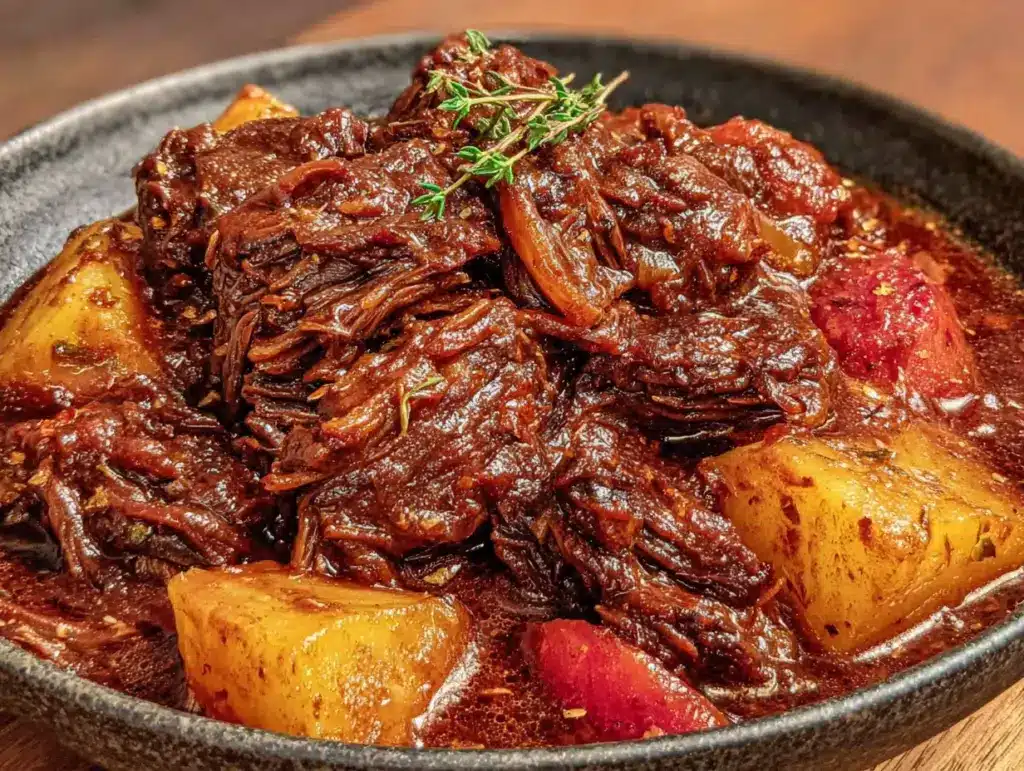
My husband took one look at the pile of parsnips, carrots, and a chuck roast on the counter and said, “You’re really going to just throw all that in a slow cooker and hope for the best?” I did not blame him for asking. I had a history of turning perfectly good meat into something resembling a leather shoe in that machine. But this time, I had a plan. I had spent weeks reading about the Maillard reaction—fancy talk for browning meat—and I was convinced that one extra step was the missing link between edible and unforgettable. I browned that chuck roast in batches, letting it get a deep, dark crust, and I will admit I felt a little smug about it.
Six hours later, he walked into the kitchen and just stood there. The smell was ridiculous—like someone had been simmering beef and herbs for days. He grabbed a spoon and dipped it into the pot without asking (a move I usually ban from the kitchen). He just looked at me and said, “Okay, I was wrong.” That was the moment this cozy slow cooker beef stew with root vegetables became a permanent fixture in our home. It is the kind of meal that makes you slow down. The kind where you set the table a little early and pour yourself something warm to drink while the steam fogs up the windows. I have made it on rainy Sundays, busy Wednesdays, and even for company when I wanted to look like I had been slaving away all day. The secret? I actually did not slave at all. The slow cooker did the work. I just did the browning.
Why You’ll Love This Recipe
This isn’t just another beef stew recipe. I have tested this specific combination of ingredients and techniques more times than I can count, and I can tell you with total confidence that it delivers every single time. The beef comes out fork-tender, the vegetables hold their shape without turning to mush, and the broth is so rich you will want to drink it straight from the pot.
- Set It and Forget It: After about 20 minutes of prep and browning, the slow cooker does everything. You can go about your day while dinner cooks itself.
- Simple Pantry Ingredients: Nothing fancy here. Beef chuck, potatoes, carrots, celery, onions, garlic, and a few pantry staples. You probably have most of it already.
- Perfect for Cozy Evenings: This is the meal you want after a long walk in the cold, or when you just need something warm and grounding. It is pure comfort in a bowl.
- Crowd-Pleaser Approved: I have served this to picky kids, meat-and-potatoes dads, and friends who claim they don’t eat red meat. Everyone cleans their bowl.
- Deep, Rich Flavor Without the Work: The key is browning the beef first. It sounds like an extra chore, but it is the one step that transforms this stew from good to absolutely memorable.
This recipe has become my go-to for meal prep, too. I often make a double batch and use it for lunches throughout the week, and it pairs perfectly with some of my other favorite make-ahead dishes like these easy chicken burrito bowls for a week of varied, satisfying meals. It is the kind of stew that makes you close your eyes after the first bite—not because it’s fancy, but because it feels like a hug you didn’t know you needed.
What Ingredients You Will Need
This recipe relies on simple, wholesome ingredients that work together to create a deeply flavorful and satisfying stew. The quality of your beef and the freshness of your vegetables will make a noticeable difference, so choose wisely.
For the Beef and Browning
- 2 ½ pounds beef chuck roast, cut into 1 ½-inch cubes (look for good marbling; it breaks down into tenderness)
- 2 tablespoons olive oil, divided (for browning the meat in batches)
- 1 teaspoon salt (I use kosher salt for better control)
- ½ teaspoon black pepper, freshly ground
- 2 tablespoons all-purpose flour (helps thicken the stew and aids browning)
For the Aromatic Base
- 1 large yellow onion, diced (about 1 ½ cups)
- 3 cloves garlic, minced
- 2 tablespoons tomato paste (adds depth and color)
- 1 cup dry red wine (like a Cabernet or Merlot—use something you’d drink; or substitute with beef broth)
For the Vegetables
- 4 medium carrots, peeled and cut into 1-inch chunks (about 2 cups)
- 3 stalks celery, sliced into ½-inch pieces (about 1 cup)
- 1 ½ pounds Yukon Gold potatoes, cut into 1-inch chunks (they hold their shape beautifully; about 3 cups)
- 2 medium parsnips, peeled and cut into 1-inch chunks (optional, but adds a lovely sweet earthiness)
- 8 ounces cremini mushrooms, halved (adds umami; I love how they soak up the broth)
For the Broth and Seasoning
- 4 cups low-sodium beef broth (I prefer the brand Kitchen Basics for its clean flavor)
- 1 tablespoon Worcestershire sauce (adds that savory, tangy depth)
- 2 bay leaves
- 2 sprigs fresh thyme (or 1 teaspoon dried thyme)
- 1 sprig fresh rosemary (or ½ teaspoon dried rosemary, crushed)
- 1 tablespoon cornstarch mixed with 2 tablespoons cold water (for thickening at the end, if needed)
- Fresh parsley, chopped, for garnish
Equipment Needed
You do not need a fancy kitchen to make this stew, but having the right tools makes the process smoother. Here is what you will need:
- 6-quart or larger slow cooker: This is non-negotiable. A smaller one will crowd the ingredients and the stew won’t cook evenly. I use a 6.5-quart model and it works perfectly.
- Large, heavy-bottomed skillet or Dutch oven: For browning the beef. Cast iron is ideal, but any heavy pan works. You need high heat and even heat distribution.
- Sharp chef’s knife and cutting board: A good knife makes cutting the beef and vegetables much safer and easier. I use an 8-inch chef’s knife.
- Wooden spoon or spatula: For stirring and scraping up the browned bits from the pan.
- Measuring cups and spoons: For accurate ingredient amounts.
- Small bowl: For mixing the cornstarch slurry.
- Tongs: For flipping the beef cubes while browning.
If you do not have a heavy skillet, a non-stick pan will work for browning, but you might not get as deep of a crust. Budget tip: A good cast-iron skillet can be found at thrift stores for under $10 and will last a lifetime.
Preparation Method
Let’s get cooking. This method is broken down into clear steps, and I have included the little cues I use to know when everything is just right.
- Prep the Beef: Pat the beef chuck cubes dry with paper towels. This is important—wet meat won’t brown. In a large bowl, toss the beef with 1 tablespoon of the olive oil, the salt, pepper, and flour until evenly coated.
- Brown the Beef in Batches: Heat 1 tablespoon of olive oil in your large skillet over medium-high heat until it shimmers. Add the beef cubes in a single layer—do not overcrowd the pan. You will need to do this in 2 or 3 batches. Let the beef sear undisturbed for 3-4 minutes per side, until a deep brown crust forms. Use your tongs to flip them. Transfer the browned beef to the slow cooker. Repeat with the remaining beef. This step takes about 10-15 minutes total, but it is the most important one for flavor.
- Sauté the Aromatics: Reduce the heat under the skillet to medium. Add the diced onion and cook for 4-5 minutes, stirring occasionally, until it softens and turns translucent. Add the minced garlic and cook for 30 seconds until fragrant. Stir in the tomato paste and cook for another minute, letting it darken slightly.
- Deglaze the Pan: Pour in the red wine (or beef broth). Use your wooden spoon to scrape up all the browned bits from the bottom of the pan—that is pure flavor. Let the wine simmer for 2-3 minutes, reducing slightly. Pour this mixture over the beef in the slow cooker.
- Add the Vegetables and Broth: Add the carrots, celery, potatoes, parsnips (if using), and mushrooms to the slow cooker. Pour in the beef broth and Worcestershire sauce. Tuck in the bay leaves, thyme sprigs, and rosemary sprig. Give everything a gentle stir to combine.
- Slow Cook: Cover the slow cooker and cook on LOW for 7-8 hours or on HIGH for 4-5 hours. The stew is done when the beef is fork-tender and the vegetables are soft but not falling apart. I prefer LOW for the most tender meat.
- Thicken the Stew (Optional): About 30 minutes before serving, if you prefer a thicker broth, mix the cornstarch and cold water in a small bowl to form a slurry. Stir it into the stew and let it cook, uncovered, for the remaining time. The broth will thicken nicely.
- Finish and Serve: Remove the bay leaves and herb sprigs. Taste the stew and adjust seasoning with more salt and pepper if needed. Ladle into bowls and garnish with fresh chopped parsley. Serve hot.
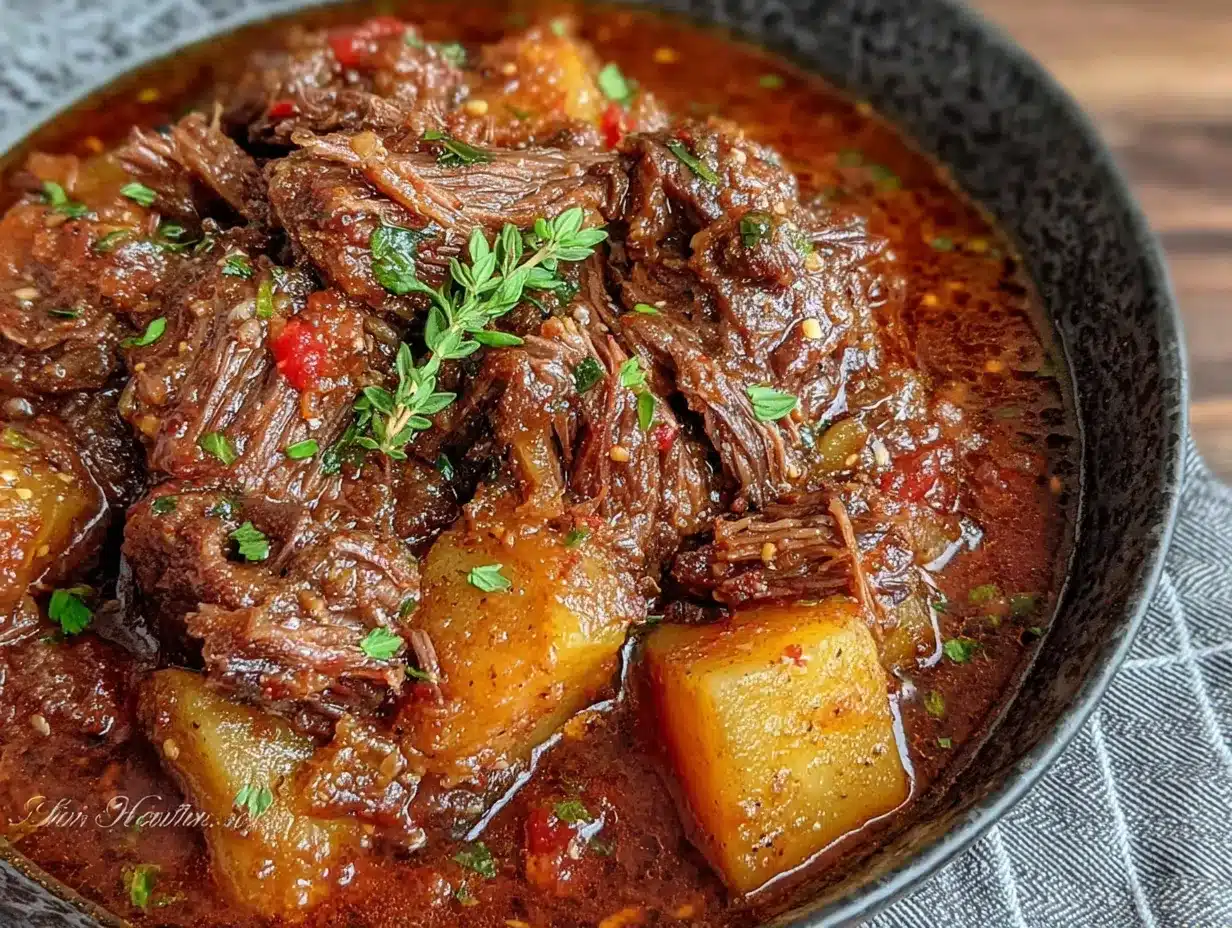
Sensory Cue: At the end, the broth should be rich and glossy, coating the back of a spoon. The beef should pull apart easily with a fork. The carrots should be tender but still hold their shape—not mushy.
Cooking Tips & Techniques
I have made this stew more times than I can count, and I have learned a few things the hard way. Here are my best tips to ensure success every time.
Do Not Skip the Browning: I know it is tempting to just throw everything in the slow cooker raw. I have done it, and the result is a pale, bland stew. The Maillard reaction from browning creates hundreds of flavor compounds that you simply cannot get any other way. It is the single most important step. If you are short on time, brown the beef the night before and refrigerate it.
Cut Vegetables Uniformly: Cutting your carrots, potatoes, and parsnips into similar 1-inch pieces ensures they cook at the same rate. If some pieces are much smaller, they will turn to mush while the larger ones are still hard.
Low and Slow is Best: Cooking on LOW for 7-8 hours yields the most tender beef. The connective tissue in the chuck roast needs time to break down into gelatin, which gives the broth its silky richness. Cooking on HIGH can work in a pinch, but the texture of the beef will not be as luxurious.
Resist the Urge to Peek: Every time you lift the lid, you release heat and add 20-30 minutes to the cooking time. Trust the process and let the slow cooker do its job.
My Biggest Failure: I once added all the vegetables at the beginning and ended up with a pot of mushy potatoes and slimy carrots. Now, if I am cooking on LOW for the full 8 hours, I add the heartier root vegetables (potatoes, carrots, parsnips) at the start, but I add more delicate vegetables like peas or green beans only in the last 30 minutes. For this recipe, the mushrooms can go in at the start or halfway through—they hold up well either way.
Variations & Adaptations
One of the best things about this stew is how adaptable it is. I have played around with it quite a bit, and here are some of my favorite variations.
- Gluten-Free Adaptation: Simply omit the all-purpose flour used to coat the beef. The stew will still thicken slightly from the potatoes and the cornstarch slurry at the end. Use tamari or coconut aminos instead of Worcestershire sauce (some brands contain gluten).
- Dairy-Free: This recipe is naturally dairy-free, but if you are adding a pat of butter at the end for richness (which some people do), just skip it. The stew is plenty rich without it.
- Seasonal Vegetable Swap: In the fall, I love adding cubed butternut squash or sweet potatoes in place of some of the Yukon Golds. In the spring, I swap the parsnips for thickly sliced leeks and add a cup of frozen peas in the last 15 minutes.
- Herb Variations: If you don’t have fresh thyme and rosemary, use 1 teaspoon each of dried. You can also add a teaspoon of smoked paprika along with the tomato paste for a subtle smoky depth.
- Personal Favorite Adaptation: My go-to twist is to add a parmesan rind to the slow cooker along with the broth. It adds an incredible savory, nutty richness to the broth. Just remember to fish it out before serving.
For a completely different but equally comforting meal prep option, try these simple meal prep secrets to streamline your weekly cooking routine.
Serving & Storage Suggestions
This stew is a meal in itself, but the right accompaniments can make it even better.
Serving: Ladle the stew into deep bowls. It is best served piping hot. I love it with a thick slice of crusty sourdough or a warm, buttered dinner roll to soak up every last drop of the broth. A simple side salad with a bright vinaigrette cuts through the richness beautifully. For a cozy night in, I sometimes serve it with a glass of the same red wine I used in the recipe.
Storage: This stew tastes even better the next day as the flavors meld together. Let the stew cool completely to room temperature, then transfer it to an airtight container. It will keep in the refrigerator for up to 4 days.
Freezing: This stew freezes wonderfully. Portion it into freezer-safe containers or zip-top bags (lay them flat to save space). It will keep for up to 3 months. Thaw overnight in the refrigerator before reheating.
Reheating: Reheat the stew gently on the stovetop over medium-low heat, stirring occasionally. You can also reheat individual portions in the microwave. If the stew has thickened too much upon reheating, add a splash of beef broth or water to loosen it up.
Flavor Development: I find the stew is at its peak on the second or third day. The flavors become deeper and more integrated. It is a perfect make-ahead meal for this reason.
Nutritional Information & Benefits
This stew is not just delicious—it is packed with nutrients that make it a wholesome meal choice. Here is an approximate breakdown per serving (based on 8 servings):
| Nutrient | Amount Per Serving |
|---|---|
| Calories | 385 |
| Protein | 35g |
| Fat | 15g |
| Carbohydrates | 28g |
| Fiber | 5g |
| Iron | 25% DV |
| Vitamin A | 80% DV |
| Vitamin C | 20% DV |
Pin This Recipe!
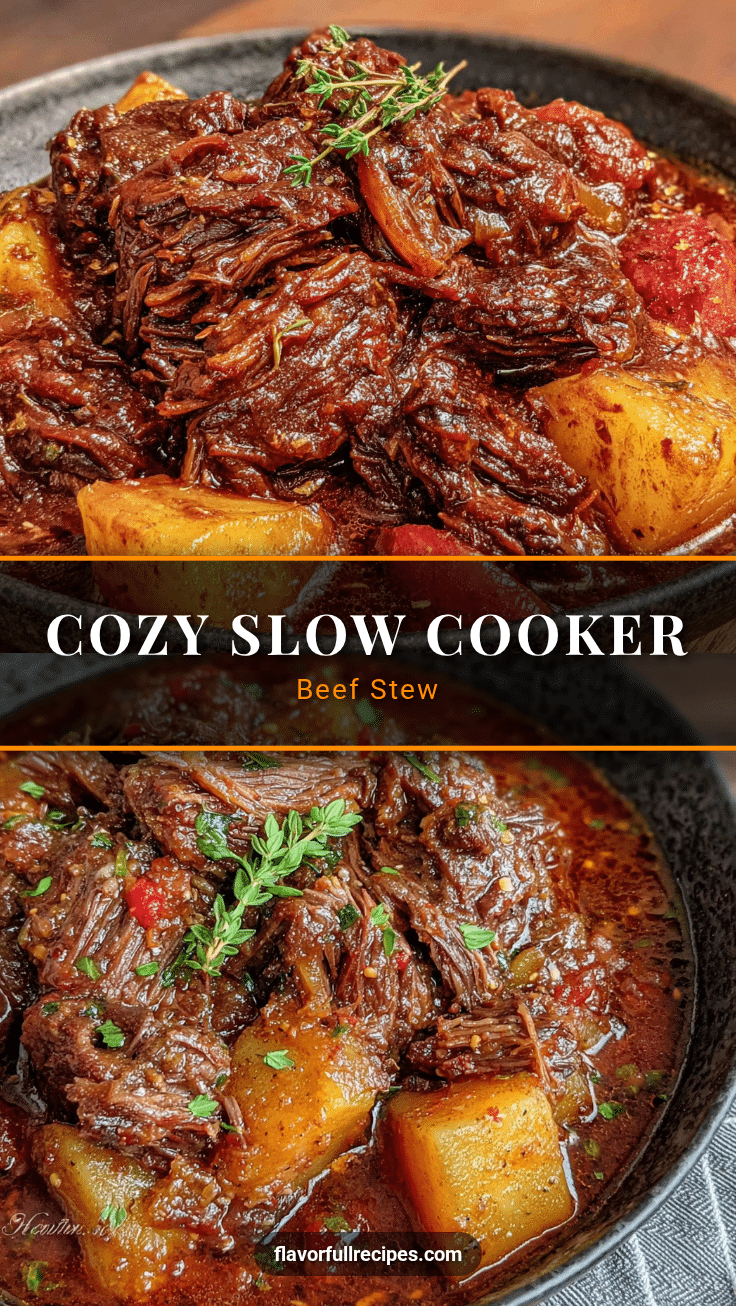
Cozy Slow Cooker Beef Stew with Root Vegetables
- Total Time: 7 hours 20 minutes to 8 hours 20 minutes
- Yield: 8 servings 1x
Description
This cozy slow cooker beef stew with root vegetables is a comforting, one-pot meal that delivers fork-tender beef and perfectly cooked vegetables in a rich, savory broth. The secret is browning the beef first for deep, unforgettable flavor.
Ingredients
- 2 ½ pounds beef chuck roast, cut into 1 ½-inch cubes
- 2 tablespoons olive oil, divided
- 1 teaspoon kosher salt
- ½ teaspoon freshly ground black pepper
- 2 tablespoons all-purpose flour
- 1 large yellow onion, diced (about 1 ½ cups)
- 3 cloves garlic, minced
- 2 tablespoons tomato paste
- 1 cup dry red wine (like Cabernet or Merlot) or beef broth
- 4 medium carrots, peeled and cut into 1-inch chunks (about 2 cups)
- 3 stalks celery, sliced into ½-inch pieces (about 1 cup)
- 1 ½ pounds Yukon Gold potatoes, cut into 1-inch chunks (about 3 cups)
- 2 medium parsnips, peeled and cut into 1-inch chunks (optional)
- 8 ounces cremini mushrooms, halved
- 4 cups low-sodium beef broth
- 1 tablespoon Worcestershire sauce
- 2 bay leaves
- 2 sprigs fresh thyme (or 1 teaspoon dried thyme)
- 1 sprig fresh rosemary (or ½ teaspoon dried rosemary, crushed)
- 1 tablespoon cornstarch mixed with 2 tablespoons cold water (for thickening, if needed)
- Fresh parsley, chopped, for garnish
Instructions
- Prep the Beef: Pat the beef chuck cubes dry with paper towels. In a large bowl, toss the beef with 1 tablespoon of the olive oil, the salt, pepper, and flour until evenly coated.
- Brown the Beef in Batches: Heat 1 tablespoon of olive oil in a large skillet over medium-high heat until it shimmers. Add the beef cubes in a single layer—do not overcrowd the pan. Cook in 2 or 3 batches, searing undisturbed for 3-4 minutes per side until a deep brown crust forms. Transfer browned beef to the slow cooker. Repeat with remaining beef.
- Sauté the Aromatics: Reduce heat under the skillet to medium. Add the diced onion and cook for 4-5 minutes, stirring occasionally, until softened and translucent. Add the minced garlic and cook for 30 seconds until fragrant. Stir in the tomato paste and cook for another minute, letting it darken slightly.
- Deglaze the Pan: Pour in the red wine (or beef broth). Use a wooden spoon to scrape up all the browned bits from the bottom of the pan. Let the wine simmer for 2-3 minutes, reducing slightly. Pour this mixture over the beef in the slow cooker.
- Add the Vegetables and Broth: Add the carrots, celery, potatoes, parsnips (if using), and mushrooms to the slow cooker. Pour in the beef broth and Worcestershire sauce. Tuck in the bay leaves, thyme sprigs, and rosemary sprig. Give everything a gentle stir to combine.
- Slow Cook: Cover the slow cooker and cook on LOW for 7-8 hours or on HIGH for 4-5 hours. The stew is done when the beef is fork-tender and the vegetables are soft but not falling apart.
- Thicken the Stew (Optional): About 30 minutes before serving, if you prefer a thicker broth, mix the cornstarch and cold water in a small bowl to form a slurry. Stir it into the stew and let it cook, uncovered, for the remaining time.
- Finish and Serve: Remove the bay leaves and herb sprigs. Taste and adjust seasoning with more salt and pepper if needed. Ladle into bowls and garnish with fresh chopped parsley. Serve hot.
Notes
Do not skip browning the beef—it’s the most important step for flavor. Cut vegetables uniformly (1-inch chunks) for even cooking. Cooking on LOW yields the most tender beef. Avoid lifting the lid during cooking. For gluten-free, omit the flour coating and use tamari instead of Worcestershire sauce. The stew tastes even better the next day.
- Prep Time: 20 minutes
- Cook Time: 7-8 hours on LOW or 4-5 hours on HIGH
- Category: Main Course
- Cuisine: American
Nutrition
- Serving Size: 1 bowl (about 1 ½ cu
- Calories: 385
- Sugar: 6
- Sodium: 680
- Fat: 15
- Saturated Fat: 5
- Carbohydrates: 28
- Fiber: 5
- Protein: 35
Keywords: slow cooker beef stew, root vegetables, comfort food, easy dinner, winter meal, beef stew recipe