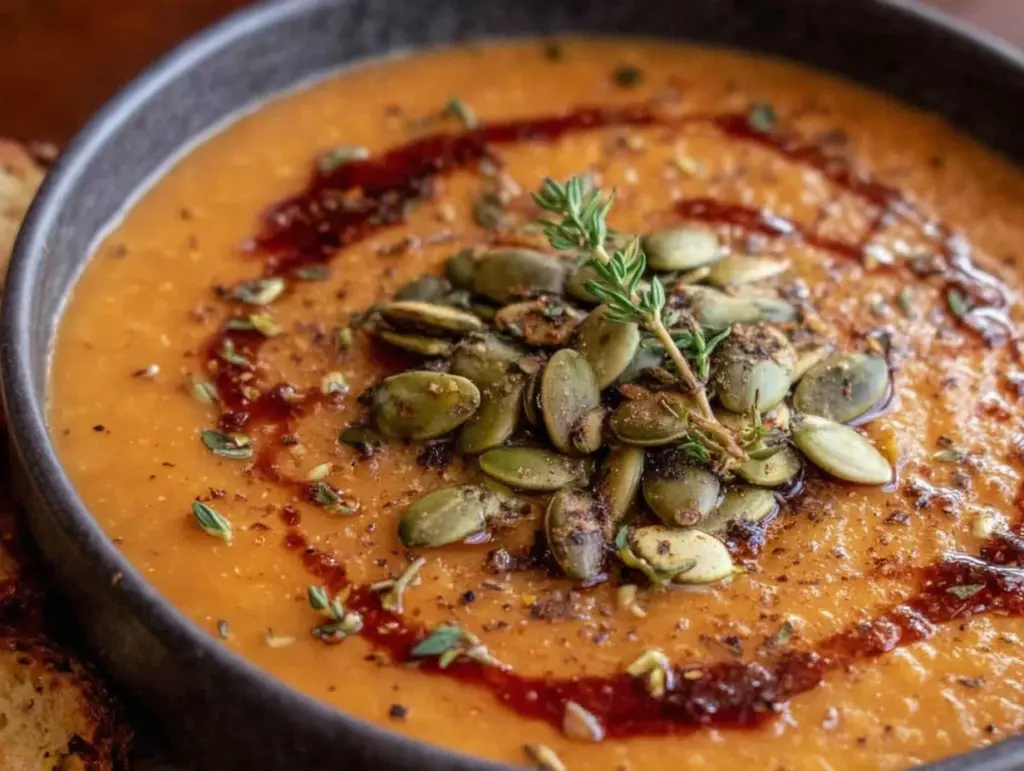
I have a confession to make. For years, I was a butternut squash purist. Every fall, I’d stockpile them, convinced they were the only winter squash worth roasting. Then my neighbor Sarah, who gardens like it’s a competitive sport, showed up at my door last October with a paper bag full of these funny little tan squashes. “Try these,” she said. “They’re sweeter.” I nodded politely, thinking I’d just roast them alongside my butternut and call it a day.
I started to explain why butternut was superior — the texture, the availability, the fact that I had three of them already sitting on my counter. Then I stopped. Honestly, I was tired and it was Tuesday and I didn’t have the energy to argue about squash. So I roasted one alongside my usual batch, more out of obligation than curiosity.
When I blended that first batch of honeynut squash bisque, something shifted. The color was deeper — almost sunset orange. The taste? Let me tell you, it was like someone had caramelized the entire squash before I even touched it. No added sugar, no honey, nothing. Just pure, concentrated squash sweetness that my butternut batch, sitting right next to it, couldn’t touch. I actually felt a little embarrassed. All those years of being a squash snob, and a beginner gardener had to show me what I was missing.
This cozy honeynut squash bisque with toasted pepitas has become my official “I was wrong and I’m glad about it” recipe. It’s the soup I make when I want to taste fall without any pretension — just pure, honest flavor in a bowl. Maybe you’ve had a moment like that, where something simple completely changed your mind about a staple ingredient. That’s what this recipe is for me.
Why You’ll Love This Recipe
This isn’t just another squash soup recipe that blends into the background of your fall cooking rotation. Here’s what makes this one stand out — and why I keep making it every single week from October through January.
- Naturally Sweet, No Sugar Added: Honeynut squash has a naturally higher sugar content than butternut, which means you get that rich, caramelized sweetness without adding any maple syrup or brown sugar. The squash does all the work.
- Ready in Under an Hour: From cutting board to bowl, this bisque comes together in about 45 minutes. Most of that is hands-off roasting time, so you can tidy up the kitchen or pour yourself a glass of wine while it works.
- Simple Pantry Ingredients: You need squash, onion, garlic, broth, coconut milk, and a few spices. That’s it. No hunting down specialty items or making a separate grocery trip.
- Perfect for Cozy Season: This is the soup you want on a rainy November afternoon, a chilly December evening, or when you’re hosting a casual fall dinner and need something that looks impressive but requires almost no effort.
- Crowd-Pleasing Texture: The blend of roasted squash with a splash of full-fat coconut milk creates a velvety smooth texture that feels luxurious without being heavy. My picky-eating nephew asked for seconds last Thanksgiving — that’s when I knew it was a keeper.
What makes this recipe different from every other squash soup out there? It’s the roasting method. I roast the honeynut squash with the skin on until it’s deeply caramelized, which concentrates the flavor and adds a subtle smokiness you just can’t get from boiling or steaming. Then I blend it with sautéed aromatics and just enough coconut milk to make it silky without masking that pure squash taste.
This isn’t just good soup. It’s the kind that makes you close your eyes after the first spoonful. It’s comfort food that feels honest — nourishing, simple, and deeply satisfying without any fuss.
What Ingredients You Will Need
This recipe uses simple, whole ingredients that work together to create something greater than the sum of their parts. Most of these are fall pantry staples, and the few that aren’t are easy to find at any grocery store this time of year.
For the Roasted Squash
- 3 medium honeynut squashes (about 2 pounds total) — Look for squashes that feel heavy for their size with firm, unblemished skin. If you can’t find honeynut, you can substitute butternut, but the sweetness won’t be quite as intense. I’ve found that the smaller squashes tend to be sweeter, so grab the little ones if you can.
- 2 tablespoons olive oil — Use a good-quality extra virgin olive oil for roasting. It adds a subtle fruitiness that complements the squash’s natural sweetness.
- 1/2 teaspoon sea salt — I prefer flaky sea salt here because it distributes more evenly and adds a gentle crunch that you’ll notice in the finished soup.
- 1/4 teaspoon black pepper — Freshly ground is always better, but pre-ground works in a pinch.
For the Bisque Base
- 1 tablespoon unsalted butter — Butter adds richness that oil alone can’t match. Use vegan butter or coconut oil for a dairy-free version.
- 1 medium yellow onion, diced (about 1 1/2 cups) — Yellow onion has the right balance of sweetness and sharpness. White onion works, but red onion will change the color more than I’d like.
- 3 cloves garlic, minced — Fresh garlic is non-negotiable here. The jarred stuff has a different flavor that doesn’t play as nicely with the squash.
- 1 teaspoon fresh thyme leaves (or 1/2 teaspoon dried) — Thyme and squash are a classic pairing. The earthiness cuts through the sweetness beautifully.
- 1/2 teaspoon ground ginger — This adds warmth without being spicy. Fresh grated ginger works too — use about 1 teaspoon.
- 1/4 teaspoon ground nutmeg — Just a pinch. Nutmeg can overpower quickly, so start small and adjust.
- 3 cups vegetable broth — I recommend Pacific Foods for its clean flavor, but any good-quality broth works. Chicken broth is fine too if you’re not keeping it vegetarian.
- 1/2 cup full-fat coconut milk — This is the secret to the velvety texture. Light coconut milk will work, but the bisque won’t be as luxuriously smooth. Save the rest of the can for another use — it freezes well in an ice cube tray.
For the Toasted Pepitas
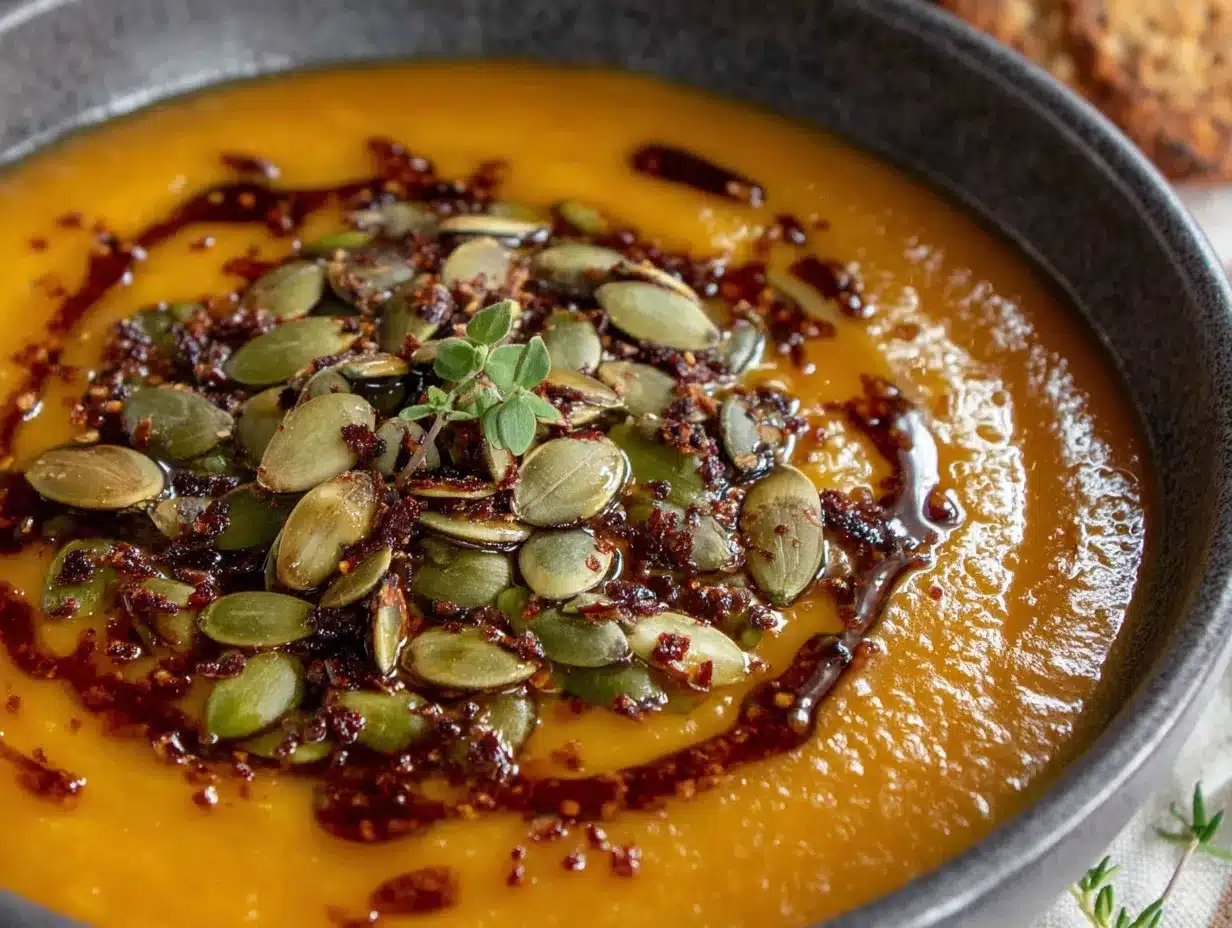
- 1/4 cup raw pepitas (pumpkin seeds) — Look for the green hulled ones, not the white shelled seeds. They toast up faster and have a better texture for this application.
- 1/2 teaspoon olive oil
- Pinch of sea salt
- Pinch of smoked paprika — Optional, but highly recommended. It adds a subtle smokiness that plays off the roasted squash beautifully.
Equipment Needed
You don’t need a professional kitchen to make this bisque, but a few key tools will make the process smoother. Here’s what you’ll need:
- Baking sheet — A rimmed half-sheet pan works best. The rim catches any juices that might drip during roasting. Line it with parchment paper for easier cleanup.
- Sharp chef’s knife — Honeynut squashes are smaller than butternut, but they’re still tough to cut. A sharp 8-inch chef’s knife makes the job safer and easier. If your knife is dull, consider using a cleaver or asking someone at the grocery store to halve them for you.
- Large soup pot or Dutch oven — A 5- to 6-quart pot gives you enough room to sauté the aromatics and blend everything together without splashing.
- Immersion blender — This is my preferred method for blending hot soup. It’s safer than transferring hot liquid to a countertop blender, and it creates a silky smooth texture with minimal effort. I use a KitchenAid immersion blender and it’s held up beautifully for years. If you don’t have one, a regular blender works — just work in batches and don’t fill the blender more than halfway with hot liquid.
- Small skillet — For toasting the pepitas. A non-stick skillet works well, but any small pan will do.
- Measuring cups and spoons — Accurate measurements matter in soup recipes, especially for the spices.
If you don’t have an immersion blender, let the soup cool for 10 minutes before transferring to a countertop blender. Remove the center cap from the lid and cover with a kitchen towel to let steam escape. Trust me on this — I learned the hard way that blending hot soup in a sealed blender creates a pressure bomb that will explode all over your kitchen.
Preparation Method
Let’s make some soup. This recipe moves quickly once the squash is roasted, so I like to prep all my ingredients before I start cooking.
Step 1: Roast the Squash (25-30 minutes)
Preheat your oven to 400°F (200°C). While it’s heating, carefully cut each honeynut squash in half lengthwise. If they’re small enough, you can cut them in half crosswise too — the goal is pieces that are roughly the same size so they cook evenly. Scoop out the seeds and stringy bits with a spoon. Don’t throw those seeds away! You can roast them just like pumpkin seeds for a snack later.
Place the squash halves cut-side up on your lined baking sheet. Drizzle with the olive oil, then sprinkle with salt and pepper. Use your hands to rub the oil and seasoning all over the cut surfaces and a little on the skin. Roast for 25-30 minutes, until the flesh is fork-tender and the edges are starting to caramelize and turn golden brown. The squash should look slightly collapsed and the skin will have some charred spots — that’s where the flavor lives.
Personal tip: I once forgot to oil the squash and ended up with dry, shriveled pieces that were impossible to scoop. Don’t skip the oil — it helps the squash caramelize instead of just dehydrating.
Step 2: Toast the Pepitas (3-4 minutes)
While the squash roasts, toast the pepitas. Heat a small skillet over medium heat. Add the pepitas and toast them dry for about 2 minutes, shaking the pan frequently, until they start to puff up and make a popping sound. Drizzle with the olive oil, add the salt and smoked paprika, and toss to coat. Toast for another minute until fragrant and lightly golden. Transfer to a plate to cool — they’ll continue toasting from the residual heat.
Step 3: Sauté the Aromatics (5-7 minutes)
When the squash is done, let it cool on the baking sheet for a few minutes. Meanwhile, melt the butter in your large pot over medium heat. Add the diced onion and cook, stirring occasionally, until softened and translucent — about 5 minutes. Add the minced garlic, thyme, ginger, and nutmeg. Cook for another minute until the garlic is fragrant but not browned. You’ll smell the spices bloom in the butter — that’s your signal that it’s time for the next step.
Step 4: Scoop and Simmer (10 minutes)
Once the squash is cool enough to handle, use a spoon to scoop the flesh away from the skin. It should come off easily in large pieces. Add the roasted squash flesh to the pot with the sautéed aromatics. Pour in the vegetable broth and stir to combine. Bring the mixture to a gentle simmer over medium-high heat, then reduce the heat to low and let it cook for 10 minutes. This allows all the flavors to meld together.
Step 5: Blend Until Silky (2-3 minutes)
Remove the pot from the heat. Using your immersion blender, blend the soup until completely smooth. Start at the bottom of the pot and work your way up in a gentle swirling motion. If you’re using a countertop blender, work in batches and follow the safety tips I mentioned earlier. The finished bisque should be velvety smooth with a vibrant orange color.
Step 6: Finish and Serve (2 minutes)
Stir in the coconut milk until fully incorporated. Taste and adjust seasoning — you might want more salt, a pinch more nutmeg, or a crack of black pepper. Ladle the bisque into bowls, top with a generous sprinkle of toasted pepitas, and serve immediately. A drizzle of extra coconut milk on top makes for a beautiful presentation.
Cooking Tips & Techniques
After making this bisque more times than I can count — including a few memorable failures — I’ve gathered some tips that make the process smoother and the results more consistent.
Don’t skip the roasting. I know it’s tempting to just boil the squash to save time, but roasting is what gives this bisque its depth. The caramelization adds a complexity that you simply can’t achieve with any other cooking method. If you’re in a rush, you can microwave the squash for 5 minutes before roasting to speed things up, but don’t skip the oven entirely.
Use the right blending technique. When using an immersion blender, tilt it slightly and move it in a circular motion to create a vortex that pulls the soup into the blades. This gives you a smoother result with less effort. If you’re using a countertop blender, blend in batches and don’t fill the jar more than halfway — hot soup expands and can force the lid off.
Season in layers. I season the squash before roasting, then add more salt with the aromatics, and adjust again at the end. This layering creates a more complex flavor profile than dumping all the salt in at once. It’s a technique I learned from a chef friend who said, “Salt is not a final step — it’s a journey.”
Watch your heat. When toasting the pepitas, keep the heat at medium and shake the pan constantly. They go from perfectly toasted to burnt in about 30 seconds. I learned this the hard way when I walked away to answer a text message and came back to a skillet full of blackened seeds that smelled like a campfire.
Make it ahead. This bisque actually tastes better the next day. The flavors have time to meld and deepen overnight. If you’re planning to serve it for a gathering, make it a day in advance and reheat gently on the stovetop. Just add a splash of broth or water when reheating, as the soup will thicken as it sits.
Variations & Adaptations
This recipe is flexible, and I’ve tried several variations depending on what I have on hand or who I’m cooking for. Here are some of my favorites:
Vegan and Dairy-Free
The recipe as written is already dairy-free if you swap the butter for coconut oil or a good vegan butter. I’ve used Miyoko’s European Style Cultured Vegan Butter with excellent results — it adds that same richness without any dairy. The coconut milk keeps it creamy and luxurious.
Spicy Honeynut Bisque
For a warming kick, add 1/2 teaspoon of red pepper flakes along with the garlic, or stir in 1 tablespoon of harissa paste at the end. The heat cuts through the sweetness beautifully and adds a whole new dimension. I made this version for a spicy food-loving friend, and she asked for the recipe before she finished her bowl.
Herb-Infused Version
Swap the thyme for fresh sage or rosemary. Sage pairs particularly well with honeynut squash — it has that earthy, slightly peppery quality that balances the sweetness. Add 4-5 fresh sage leaves when you sauté the onions, then remove them before blending. The flavor will infuse the entire bisque.
Roasted Apple Addition
Add one peeled and cubed apple (Honeycrisp or Granny Smith work well) to the baking sheet with the squash. Roast alongside and blend into the soup. The apple adds a subtle fruity sweetness and helps thin the bisque slightly without adding extra liquid. This is my favorite fall variation.
Nut-Free Topping Alternative
If you can’t have pepitas, top the bisque with crispy roasted chickpeas or a sprinkle of toasted sunflower seeds. Both add that same satisfying crunch without any nut or seed allergens.
Serving & Storage Suggestions
This bisque is versatile enough for casual weeknight dinners or more formal occasions. Here’s how I like to serve and store it.
Serving Temperature: Serve the bisque hot, but not boiling. I find that letting it cool for 3-4 minutes after blending allows the flavors to settle and the texture to become perfectly velvety. Garnish each bowl with a generous sprinkle of toasted pepitas, a drizzle of coconut milk, and a few fresh thyme leaves if you have them.
What to Serve With It: A crusty sourdough bread or warm dinner rolls are perfect for dipping. For a more substantial meal, serve alongside a simple arugula salad with lemon vinaigrette — the peppery greens cut through the richness of the bisque. I also love pairing this with a crispy garlic chicken for a complete fall dinner that feels special without being fussy.
Storage: Store leftover bisque in an airtight container in the refrigerator for up to 5 days. The flavors will continue to develop, and it often tastes even better on day two. The bisque thickens as it sits, so add a splash of broth or water when reheating to restore the desired consistency.
Freezing: This bisque freezes beautifully. Let it cool completely, then transfer to freezer-safe containers or zip-top bags. Leave about an inch of headspace for expansion. Freeze for up to 3 months. Thaw overnight in the refrigerator and reheat gently on the stovetop or in the microwave. The texture remains smooth and creamy after freezing — just give it a good stir after reheating.
Reheating: Reheat on the stovetop over medium-low heat, stirring occasionally. Add a splash of broth or water if the bisque is too thick. You can also reheat individual portions in the microwave — use 30-second intervals and stir between each to ensure even heating.
Nutritional Information & Benefits
This bisque is as nourishing as it is delicious. Here’s a rough breakdown per serving (based on 4 servings):
- Calories: 285
- Total Fat: 16g
- Saturated Fat: 8g
- Carbohydrates: 32g
- Fiber: 6g
- Sugar: 12g (all natural from the squash)
- Protein: 6g
- Vitamin A: 380% of the Daily Value
- Vitamin C: 45% of the Daily Value
- Potassium: 850mg
Honeynut squash is a nutritional powerhouse. It’s loaded with beta-carotene, which your body converts to vitamin A for healthy vision and immune function. The fiber content keeps you full and supports digestive health. Coconut milk provides healthy medium-chain triglycerides (MCTs) that can boost energy and support brain function.
This bisque is naturally gluten-free, dairy-free (with the butter swap), and vegetarian. It’s also relatively low in calories for such a satisfying dish, making it a great option if you’re watching your intake without sacrificing flavor. The pepitas add a nice dose of zinc, magnesium, and healthy fats.
Conclusion
This cozy honeynut squash bisque with toasted pepitas has become a staple in my fall and winter cooking rotation for good reason. It’s simple enough for a quiet Tuesday night, yet elegant enough to serve at a holiday gathering. The natural sweetness of the honeynut squash, the velvety texture from the coconut milk, and the crunchy pepitas on top create a bowl of soup that feels like a warm hug on a cold day.
What I love most about this recipe is how forgiving it is. You can adjust the spices, swap the toppings, or make it ahead of time — it always turns out delicious. It’s the kind of recipe that makes you feel like a confident cook, even on days when you’re not sure what you’re doing.
I’d love to hear how this bisque turns out for you. Have you tried any variations? Did you discover a new favorite topping? Drop a comment below and let me know — your ideas might inspire someone else’s next great meal. And if you’re looking for another cozy fall dish, don’t miss our maple rosemary roasted carrots — they pair beautifully with this bisque for a complete autumn menu.
Until next time, happy cooking — and don’t be afraid to be wrong about squash. Sometimes being wrong leads to the best recipes.
Frequently Asked Questions
Can I use butternut squash instead of honeynut?
Yes, absolutely. The bisque will still be delicious, though it won’t be quite as sweet. If using butternut, you might want to add a tablespoon of maple syrup or honey to compensate. Roast the butternut squash for about 35-40 minutes since it’s denser than honeynut.
How do I make this bisque thicker or thinner?
For a thicker bisque, use less broth — start with 2 1/2 cups and add more if needed. For a thinner soup, add an extra 1/2 to 1 cup of broth. You can also adjust the consistency by blending in a peeled, cooked potato for extra body without changing the flavor.
Can I make this in an Instant Pot or slow cooker?
For an Instant Pot, roast the squash first, then sauté the aromatics using the sauté function. Add the squash and broth, pressure cook on high for 5 minutes, then blend. For a slow cooker, add all ingredients except the coconut milk and cook on low for 4-6 hours, then blend and stir in the coconut milk at the end.
What can I use instead of coconut milk?
Heavy cream, half-and-half, or full-fat oat milk all work well. Each will give a slightly different texture and flavor. Heavy cream makes it richer, oat milk keeps it dairy-free with a neutral taste, and half-and-half is a good middle ground if you want creaminess without the full fat.
How long does this bisque keep in the fridge?
Store in an airtight container for up to 5 days. The flavors actually improve after a day or two. Just remember that the bisque will thicken as it sits, so add a splash of broth or water when reheating to bring it back to the perfect consistency.
Pin This Recipe!


Cozy Honeynut Squash Bisque with Toasted Pepitas
- Total Time: 45 minutes
- Yield: 4 servings 1x
Description
This velvety honeynut squash bisque is naturally sweet, ready in under an hour, and made with simple pantry ingredients. Roasted squash blended with coconut milk creates a luxurious texture that’s perfect for cozy fall and winter meals.
Ingredients
- 3 medium honeynut squashes (about 2 pounds total)
- 2 tablespoons olive oil
- 1/2 teaspoon sea salt
- 1/4 teaspoon black pepper
- 1 tablespoon unsalted butter
- 1 medium yellow onion, diced (about 1 1/2 cups)
- 3 cloves garlic, minced
- 1 teaspoon fresh thyme leaves (or 1/2 teaspoon dried)
- 1/2 teaspoon ground ginger
- 1/4 teaspoon ground nutmeg
- 3 cups vegetable broth
- 1/2 cup full-fat coconut milk
- 1/4 cup raw pepitas (pumpkin seeds)
- 1/2 teaspoon olive oil (for pepitas)
- Pinch of sea salt (for pepitas)
- Pinch of smoked paprika (optional, for pepitas)
Instructions
- Preheat oven to 400°F (200°C). Cut each honeynut squash in half lengthwise and scoop out seeds. Place cut-side up on a lined baking sheet, drizzle with 2 tablespoons olive oil, and sprinkle with 1/2 teaspoon salt and 1/4 teaspoon pepper. Rub to coat. Roast for 25-30 minutes until fork-tender and caramelized.
- While squash roasts, toast pepitas in a small skillet over medium heat for 2 minutes, shaking frequently. Add 1/2 teaspoon olive oil, a pinch of salt, and smoked paprika. Toast 1 more minute until fragrant. Transfer to a plate to cool.
- When squash is done, let cool slightly. In a large pot, melt butter over medium heat. Add diced onion and cook 5 minutes until softened. Add garlic, thyme, ginger, and nutmeg; cook 1 minute until fragrant.
- Scoop roasted squash flesh into the pot. Add vegetable broth and stir. Bring to a gentle simmer, then reduce heat to low and cook 10 minutes.
- Remove pot from heat. Use an immersion blender to blend until completely smooth. (Alternatively, let cool 10 minutes and blend in batches in a countertop blender, removing center cap and covering with a towel.)
- Stir in coconut milk until fully incorporated. Taste and adjust seasoning. Ladle into bowls, top with toasted pepitas, and serve immediately.
Notes
For a vegan version, substitute butter with coconut oil or vegan butter. The bisque tastes even better the next day. If using butternut squash instead of honeynut, add 1 tablespoon maple syrup or honey for sweetness. To make it spicy, add 1/2 teaspoon red pepper flakes or 1 tablespoon harissa paste.
- Prep Time: 15 minutes
- Cook Time: 30 minutes
- Category: Soup
- Cuisine: American
Nutrition
- Serving Size: 1 bowl (about 1 1/2
- Calories: 285
- Sugar: 12
- Sodium: 680
- Fat: 16
- Saturated Fat: 8
- Carbohydrates: 32
- Fiber: 6
- Protein: 6
Keywords: honeynut squash bisque, roasted squash soup, fall soup, vegan soup option, gluten-free soup, coconut milk soup, pepitas