My daughter asked why I couldn’t just let the dough sit in the fridge overnight and bake it in the morning. I started to explain why that wouldn’t work—something about yeast needing to be coaxed and watched. Then I stopped. Honestly, I had no good reason. I’d just never tried it that way before.
That conversation happened on a random Thursday evening in March. I was prepping for Easter brunch, feeling that familiar pressure to make something special but also manageable. The kitchen was a mess of flour and orange zest, and I was already tired. My daughter, all of twelve years old, looked at my complicated timeline on the fridge and said, “Mom, this is way too much work. Just put it in the fridge.”
I remember the moment I decided to listen to her. It felt like giving up control, which is not something I do easily in the kitchen. But I covered the bowl, slid it onto the bottom shelf, and went to bed. The next morning, I pulled out that cold, puffy dough, and it was the most cooperative dough I’d ever worked with. No fighting, no sticking, just perfect, pillowy buns waiting to be shaped.
That little rebellion against my own stubbornness taught me something. Sometimes the best technique is the one you haven’t tried yet because you were too busy being right. These lighter orange glazed hot cross buns are the result of that night. They are proof that overnight dough isn’t just for bread snobs or people with more patience than me. It is for anyone who wants a gorgeous, from-scratch breakfast without waking up at dawn. Maybe you’ve been there, standing over a bowl of dough, wondering if there was an easier way. There is. And it starts with trusting a twelve-year-old’s common sense.
Why You’ll Love This Recipe
These aren’t your grandmother’s hot cross buns—though she would absolutely approve. They are lighter in texture, brighter in flavor, and way easier on your morning schedule. I’ve tested this overnight method more times than I can count, and it delivers consistent, bakery-quality results every single time.
- Overnight Convenience: Mix the dough in 20 minutes, let it chill overnight, and bake fresh in the morning. No early alarms needed.
- Lighter & Healthier Twist: We use a combination of whole wheat pastry flour and all-purpose flour, plus a touch of honey instead of all refined sugar. The orange glaze adds sweetness without being cloying.
- Bright Citrus Flavor: Fresh orange zest and juice infuse every bite. It’s not just a hint of orange—it is the star of the show.
- Perfect for Easter Brunch or Spring Mornings: These buns feel festive without being fussy. They impress guests but don’t stress you out.
- Family-Approved: My kids devour these, and they are notoriously picky about dried fruit. The secret is soaking the currants in warm orange juice first—it plumps them up and makes them sweet.
What makes these different from every other hot cross bun recipe? It’s the balance. So many versions are heavy, dense, and loaded with butter and sugar. These are airy, tender, and just sweet enough. The overnight fermentation develops a deeper flavor without any extra effort. Honestly, I’ll never go back to the same-day method. This is my best version, and I’m so glad I finally listened to my daughter.
What Ingredients You Will Need
This recipe relies on simple, wholesome ingredients to create a light, flavorful bun without the heavy feeling of traditional versions. Most of these are pantry staples, which makes it even easier to whip up on a whim.
- For the Dough:
- All-purpose flour (2 ½ cups / 315g): Provides structure. I use King Arthur Flour for consistent results.
- Whole wheat pastry flour (1 cup / 120g): Adds a nutty flavor and a touch of fiber without making the buns dense. Regular whole wheat works too, but pastry flour keeps them lighter.
- Active dry yeast (2 ¼ teaspoons / one ¼-ounce packet): The overnight method gives the yeast plenty of time to work slowly in the cold environment.
- Warm milk (¾ cup / 180ml, about 110°F): I use 2% milk, but any milk works. The warmth wakes up the yeast.
- Honey (¼ cup / 85g): Adds subtle sweetness and helps with browning. You can substitute maple syrup for a different flavor profile.
- Unsalted butter (3 tablespoons / 42g, softened): Adds richness. For a dairy-free version, use a good vegan butter stick.
- Large egg (1, room temperature): Adds structure and tenderness. Don’t skip it.
- Orange zest (2 tablespoons, from about 2 large oranges): This is non-negotiable. Fresh zest provides that bright, aromatic citrus punch.
- Ground cinnamon (1 ½ teaspoons): Warm spice that complements the orange perfectly.
- Ground nutmeg (½ teaspoon): Just a hint for depth.
- Salt (½ teaspoon): Balances the sweetness and strengthens the gluten.
- Dried currants or raisins (¾ cup / 120g): I prefer currants for their smaller size and sweeter taste. Soak them in warm orange juice for 15 minutes before adding—it makes a huge difference.
- For the Orange Glaze & Cross:
- Powdered sugar (1 cup / 120g): For the cross and the final glaze.
- Fresh orange juice (2-3 tablespoons): Use the juice from the oranges you zested. Fresh is best here.
- Vanilla extract (½ teaspoon): Rounds out the citrus flavor.
One quick note on the yeast: don’t worry if the dough doesn’t double in size overnight in the fridge. Cold fermentation slows things down. It will rise enough to develop flavor and texture, and the final proof on the counter will do the heavy lifting.
Equipment Needed
- Large mixing bowl: A standard ceramic or glass bowl works fine. I use a 4-quart bowl to give the dough room to expand.
- Whisk and wooden spoon (or stand mixer with dough hook): You can mix by hand, but a stand mixer makes it effortless. If mixing by hand, expect about 8-10 minutes of kneading.
- Measuring cups and spoons: For accuracy, especially with the flour and yeast.
- Kitchen scale (optional but recommended): Weighing ingredients ensures consistent results, especially with flour.
- Plastic wrap or a reusable bowl cover: To cover the dough while it chills overnight.
- 9×13-inch baking dish or large rimmed baking sheet: I prefer a baking dish because the buns nestle together and rise up, not out.
- Piping bag or small zip-top bag: For piping the cross on top. A zip-top bag with a tiny corner snipped off works perfectly.
- Cooling rack: Essential for letting the buns cool without getting soggy on the bottom.
If you don’t have a stand mixer, don’t worry. This dough is forgiving and easy to knead by hand. It’s actually a great arm workout!
Preparation Method
- Soak the currants (15 minutes before starting): Place the currants in a small bowl and cover them with warm orange juice. Set aside. This plumps them up and infuses them with citrus flavor.
- Bloom the yeast (5 minutes): In your mixing bowl, combine the warm milk and 1 tablespoon of the honey. Sprinkle the yeast over the top and let it sit for 5 minutes until frothy. If it doesn’t foam, your milk might have been too hot or your yeast is old. Start over if needed.
- Mix the dry ingredients (2 minutes): In a separate bowl, whisk together the all-purpose flour, whole wheat pastry flour, cinnamon, nutmeg, and salt.
- Build the dough (5 minutes): Add the remaining honey, softened butter, egg, and orange zest to the yeast mixture. Stir to combine. Gradually add the dry ingredients, mixing with a wooden spoon or the dough hook on low speed. Once a shaggy dough forms, add the soaked currants (drain them first) and mix until just incorporated.
- Knead (8-10 minutes by hand, 5-6 minutes in mixer): Turn the dough out onto a lightly floured surface. Knead until smooth and elastic. The dough should feel soft and slightly tacky but not sticky. If using a stand mixer, knead on medium-low speed until the dough pulls away from the sides of the bowl.
- First rise (overnight in the fridge): Place the dough in a lightly greased bowl, cover tightly with plastic wrap, and refrigerate for at least 8 hours or up to 18 hours. The dough will puff up but might not double—that’s perfectly fine.
- Shape the buns (15 minutes): The next morning, take the dough out of the fridge. Turn it onto a lightly floured surface and gently punch it down. Divide the dough into 12 equal pieces (about 75g each). Shape each piece into a smooth ball by cupping your hand over it and rolling it against the counter.
- Second rise (1 to 1.5 hours): Place the buns in a greased 9×13-inch baking dish, spacing them evenly. Cover loosely with a clean kitchen towel and let them rise in a warm spot until they have doubled in size and are touching each other. This usually takes about 1 to 1.5 hours.
- Preheat the oven (20 minutes before baking): Preheat your oven to 375°F (190°C).
- Bake the buns (20-25 minutes): Place the dish in the oven and bake until the tops are golden brown and the internal temperature reaches 190°F (88°C). If the tops brown too quickly, tent loosely with foil after 15 minutes.
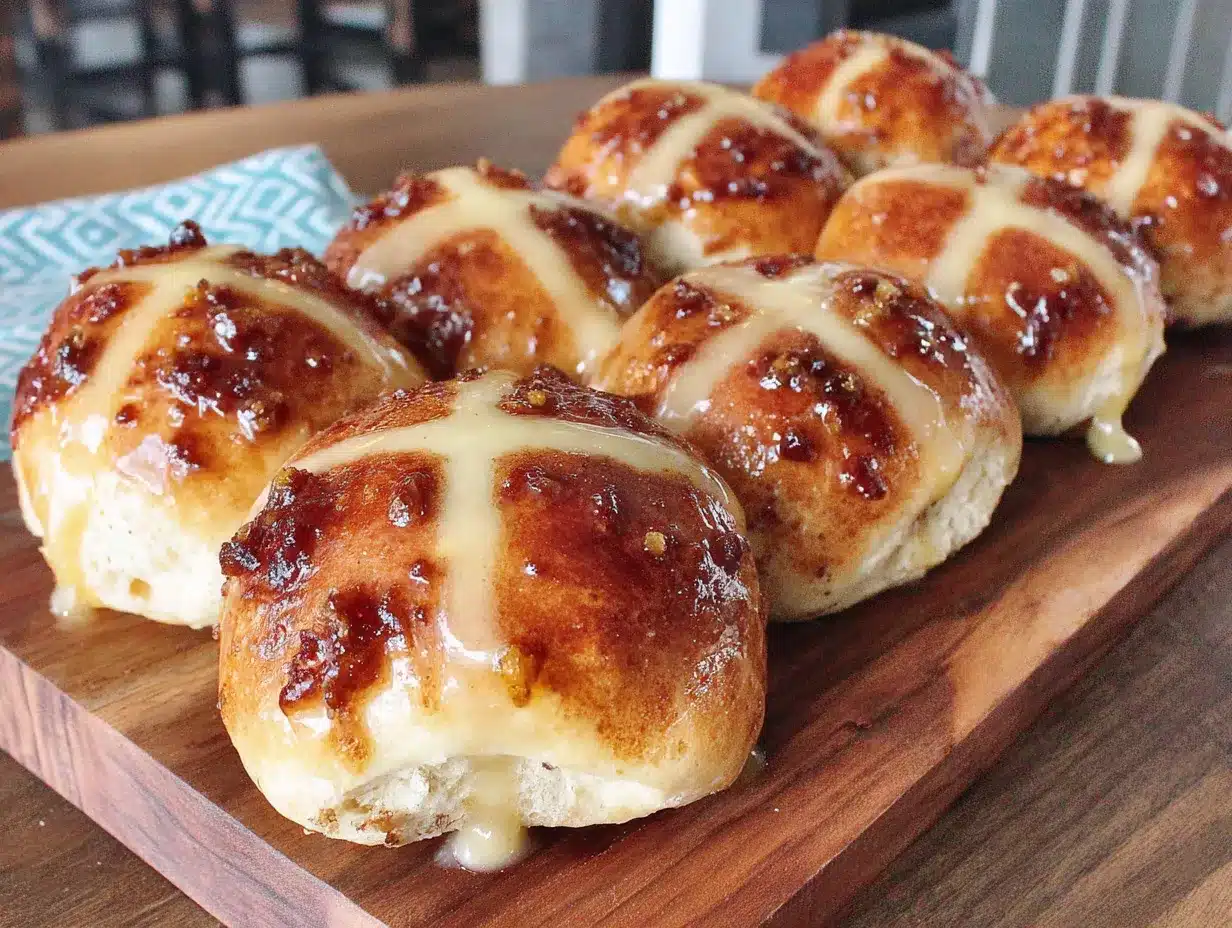
- Make the glaze & cross (while buns cool): Let the buns cool in the dish for 10 minutes, then transfer to a cooling rack. For the cross, mix ½ cup powdered sugar with 1 tablespoon orange juice until thick but pipeable. Pipe crosses onto each bun. For the final glaze, whisk the remaining ½ cup powdered sugar with 1-2 tablespoons orange juice and the vanilla until smooth. Brush or drizzle over the warm buns.
Pro tip: The buns are best served warm. If you’re making them ahead, reheat gently in a 300°F oven for 5 minutes before glazing.
Cooking Tips & Techniques
I learned the hard way that rushing the second rise leads to dense buns. One Easter, I was so pressed for time that I only let them rise for 30 minutes. They were edible, but they lacked that pillowy softness. Give them the full hour, at least. The dough should feel puffy and light when you gently press it.
Another mistake I’ve made? Over-flouring the dough during shaping. It’s tempting to keep adding flour when the dough feels sticky, but that dries out the final buns. Instead, lightly oil your hands and the counter. The dough will be easier to handle without absorbing extra flour.
For the orange glaze, fresh juice is non-negotiable. Bottled juice has a flat, metallic taste that ruins the bright citrus flavor. Zest the oranges before you juice them—it’s much easier.
If you want an extra-glossy finish, brush the baked buns with a little melted butter right when they come out of the oven. Then apply the glaze. The butter creates a barrier so the glaze doesn’t soak in completely, leaving a beautiful sheen.
Timing tip: start the dough on Friday evening, bake Saturday morning. It fits perfectly into a weekend rhythm without taking over your whole day.
Variations & Adaptations
- Dairy-Free Version: Substitute the milk with oat or almond milk, and use vegan butter. The texture will be slightly less tender but still delicious.
- Gluten-Free Option: Use a high-quality 1-to-1 gluten-free flour blend. The dough will be stickier, so wet your hands when shaping. The overnight method still works well.
- Spiced Variation: Add ¼ teaspoon ground cardamom or allspice along with the cinnamon. It gives the buns a more complex, wintery flavor.
- Dried Fruit Swap: Not a fan of currants? Use chopped dried apricots, golden raisins, or even dried cherries. Soak them in orange juice just like the currants.
- No-Orange Option: Skip the orange zest and juice in the dough. Use lemon zest and juice instead for a completely different citrus profile. The glaze becomes a lemon glaze.
- Chocolate Twist: Add ½ cup mini dark chocolate chips along with the dried fruit. The chocolate melts into little pockets of richness.
I once tried a version with dried cranberries and a splash of maple syrup in the dough. It was fantastic for Thanksgiving morning. Don’t be afraid to experiment—this dough is forgiving.
Serving & Storage Suggestions
These buns are best served warm, fresh from the oven, with the glaze still slightly runny. Pair them with a cup of strong black coffee or a frothy latte. For a brunch spread, serve alongside a frittata or a fresh fruit salad. The bright orange flavor cuts through rich eggs beautifully.
Leftover buns (if you have any!) store well at room temperature in an airtight container for up to 2 days. The glaze will soften slightly, but the flavor remains. To reheat, pop them in a 300°F oven for 5-7 minutes, or microwave each bun for 15 seconds. Avoid overheating or they’ll become tough.
You can also freeze the unglazed baked buns. Wrap them individually in plastic wrap, then place in a freezer bag. They keep for up to 3 months. Thaw at room temperature, then warm in the oven and glaze fresh. The glaze does not freeze well, so always add it after reheating.
The flavors actually deepen a bit on day two. The orange zest and spices meld together beautifully. If you can resist eating them all immediately, you might enjoy them even more the next morning.
Nutritional Information & Benefits
Per bun (approximate, based on 12 servings): 220 calories, 5g fat, 38g carbohydrates, 3g fiber, 6g protein. These numbers are lighter than traditional hot cross buns, thanks to the reduced butter and use of whole wheat pastry flour.
The whole wheat pastry flour adds a modest amount of fiber, which helps with satiety and blood sugar stability. The orange zest provides a small dose of vitamin C and antioxidants. Using honey instead of refined sugar means you get trace amounts of beneficial compounds, though it’s still sugar—so enjoy in balance.
This recipe fits well into a balanced, health-conscious lifestyle. It’s not a health food, but it’s a smarter choice for a treat. You get the satisfaction of a homemade pastry without the heavy, overly sweet feeling that often follows traditional versions.
If you are watching your sugar intake, you can reduce the honey in the dough by a tablespoon and use a lighter hand with the glaze. The buns will still be flavorful, just less sweet.
Conclusion
These lighter orange glazed hot cross buns have become a spring tradition in my house, and I don’t see that changing anytime soon. They represent everything I love about cooking: a willingness to be wrong, a little bit of patience, and a whole lot of bright, cheerful flavor. The overnight method makes them achievable on even the busiest mornings, and the orange glaze turns them into something truly special.
I hope you give them a try, and I hope you make them your own. Swap the fruit, adjust the spices, or double the glaze—there are no rules once you know the basic method. And if you have a kitchen skeptic in your life (maybe a twelve-year-old who thinks they know everything), let them prove you wrong. It might just lead to your new favorite recipe.
I’d love to hear how these turn out for you. Drop a comment below with your variations or questions. And if you share a photo on Pinterest, tag me—I always love seeing your bakes!
Frequently Asked Questions
Can I skip the overnight step and bake them the same day?
Yes, you can. After kneading, let the dough rise in a warm spot for 1.5 to 2 hours, then shape and do a second rise of about 1 hour. The flavor won’t be as developed, and the texture will be slightly less tender, but they will still be good.
My dough didn’t rise overnight in the fridge. Is it ruined?
Not at all. Cold fermentation is slow. The dough will puff up but might not double. As long as the yeast was active when you started (it foamed), it will be fine. The final rise on the counter is what matters most.
Can I use all white flour instead of whole wheat pastry flour?
Absolutely. Substitute the whole wheat pastry flour with an equal amount of all-purpose flour. The buns will be slightly less hearty but still delicious and light.
How do I get a perfect cross on top?
Use a piping bag or a small zip-top bag with a tiny corner snipped off. Pipe the cross in a steady, continuous motion. If the glaze is too thick, add a drop more orange juice. If it’s too thin, add a little more powdered sugar.
Can I make these vegan?
Yes, with a few swaps. Use a plant-based milk, vegan butter, and a flax egg (1 tablespoon ground flaxseed mixed with 3 tablespoons water). The texture will be a bit denser, but the flavor will still be wonderful.
Pin This Recipe!


Easy Lighter Overnight Orange Glazed Hot Cross Buns Recipe
- Total Time: 8 hours 45 minutes (includes overnight chilling)
- Yield: 12 servings 1x
Description
These lighter orange glazed hot cross buns are made with an overnight method for convenience, featuring a bright citrus flavor and a tender, airy texture. Perfect for Easter brunch or spring mornings, they are a healthier twist on a classic treat.
Ingredients
- 2 ½ cups (315g) all-purpose flour
- 1 cup (120g) whole wheat pastry flour
- 2 ¼ teaspoons active dry yeast (one ¼-ounce packet)
- ¾ cup (180ml) warm milk (about 110°F)
- ¼ cup (85g) honey
- 3 tablespoons (42g) unsalted butter, softened
- 1 large egg, room temperature
- 2 tablespoons orange zest (from about 2 large oranges)
- 1 ½ teaspoons ground cinnamon
- ½ teaspoon ground nutmeg
- ½ teaspoon salt
- ¾ cup (120g) dried currants or raisins
- 1 cup (120g) powdered sugar
- 2–3 tablespoons fresh orange juice
- ½ teaspoon vanilla extract
Instructions
- Soak the currants in warm orange juice for 15 minutes before starting.
- In a mixing bowl, combine warm milk and 1 tablespoon honey. Sprinkle yeast over top and let sit for 5 minutes until frothy.
- In a separate bowl, whisk together all-purpose flour, whole wheat pastry flour, cinnamon, nutmeg, and salt.
- Add remaining honey, softened butter, egg, and orange zest to the yeast mixture. Stir to combine. Gradually add dry ingredients, mixing until a shaggy dough forms. Add drained currants and mix until just incorporated.
- Knead on a lightly floured surface for 8-10 minutes (or 5-6 minutes in a stand mixer) until smooth and elastic.
- Place dough in a lightly greased bowl, cover tightly with plastic wrap, and refrigerate for at least 8 hours or up to 18 hours.
- The next morning, turn dough onto a lightly floured surface and gently punch it down. Divide into 12 equal pieces (about 75g each) and shape into smooth balls.
- Place buns in a greased 9×13-inch baking dish, spacing evenly. Cover loosely with a kitchen towel and let rise in a warm spot for 1 to 1.5 hours until doubled in size and touching.
- Preheat oven to 375°F (190°C).
- Bake for 20-25 minutes until golden brown and internal temperature reaches 190°F (88°C). Tent with foil after 15 minutes if browning too quickly.
- Let buns cool in dish for 10 minutes, then transfer to a cooling rack.
- For the cross: mix ½ cup powdered sugar with 1 tablespoon orange juice until thick but pipeable. Pipe crosses onto each bun.
- For the final glaze: whisk remaining ½ cup powdered sugar with 1-2 tablespoons orange juice and vanilla until smooth. Brush or drizzle over warm buns.
Notes
The buns are best served warm. For make-ahead, reheat gently in a 300°F oven for 5 minutes before glazing. The dough is forgiving; don’t over-flour during shaping. Fresh orange juice is essential for the glaze.
- Prep Time: 20 minutes
- Cook Time: 25 minutes
- Category: Breakfast, Brunch
- Cuisine: American
Nutrition
- Serving Size: 1 bun
- Calories: 220
- Sugar: 16
- Sodium: 120
- Fat: 5
- Saturated Fat: 2.5
- Carbohydrates: 38
- Fiber: 3
- Protein: 6
Keywords: hot cross buns, orange glaze, overnight recipe, Easter brunch, lighter buns, citrus buns, spring breakfast