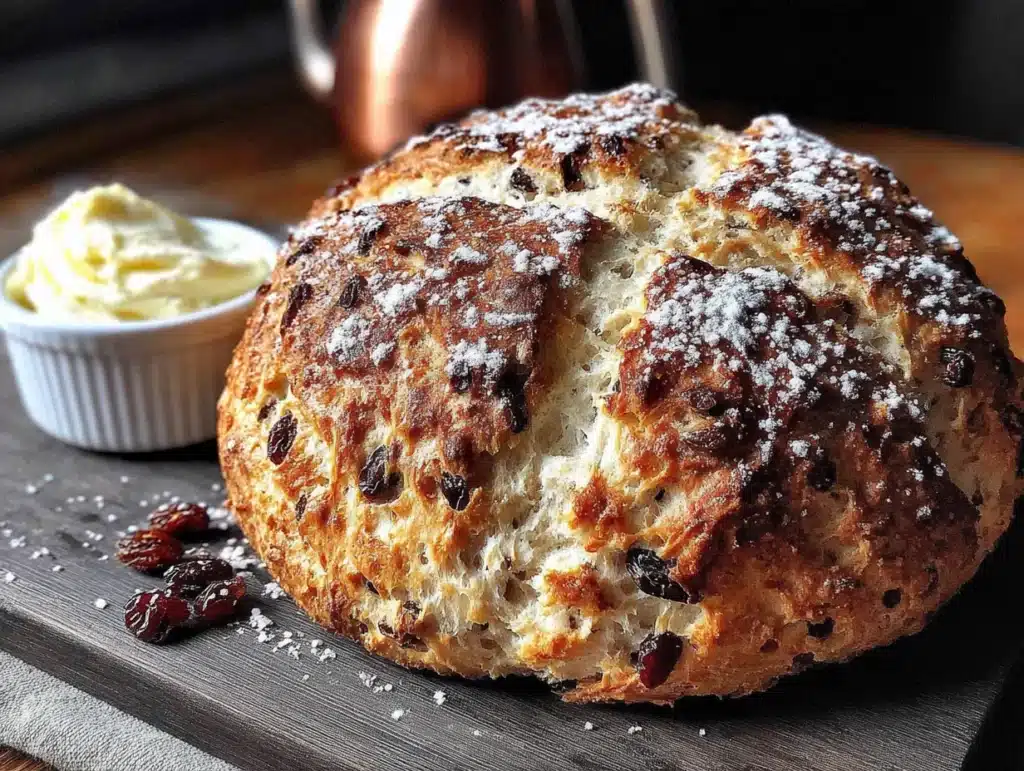
My sister swore she hated caraway seeds. For years. She’d pick them out of rye bread like a kid removing raisins from a cookie, making that face—you know the one. Then last March, I pulled a loaf of Irish soda bread out of the oven, still steaming, the kitchen smelling like a bakery in County Cork. I set it on the counter to cool and walked away for maybe ten minutes. When I came back, she was standing there with a slice in one hand, butter melting into every crevice, and a guilty look on her face. “This is different,” she mumbled, reaching for another piece. I didn’t say a word. I just watched her prove herself wrong, bite by bite. Honestly, that moment taught me something about this bread—it has a way of quietly winning people over without even trying.
This isn’t fancy bread. It’s not the kind you knead for twenty minutes or let rise overnight. It’s the bread you make when you realize you forgot to buy bread for dinner, or when a sudden craving for something warm and buttery hits on a rainy Tuesday afternoon. The dough comes together in one bowl with a wooden spoon, and there’s no waiting around for yeast to do its thing. Baking soda and buttermilk handle all the heavy lifting here. I’ve made this loaf on a whim more times than I can count, and it never lets me down.
The raisins add little pockets of sweetness that catch you off guard, and the caraway seeds—yes, those controversial little seeds—bring this subtle, almost fennel-like warmth that just works. It’s the kind of bread that makes you close your eyes after the first bite, not because it’s complicated or fancy, but because it tastes like something your grandmother might have made. Or maybe that’s just me. But I think you’ll understand once you try it.
Why You’ll Love This Recipe
Let me be straight with you—I’ve tested this recipe about seven times to get it exactly right. The first loaf came out dense as a hockey puck. The second one? Too dry. The third time, I finally figured out that the secret is handling the dough like it’s made of glass. This version, the one I’m sharing with you today, is the one that finally made my sister a caraway convert. So trust me when I say this recipe has been through the wringer.
- Quick & Easy: From mixing bowl to cooling rack in under an hour. No yeast, no kneading, no fuss. You can have warm bread on the table before you finish cleaning up the kitchen.
- Simple Ingredients: You probably already have flour, sugar, salt, and baking soda in your pantry. You might need to grab buttermilk and a handful of raisins, but that’s it. No trips to specialty stores required.
- Perfect for St. Patrick’s Day or Any Cozy Day: This bread shines on March 17th alongside a bowl of soup, but honestly, it’s just as welcome on a snowy January evening or a drizzly October afternoon. It fits any season where you crave something warm and comforting.
- Crowd-Pleaser: I’ve brought this to potlucks and watched people go back for seconds and thirds. Even folks who swear they don’t like caraway seeds end up asking for the recipe. My sister is living proof.
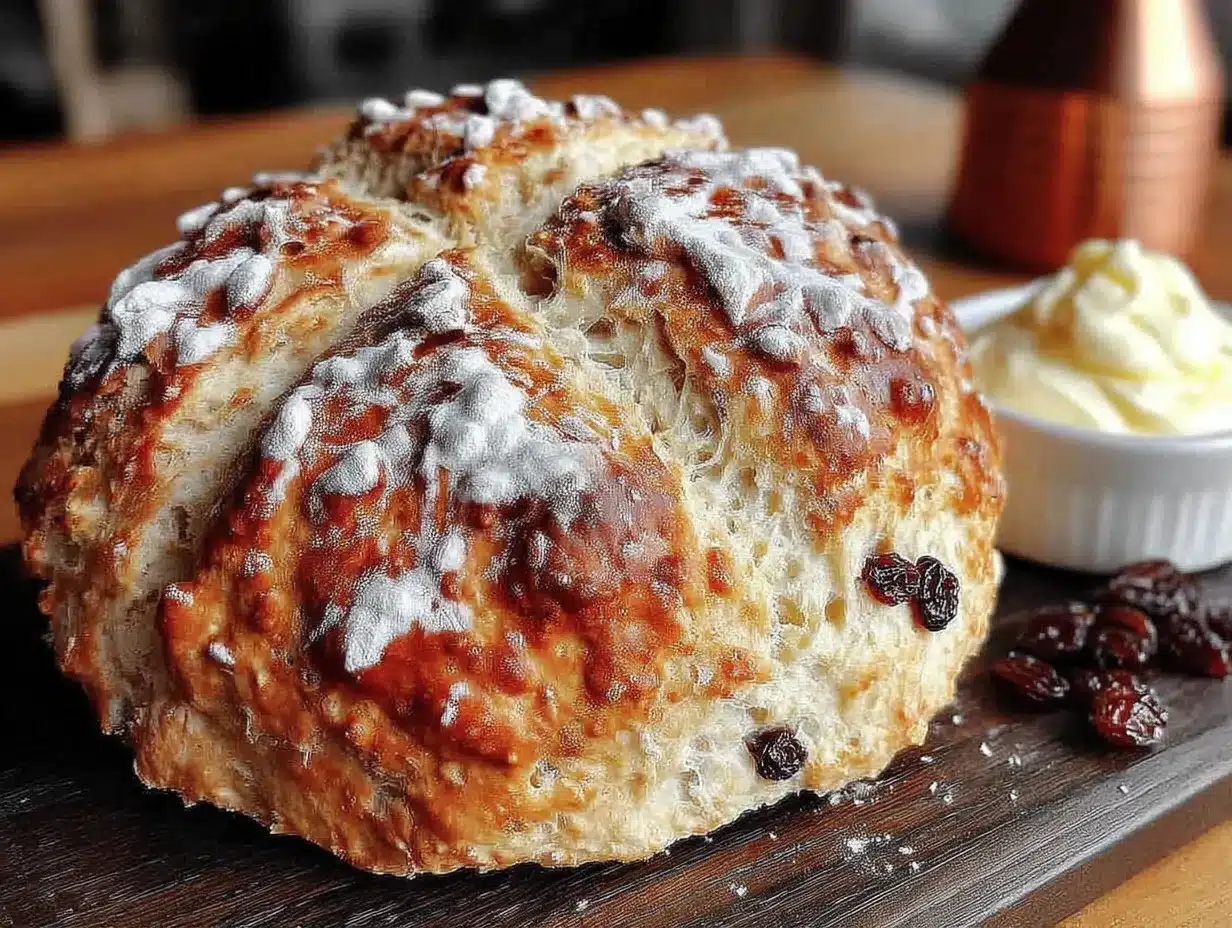
- Unbelievably Delicious: The crust is golden and slightly crisp, the inside is tender and soft, and those bursts of raisin sweetness paired with the subtle savory note of caraway? It’s next-level comfort food in sliceable form.
What makes this recipe different from every other Irish soda bread out there is the balance. I’ve found that sweet spot where the raisins don’t overpower the caraway, and the caraway doesn’t bully the raisins. The buttermilk keeps the crumb tender without making it soggy. And the technique—barely mixing, barely handling—is what gives you that perfect texture. This isn’t just another version of soda bread. It’s the version I keep coming back to, and I think you will too.
What Ingredients You Will Need
This recipe uses simple, everyday ingredients that come together to create something truly special. Most of these are probably already sitting in your kitchen, which is exactly how I like my recipes to work.
- All-purpose flour – 4 cups (500g). This gives the bread structure without making it too heavy. I prefer Gold Medal or King Arthur for consistent results, but any brand works fine.
- Granulated sugar – 3 tablespoons (36g). Just enough to balance the tangy buttermilk and complement the raisins. Don’t skip it—the bread needs that tiny bit of sweetness.
- Baking soda – 1 teaspoon (5g). This is your leavening agent, so make sure it’s fresh. If your baking soda has been sitting in the back of the cabinet for two years, go buy a new box. Trust me on this one.
- Salt – 1 teaspoon (6g). Use fine sea salt or table salt. It enhances all the other flavors and keeps the bread from tasting flat.
- Unsalted butter – 4 tablespoons (56g), cold and cut into small cubes. The butter gets cut into the flour like you’re making biscuits. It creates little pockets of tenderness throughout the crumb.
- Buttermilk – 1 ½ cups (360ml), cold. This is non-negotiable for authentic soda bread. The acid in the buttermilk reacts with the baking soda to create lift. If you don’t have buttermilk, you can make a quick substitute by adding 1 tablespoon of lemon juice or white vinegar to 1 ½ cups of regular milk and letting it sit for 5 minutes. It works in a pinch, but real buttermilk gives the best texture.
- Raisins – 1 cup (150g). I use golden raisins because they’re plumper and a little sweeter, but dark raisins work beautifully too. If your raisins are a bit dry, soak them in warm water for 10 minutes before using, then drain them well. It makes a noticeable difference.
- Caraway seeds – 1 tablespoon (8g). These little seeds are the soul of this bread. They have a mild licorice-like flavor that’s earthy and slightly sweet. If you’re nervous about them, start with 2 teaspoons and see how you feel. I promise they grow on you.
- Egg – 1 large, for the egg wash. This gives the crust that beautiful golden-brown finish. You can skip it and brush the top with a little buttermilk instead if you prefer.
A quick note on the buttermilk—I know it’s one of those ingredients you don’t always have on hand, but it’s worth buying specifically for this bread. The tanginess it brings is irreplaceable. And if you end up with leftover buttermilk, you can use it in pancakes, biscuits, or even mashed potatoes. Problem solved.
Equipment Needed
You don’t need a stand mixer or any fancy gadgets for this bread. That’s part of its charm.
- Large mixing bowl – Any bowl big enough to get your hands in there. I use a ceramic one that belonged to my grandmother, but a stainless steel one works just fine.
- Wooden spoon or sturdy spatula – For mixing the dough. A wooden spoon feels right somehow, but use whatever you have.
- Pastry cutter or two knives – For cutting the butter into the flour. You can also use your fingertips if you work quickly and keep everything cold. I’ve done it all three ways, and they all work.
- Baking sheet or cast iron skillet – I prefer a cast iron skillet because it gives the bread a gorgeous crust, but a regular baking sheet lined with parchment paper works perfectly. If using a skillet, don’t preheat it—just place the dough in a cold pan.
- Sharp knife or bench scraper – For scoring the cross on top of the loaf. That cross isn’t just decorative—it helps the bread bake evenly by allowing heat to reach the center.
- Wire cooling rack – Essential for letting the bread cool properly. If you leave it in the pan, the bottom gets soggy. I learned that lesson the hard way.
- Pastry brush – For applying the egg wash. A silicone one is easiest to clean, but any brush works.
If you don’t have a pastry cutter, honestly, just use two butter knives in a scissoring motion. It takes a little longer but gets the job done. And if you don’t have a cast iron skillet, don’t run out and buy one—a baking sheet will give you excellent results. I’ve made this bread on a cheap cookie sheet more times than I can count.
Preparation Method
Preheat your oven to 375°F (190°C). Line a baking sheet with parchment paper or lightly grease a 10-inch cast iron skillet. Set it aside.
In your large mixing bowl, whisk together the flour, sugar, baking soda, and salt. Make sure the baking soda is evenly distributed—if you get a pocket of it in your final loaf, you’ll taste it, and not in a good way. I speak from experience.
Add the cold butter cubes to the flour mixture. Using your pastry cutter or two knives, cut the butter into the flour until the mixture resembles coarse crumbs with some pea-sized butter pieces remaining. You want to see little flecks of butter throughout. Don’t overdo it—those tiny butter bits are what make the bread tender. Work quickly so the butter stays cold.
Stir in the raisins and caraway seeds. Make sure they’re evenly distributed throughout the flour mixture. The raisins have a tendency to clump together, so take a moment to break them apart with your fingers.
Make a well in the center of the flour mixture and pour in the cold buttermilk. Using your wooden spoon or spatula, stir until the dough just comes together. It will look shaggy and a little messy—that’s exactly what you want. Don’t keep stirring once the flour is incorporated. Overmixing develops gluten, and gluten is the enemy of tender soda bread.
Turn the dough out onto a lightly floured surface. Here’s where you need to be gentle. With floured hands, bring the dough together into a rough ball. Knead it no more than 8 to 10 times—just enough to shape it. If you knead it like regular bread dough, you’ll end up with a brick. I’ve done it. It’s sad. Learn from my mistakes.
Shape the dough into a round loaf about 6 to 7 inches in diameter. It won’t be perfectly smooth, and that’s fine. Transfer it to your prepared baking sheet or cast iron skillet.
Using a sharp knife, score a deep cross into the top of the loaf, cutting about ½ inch deep. The cross should go from edge to edge. This isn’t just tradition—it helps the bread bake evenly and gives it that classic soda bread look. Some people say it lets the fairies out. I like that explanation better.
In a small bowl, beat the egg with 1 tablespoon of water to make an egg wash. Brush it generously over the top and sides of the loaf. This gives you that beautiful golden crust that makes everyone think you’re a professional baker.
Bake for 40 to 45 minutes, until the bread is deep golden brown and sounds hollow when you tap the bottom. If the top is browning too quickly after 30 minutes, tent it loosely with foil. Every oven runs differently, so start checking at the 38-minute mark.
Remove the bread from the oven and let it cool on the baking sheet for 10 minutes, then transfer to a wire rack. I know it’s tempting to slice into it right away, but let it cool for at least 20 minutes. The texture sets as it cools, and warm bread tends to be gummy inside. Trust the process.
Cooking Tips & Techniques
The biggest mistake people make with soda bread is overworking the dough. I’ve done it myself more times than I’d like to admit. That first loaf I mentioned earlier? The hockey puck? That was from kneading it like it was yeast bread. Soda bread wants to be treated gently. Mix until it just comes together, shape it with a light touch, and get it in the oven. That’s the whole secret.
Here’s another thing I learned the hard way—cold ingredients matter. Cold butter creates steam pockets as it melts in the oven, which gives you a lighter crumb. Cold buttermilk keeps the butter from softening too quickly. If your kitchen is warm, you can even pop the flour mixture in the fridge for 10 minutes before adding the buttermilk. It makes a difference.
Timing wise, this bread comes together in about 10 minutes of active work. I usually preheat the oven first, then mix the dough while it’s heating up. By the time the oven is ready, the dough is shaped and scored. It’s one of those rare recipes where everything lines up perfectly.
If your dough feels too dry and isn’t coming together, add buttermilk 1 tablespoon at a time until it does. Flour varies in how much liquid it absorbs, especially depending on humidity. On the flip side, if the dough feels sticky, add a little more flour. You want a dough that holds together but isn’t wet. It should feel soft and a little shaggy.
One more thing—don’t skip the scoring step. I know it seems like just a decorative touch, but that cross allows the bread to expand as it bakes. Without it, the bread can crack on the sides or end up dense in the center. Plus, it looks beautiful. It’s a win-win.
Variations & Adaptations
This recipe is wonderfully flexible, and I’ve tried quite a few variations over the years. Here are some of my favorites:
- Gluten-Free Version: Substitute the all-purpose flour with a good gluten-free flour blend that contains xanthan gum. I’ve used Bob’s Red Mill 1-to-1 Baking Flour with great results. The texture will be slightly different—a bit more crumbly—but the flavor is still spot on. Add an extra tablespoon of buttermilk since gluten-free flours tend to absorb more liquid.
- Dairy-Free Adaptation: Use a dairy-free butter substitute like Earth Balance, and replace the buttermilk with 1 ½ cups of unsweetened almond or oat milk mixed with 1 tablespoon of lemon juice. Let it sit for 5 minutes before using. The bread won’t be quite as tender, but it’s still delicious. I made this version for a friend with dairy allergies and she asked for the recipe.
- No Raisin Version: If you’re not a raisin person (I see you, and I respect you), simply omit them. The bread works beautifully without them. You might want to increase the sugar to 4 tablespoons to compensate for the lost sweetness, but it’s not strictly necessary.
- Savory Soda Bread: Leave out the raisins and sugar, and add ½ cup of shredded sharp cheddar cheese, 2 tablespoons of fresh chopped rosemary, and an extra teaspoon of caraway seeds. This version is incredible alongside a bowl of tomato soup or beef stew. I’ve made it for St. Patrick’s Day parties and it disappears fast.
- Dried Fruit Swap: Replace the raisins with dried cranberries, chopped dried apricots, or even dried cherries. Each one gives the bread a different personality. The cranberry version is especially good around Thanksgiving.
Serving & Storage Suggestions
This bread is best served warm, with a generous slab of salted butter melting into every slice. I mean it—don’t skimp on the butter. It’s what makes soda bread truly sing. A drizzle of honey or a spoonful of raspberry jam is also lovely if you’re feeling fancy.
For a savory pairing, serve it alongside a bowl of hearty Irish stew, creamy potato soup, or even a simple lentil soup. The bread’s tender crumb is perfect for soaking up broth. I’ve also been known to toast leftover slices and use them for breakfast with a fried egg on top. Don’t knock it until you’ve tried it.
As for beverages, a cup of strong black tea is the classic choice. But honestly, this bread goes with just about anything—coffee, milk, a cold glass of buttermilk, or even a pint of stout if you’re feeling festive.
To store leftovers, wrap the bread tightly in aluminum foil or plastic wrap and keep it at room temperature for up to 3 days. Do not refrigerate it—the fridge dries out bread faster than anything. If you need to keep it longer, slice the bread and freeze the slices in a zip-top bag for up to 3 months. Toast frozen slices directly from the freezer for a quick breakfast or snack.
The flavor actually improves after the first day. The caraway seeds mellow out and meld with the raisins, and the texture becomes even more tender. That is, if it lasts that long. In my house, a loaf rarely makes it past 24 hours.
Nutritional Information & Benefits
Per slice (based on 12 slices per loaf), here’s the approximate nutritional breakdown:
- Calories: 245
- Total Fat: 6g
- Saturated Fat: 3.5g
- Cholesterol: 30mg
- Sodium: 320mg
- Total Carbohydrates: 43g
- Dietary Fiber: 2g
- Sugars: 14g
- Protein: 6g
This bread offers a few surprising nutritional perks. The caraway seeds are rich in antioxidants and have been used in traditional medicine to aid digestion. They also contain small amounts of iron and calcium. The raisins provide natural sweetness along with fiber and potassium. And while this isn’t health food by any stretch, it’s made with simple, recognizable ingredients—no preservatives, no weird additives, nothing you can’t pronounce.
If you’re watching your sugar intake, you can reduce the sugar to 2 tablespoons and use fewer raisins. The bread will still be delicious, just a little less sweet. For a lower-carb option, this recipe isn’t ideal due to the flour content, but you can explore almond flour versions if that’s your priority.
Conclusion
This Irish soda bread has become a staple in my kitchen for good reason. It’s quick enough for a weekday whim and special enough for a holiday table. The combination of sweet raisins and earthy caraway seeds, tucked into that tender, buttery crumb—it’s the kind of simple pleasure that reminds you why baking is worth the effort.
I hope you’ll make this bread your own. Add more raisins if that’s your thing. Cut back on the caraway seeds if you’re still on the fence. Serve it with butter and jam, or alongside a bowl of soup, or just eat it standing at the counter while it’s still warm. There’s no wrong way to enjoy it.
When you make it—and I hope you do—come back and let me know how it turned out. Did you convert a caraway skeptic? Did you try a fun variation? I’d love to hear about it. Drop a comment below, share a photo, or tag me on social media. Nothing makes my day like seeing someone else fall in love with this bread.
Now go preheat that oven. You’ve got a loaf of something wonderful waiting to happen.
Frequently Asked Questions
Can I use whole wheat flour instead of all-purpose flour?
You can substitute up to half of the all-purpose flour with whole wheat flour without major issues. Using 100% whole wheat will result in a denser, heavier loaf. If you go that route, add an extra 2 to 3 tablespoons of buttermilk since whole wheat flour absorbs more liquid.
Why did my soda bread turn out dense and heavy?
The most common culprit is overmixing or overkneading the dough. Soda bread needs a light touch—mix until just combined and knead no more than 10 times. Another possibility is old baking soda. Test your baking soda by dropping a teaspoon into a small amount of vinegar. If it fizzes vigorously, it’s still active.
Can I make this recipe without caraway seeds?
Absolutely. The caraway seeds add a traditional flavor, but the bread is still wonderful without them. You can replace them with fennel seeds for a similar vibe, or simply leave them out entirely. The raisins will carry the flavor on their own just fine.
How do I know when the bread is fully baked?
The top should be deep golden brown, and the loaf should sound hollow when you tap the bottom. If you’re unsure, insert a skewer into the center—it should come out clean or with just a few moist crumbs. Internal temperature should reach about 200°F (93°C).
Can I freeze this Irish soda bread?
Yes, and it freezes beautifully. Let the bread cool completely, then wrap it tightly in plastic wrap followed by a layer of aluminum foil. Freeze for up to 3 months. To thaw, leave it at room temperature for a few hours, then warm slices in a 350°F oven for 5 to 7 minutes. It’s almost as good as fresh.
Pin This Recipe!
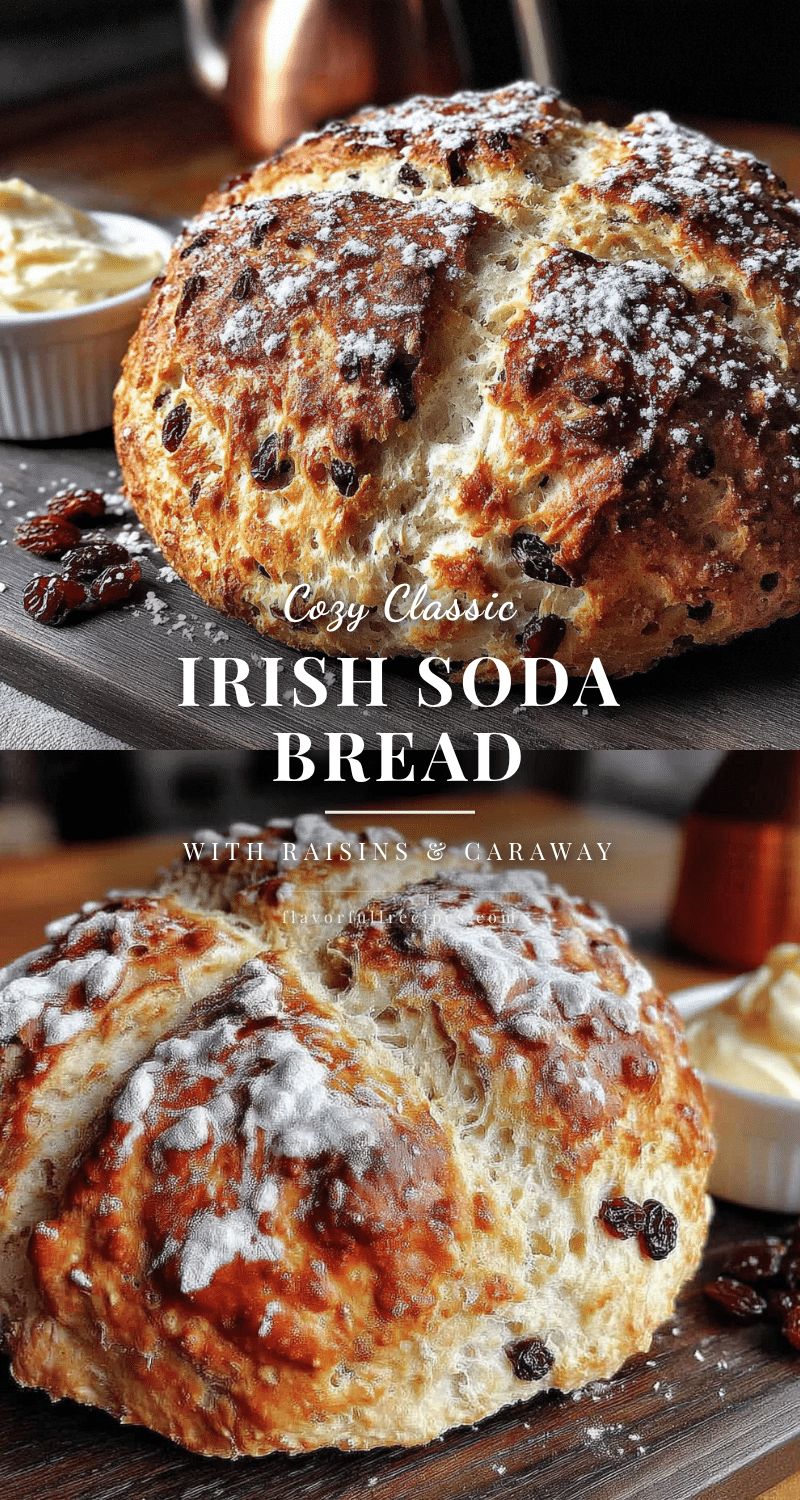

Easy Classic Irish Soda Bread with Raisins & Caraway
- Total Time: 50 minutes
- Yield: 12 servings 1x
Description
This quick and easy Irish soda bread comes together in one bowl with no yeast or kneading. Sweet raisins and earthy caraway seeds create a tender, buttery loaf that’s perfect for St. Patrick’s Day or any cozy day.
Ingredients
- 4 cups (500g) all-purpose flour
- 3 tablespoons (36g) granulated sugar
- 1 teaspoon (5g) baking soda
- 1 teaspoon (6g) fine sea salt
- 4 tablespoons (56g) cold unsalted butter, cut into small cubes
- 1 ½ cups (360ml) cold buttermilk
- 1 cup (150g) raisins (golden or dark)
- 1 tablespoon (8g) caraway seeds
- 1 large egg (for egg wash)
Instructions
- Preheat oven to 375°F (190°C). Line a baking sheet with parchment paper or lightly grease a 10-inch cast iron skillet.
- In a large mixing bowl, whisk together flour, sugar, baking soda, and salt.
- Add cold butter cubes to the flour mixture. Using a pastry cutter or two knives, cut the butter into the flour until the mixture resembles coarse crumbs with some pea-sized butter pieces remaining.
- Stir in raisins and caraway seeds until evenly distributed.
- Make a well in the center and pour in the cold buttermilk. Stir with a wooden spoon until the dough just comes together (it will look shaggy).
- Turn dough out onto a lightly floured surface. With floured hands, bring it together into a rough ball. Knead no more than 8 to 10 times.
- Shape into a round loaf about 6 to 7 inches in diameter. Transfer to prepared baking sheet or skillet.
- Using a sharp knife, score a deep cross into the top of the loaf, cutting about ½ inch deep.
- In a small bowl, beat the egg with 1 tablespoon of water to make an egg wash. Brush generously over the top and sides of the loaf.
- Bake for 40 to 45 minutes, until deep golden brown and sounds hollow when tapped on the bottom. If browning too quickly after 30 minutes, tent loosely with foil.
- Remove from oven and cool on baking sheet for 10 minutes, then transfer to a wire rack. Let cool for at least 20 minutes before slicing.
Notes
The biggest mistake is overworking the dough. Mix until just combined and knead no more than 10 times. Cold ingredients matter—cold butter and cold buttermilk create a lighter crumb. Don’t skip scoring the cross; it helps the bread bake evenly. For best texture, let cool at least 20 minutes before slicing. Store wrapped at room temperature for up to 3 days; do not refrigerate. Freeze sliced for up to 3 months.
- Prep Time: 10 minutes
- Cook Time: 40 minutes
- Category: Bread
- Cuisine: Irish
Nutrition
- Serving Size: 1 slice
- Calories: 245
- Sugar: 14
- Sodium: 320
- Fat: 6
- Saturated Fat: 3.5
- Carbohydrates: 43
- Fiber: 2
- Protein: 6
Keywords: Irish soda bread, soda bread, raisin bread, caraway bread, St. Patrick's Day bread, quick bread, no yeast bread