
I had refused to make orzo for years. Honestly, I thought it was just sad, tiny pasta that couldn’t decide what it wanted to be—not quite rice, not quite a real noodle. It felt like a compromise you’d make when you ran out of actual pasta. Then last Tuesday, my neighbor Claire knocked on my door holding a steaming bowl, saying, “I made too much orzo again, please take this off my hands.” I took it out of politeness, set it on the counter, and forgot about it for an hour. When I finally warmed it up, that first bite had this unexpected brightness—the lemon hit first, then this creamy, almost velvety texture from the Parmesan, and little pops of fresh herbs that made everything feel alive. I stood at my kitchen island eating it straight from the bowl, and let me tell you, I had to stop myself from licking it clean. The thing is, Claire is the kind of cook who never measures anything and just “feels” her way through recipes, so I spent the next three days texting her questions. “How much garlic? What kind of broth? Did you really use that much butter?” She finally sent me a voice note that was mostly her laughing and saying, “Just figure it out, you’ll make it better anyway.” So I did. I tested it four times that week—once with too much lemon (bitter), once with not enough salt (sad), once with pre-shredded Parmesan (clumpy disaster), and once where I got distracted by a phone call and let the garlic brown too much (still ate it, honestly). But that fourth try? That was the one. The orzo soaked up the broth like it was made for it, the Parmesan melted into this silky sauce, and the herbs—I used parsley and dill because that’s what I had—made every bite feel fresh and cozy at the same time. Maybe you’ve been there, where a dish you dismissed for years suddenly becomes the one you can’t stop thinking about. This is that recipe for me. And now I make it every single week, sometimes twice.
Why You’ll Love This Recipe
This Cozy Lemon Garlic Orzo isn’t just another side dish floating around the internet. I’ve tested this version more times than I care to admit, and here is why it earned a permanent spot in my weekly rotation.
- One-Pot Wonder : Everything comes together in a single pot. Less cleanup, more time curling up on the couch.
- Ready in 25 Minutes : From the moment you start sautéing the garlic to the final sprinkle of Parmesan, you are looking at about 25 minutes. Perfect for those nights when you need comfort fast.
- Pantry-Friendly Ingredients : Orzo, garlic, lemon, Parmesan, and herbs. Chances are you already have most of this in your kitchen right now.
- Cozy Meets Bright : This is the rare dish that feels both comforting and light. The creamy Parmesan base wraps around you like a warm blanket, while the lemon and fresh herbs keep everything bright and uplifting.
- Incredibly Versatile : Serve it alongside roasted chicken, flaky fish, or grilled vegetables. Or eat it straight from the pot like I do on lazy Sundays.
- Always a Crowd-Pleaser : I brought this to a small dinner party last month, and three people asked for the recipe before dessert was served.
What makes this recipe different? It is the technique. Instead of boiling the orzo separately and tossing it with sauce later, you cook it gently in broth, letting the starches release naturally and create this luscious, almost risotto-like texture without all the stirring. The lemon juice goes in at the very end, preserving its brightness, and the Parmesan gets stirred in off the heat so it stays silky instead of turning grainy. This isn’t just another version of lemon orzo—it is the one that makes you close your eyes after the first bite.
What Ingredients You Will Need
This recipe relies on simple, wholesome ingredients that work together to create something truly special. Most of these are pantry staples, which makes this dish perfect for those evenings when you need comfort without a grocery run.
For the Orzo Base
- 1 cup (200g) orzo pasta – I prefer De Cecco or Barilla for their texture. Look for orzo that is uniformly small and pale yellow. Avoid broken pieces in the box.
- 2 tablespoons (30g) unsalted butter – Adds richness and helps the garlic bloom without burning. You can use salted butter, just reduce the added salt later.
- 4 cloves garlic, minced – Fresh garlic is non-negotiable here. Pre-minced jarred garlic tends to be bitter and watery. Trust me on this one.
- 2 cups (480ml) low-sodium chicken or vegetable broth – The broth is where most of the flavor comes from, so use a good quality one. I like Swanson or Pacific Foods. Low-sodium lets you control the salt.
- 1/2 cup (120ml) water – Helps the orzo cook evenly without becoming too salty as the liquid reduces.
For the Creamy Finish
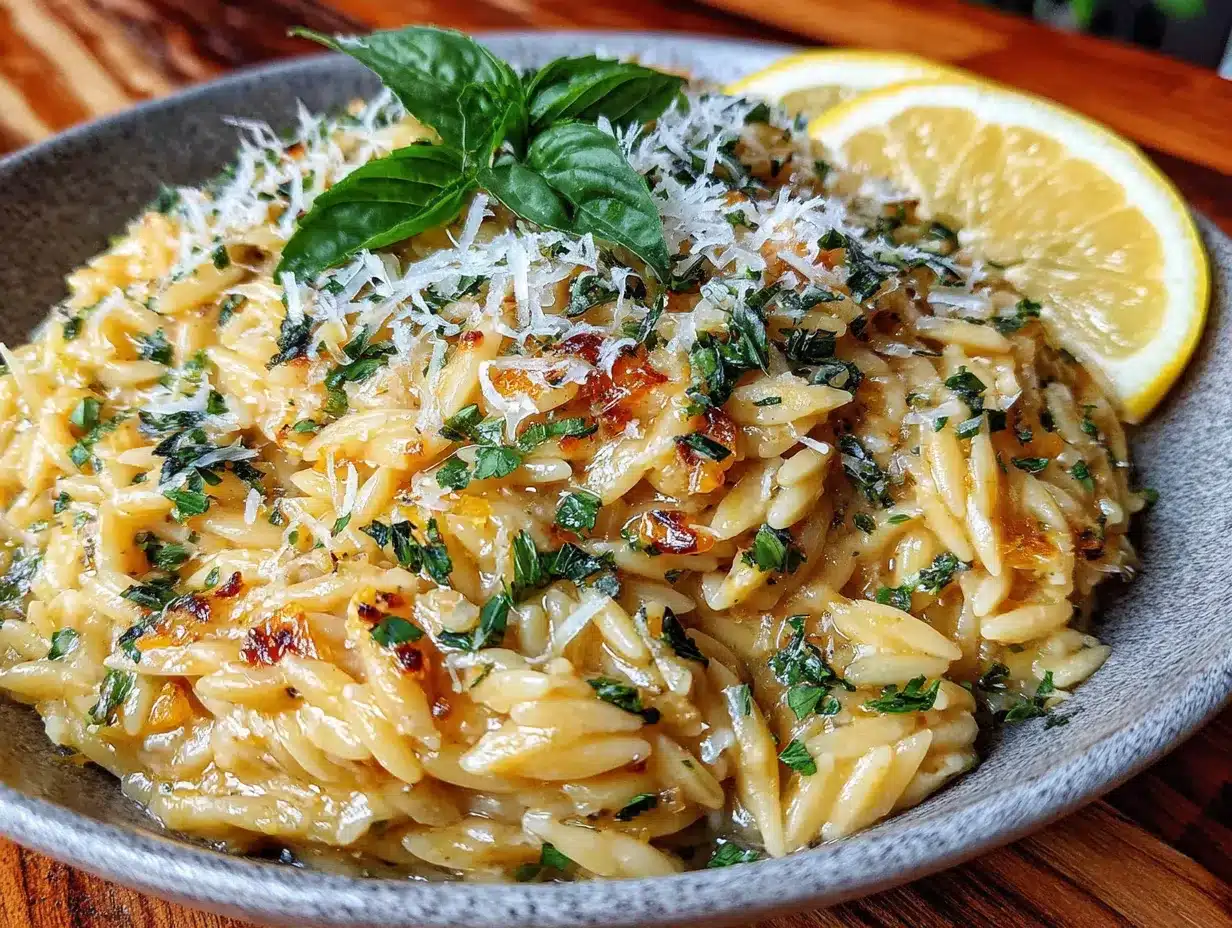
- 1/2 cup (50g) freshly grated Parmesan cheese – Please, please grate your own. Pre-shredded Parmesan contains anti-caking agents that prevent it from melting smoothly. You want fine, powdery shreds that dissolve into the orzo.
- 1/4 cup (60ml) heavy cream or half-and-half – Adds that luscious, velvety texture. For a lighter version, use whole milk, but the result won’t be quite as creamy.
- 1 tablespoon (15ml) fresh lemon juice – About half a lemon. Always use fresh. Bottled lemon juice tastes flat and slightly metallic.
- 1 teaspoon lemon zest – This is where the real lemon flavor lives. The oils in the zest give you that bright, aromatic quality that juice alone can’t provide.
For the Herbs & Finish
- 3 tablespoons fresh parsley, finely chopped – Flat-leaf parsley works best. It adds freshness and a pop of green color.
- 1 tablespoon fresh dill, finely chopped – Dill and lemon are a match made in heaven. If you are not a dill fan, try fresh chives or basil instead.
- 1/2 teaspoon salt – Adjust based on your broth’s saltiness. Start with less and add more at the end.
- 1/4 teaspoon black pepper – Freshly cracked is best.
- Extra Parmesan and herbs for garnish – Because we eat with our eyes first.
Equipment Needed
You don’t need a fancy kitchen to make this recipe. Here is what you will need:
- Large, heavy-bottomed pot or Dutch oven – A 3 to 4-quart pot works perfectly. The heavy bottom helps distribute heat evenly and prevents the orzo from sticking. I use my trusty Le Creuset, but any sturdy pot will do.
- Wooden spoon or silicone spatula – For stirring. A metal spoon can scratch your pot, especially if you are using non-stick.
- Microplane or fine grater – For zesting the lemon and grating the Parmesan. A regular box grater works too, but a microplane gives you that fine, fluffy texture.
- Chef’s knife and cutting board – For mincing garlic and chopping herbs.
- Measuring cups and spoons – Accuracy matters, especially with the broth and cream.
- Citrus juicer or your hands – For squeezing the lemon. I usually just use my hands, but a small juicer catches the seeds.
If you don’t have a Dutch oven, a deep skillet with a lid works beautifully. The key is having enough surface area for the orzo to cook evenly. And if you are on a budget, a standard stainless steel saucepan from IKEA or Target will get the job done just fine.
Preparation Method
Let me walk you through this step by step. I promise, if you follow these instructions, you will end up with the creamiest, most flavorful orzo of your life.
- Melt the butter and bloom the garlic. Place your pot over medium heat and add the 2 tablespoons of butter. Let it melt completely, swirling occasionally. Once it starts to foam gently—about 1 minute—add the minced garlic. Stir constantly for 30 to 45 seconds, until the garlic is fragrant but not brown. The moment it turns golden, you have gone too far. Burnt garlic tastes bitter and will ruin the whole dish.
- Toast the orzo. Add the 1 cup of orzo directly to the pot. Stir it into the garlic butter and let it toast for 2 to 3 minutes, stirring frequently. You will notice the orzo turning a slightly deeper, golden color, and you will smell a nutty aroma. This step is crucial—toasting the pasta adds a layer of flavor that you simply cannot get from boiling it.
- Add the liquids. Pour in the 2 cups of broth and 1/2 cup of water. Stir everything together, scraping the bottom of the pot to release any stuck bits of garlic or orzo. Bring the mixture to a gentle boil—you want bubbles around the edges, not a violent rolling boil.
- Simmer gently. Once it reaches a boil, reduce the heat to low, cover the pot with a lid, and let it simmer for 12 to 15 minutes. Set a timer for 12 minutes, then check. The orzo should be tender but still have a slight bite to it—al dente. Most of the liquid should be absorbed. If it looks dry before the orzo is cooked, add 2 to 3 tablespoons of warm water or broth.
- Remove from heat and add the cream. Take the pot off the burner completely. Pour in the 1/4 cup of heavy cream and stir gently. The residual heat will warm the cream without curdling it. You will see the mixture transform from separate grains of orzo into something cohesive and saucy.
- Stir in the Parmesan. Add the 1/2 cup of freshly grated Parmesan cheese. Stir continuously for about 30 seconds, until the cheese melts completely and the orzo becomes creamy and luscious. If the mixture seems too thick, add a tablespoon of warm water or broth to loosen it.
- Add the lemon and herbs. Sprinkle in the 1 teaspoon of lemon zest, 1 tablespoon of lemon juice, 3 tablespoons of parsley, and 1 tablespoon of dill. Stir gently to combine. Taste the orzo at this point. Add the 1/2 teaspoon of salt and 1/4 teaspoon of black pepper, then taste again and adjust. I often find I need a pinch more salt or an extra squeeze of lemon.
- Rest and serve. Let the orzo sit off the heat for 2 to 3 minutes. This allows the flavors to meld and the texture to settle. Spoon it into serving bowls, garnish with extra Parmesan and a sprinkle of fresh herbs, and serve immediately.
A note on timing: The entire cooking process takes about 25 minutes from start to finish. The active time is only about 10 minutes—the rest is hands-off simmering. This makes it perfect for busy weeknights when you want something homemade but don’t have the energy for a complicated recipe.
Cooking Tips & Techniques
I learned most of these the hard way—through batches that were too salty, too gluey, or just plain sad. Let me save you the trouble.
Toast the orzo properly. This is non-negotiable. I once skipped the toasting step because I was in a hurry, and the orzo came out tasting flat and one-dimensional. That nutty flavor from toasting is what gives this dish depth. Stir constantly and watch for that golden color change.
Grate your own Parmesan. I know, I know, it is an extra step. But pre-shredded cheese is coated in cellulose and other anti-caking agents that prevent it from melting smoothly. When you add it to the orzo, it clumps up and creates a grainy texture instead of that silky sauce you are after. Spend the two minutes grating a block of Parmesan. Your taste buds will thank you.
Don’t rush the simmer. If you crank up the heat to cook the orzo faster, you will end up with burnt orzo on the bottom and undercooked orzo on the top. Low and slow is the way to go. The gentle simmer allows the orzo to absorb the broth gradually, releasing its starches and creating that creamy consistency naturally.
Add lemon at the end. Lemon juice loses its brightness when cooked for too long. If you add it at the beginning, you will end up with a dull, vaguely sour flavor instead of that fresh, zesty pop. Stir it in right before serving for maximum impact.
Watch your salt. Broths vary wildly in sodium content. Some brands are so salty that you won’t need any additional salt at all. I always start with less and add more at the end after tasting. You can always add salt, but you cannot take it away.
If the orzo gets too thick. Orzo continues to absorb liquid even after you take it off the heat. If your leftovers are thicker than you would like, stir in a splash of warm broth or milk when reheating. It will loosen right up.
Variations & Adaptations
One of the best things about this recipe is how flexible it is. Here are some variations I have tried and loved.
Make it vegetarian or vegan. Use vegetable broth instead of chicken broth. For a vegan version, swap the butter for olive oil, use full-fat coconut milk or unsweetened oat cream instead of heavy cream, and replace the Parmesan with nutritional yeast or a good vegan Parmesan alternative. The flavor profile changes slightly, but it is still delicious.
Add protein. Stir in 1 cup of shredded rotisserie chicken, cooked shrimp, or pan-seared scallops at the end. The creamy orzo acts as a beautiful base for any protein. I often make a double batch and add leftover roasted chicken for an easy lunch the next day.
Change the herbs. Not a dill fan? No problem. Use fresh basil, chives, tarragon, or a combination of parsley and mint. Each herb brings its own personality to the dish. Basil makes it feel more Italian, while mint gives it a fresh, almost Middle Eastern vibe.
Make it spicy. Add a pinch of red pepper flakes along with the garlic for a gentle heat that balances the lemon beautifully. Start with 1/4 teaspoon and adjust upward if you like more kick.
Vegetable-packed version. Sauté 1 cup of chopped spinach, asparagus tips, or peas and stir them in with the cream. The green vegetables add color, nutrition, and texture. I love adding asparagus in the spring when it is at its peak.
Try a different pasta. If you don’t have orzo, small pasta shapes like ditalini, stelline, or even acini di pepe work wonderfully. The cooking time may vary slightly, so check for doneness a minute or two early.
Serving & Storage Suggestions
Serving temperature: This orzo is best served hot, straight from the pot. The Parmesan and cream create a luscious sauce that coats every grain, and the herbs stay bright and fresh. If it sits too long, the orzo will continue to absorb liquid and become thicker.
What to serve with it: This dish is incredibly versatile. It pairs beautifully with:
- Pan-seared salmon or trout
- Grilled lemon herb chicken
- Roasted vegetables like asparagus, broccoli, or zucchini
- A simple green salad with vinaigrette
- Crusty bread to soak up any extra sauce
Storage: Leftover orzo keeps well in an airtight container in the refrigerator for up to 4 days. The texture will thicken as it sits, but that is normal and easy to fix.
Reheating: The key to reheating orzo is adding moisture. Place the leftovers in a small saucepan with 2 to 3 tablespoons of broth, water, or milk. Warm over medium-low heat, stirring frequently, until heated through and creamy again. You can also microwave it in 30-second bursts, stirring between each, with a splash of liquid. Avoid overheating, or the orzo can become mushy.
Freezing: I do not recommend freezing this dish. The creamy sauce can separate upon thawing, and the orzo becomes soft and unappealing. It is so quick to make fresh that freezing isn’t necessary.
Flavor development: Interestingly, the flavors meld and deepen overnight. Some people actually prefer this dish the next day, when the garlic and lemon have had time to marry. Just add a splash of liquid when reheating, and you have an even more flavorful version of the original.
Nutritional Information & Benefits
Here is the approximate nutritional breakdown for one serving (about 1 cup, based on 4 servings):
- Calories: 380
- Protein: 12g
- Carbohydrates: 45g
- Fat: 18g
- Saturated Fat: 10g
- Fiber: 2g
- Sodium: 580mg
Health highlights: This dish offers more than just comfort. The garlic provides allicin, a compound known for its immune-supporting properties. Lemon juice and zest are packed with vitamin C and antioxidants. Fresh herbs like parsley and dill are rich in vitamins A, C, and K, and they add anti-inflammatory benefits. Parmesan cheese is a good source of calcium and protein, though it is also high in sodium, so keep that in mind if you are watching your salt intake.
Dietary considerations: This recipe is vegetarian as written. To make it gluten-free, use gluten-free orzo or substitute with rice-shaped gluten-free pasta. For a lower-carb option, replace the orzo with cauliflower rice, though the texture and cooking time will change significantly. The dish contains dairy, so it is not suitable for vegans or those with lactose intolerance without the substitutions mentioned above.
My personal perspective: I love that this dish feels indulgent without being heavy. It is the kind of meal that satisfies your soul while still using real, recognizable ingredients. I don’t believe in labeling food as “good” or “bad”—I believe in balance. And this orzo fits beautifully into a balanced, joyful way of eating.
Frequently Asked Questions
Can I use pre-shredded Parmesan cheese?
I strongly recommend against it. Pre-shredded Parmesan contains anti-caking agents that prevent it from melting smoothly. You will end up with a grainy, clumpy sauce instead of the silky, creamy texture that makes this dish so special. Grating a block of Parmesan takes two minutes and makes a world of difference.
Can I make this recipe dairy-free?
Yes! Use olive oil instead of butter, unsweetened oat cream or full-fat coconut milk instead of heavy cream, and nutritional yeast or a dairy-free Parmesan alternative. The flavor will be slightly different, but it is still delicious and creamy.
Why is my orzo turning out mushy?
Mushy orzo usually means one of two things: too much liquid or overcooking. Make sure you measure your broth and water accurately. Also, check the orzo at the 12-minute mark rather than waiting the full 15 minutes. Different brands of orzo cook at slightly different rates, so trust your senses over the timer.
Can I add vegetables to this dish?
Absolutely. Sautéed spinach, asparagus tips, peas, or roasted cherry tomatoes all work beautifully. Add them after the orzo is cooked, just before you stir in the cream and Parmesan. This keeps the vegetables vibrant and prevents them from becoming soggy.
How do I prevent the orzo from sticking to the pot?
Use a heavy-bottomed pot and stir occasionally during the simmering process. If you notice the orzo sticking, reduce the heat slightly and add a splash of warm broth or water. The key is gentle, even heat and not walking away for too long.
Conclusion
This Cozy Lemon Garlic Orzo is the kind of recipe that makes you wonder why you didn’t try it sooner. It is simple enough for a Tuesday night, yet impressive enough for company. The bright lemon, creamy Parmesan, and fresh herbs come together in a way that feels both comforting and uplifting—exactly what you need after a long day.
I hope you make this your own. Add extra lemon if you like things tangy. Throw in some spinach because you have it in the fridge. Use basil instead of dill because that is what you have growing on your windowsill. The beauty of this recipe is that it is forgiving and adaptable, just like the best comfort food should be.
When you make it—and I really hope you do—come back and let me know how it turned out. Did you add something unexpected? Did your family ask for seconds? I love hearing about your kitchen adventures. Share your version in the comments below, and if you loved this recipe as much as I do, pass it along to someone who needs a little cozy comfort tonight.
Now go make some orzo. You deserve it.
Pin This Recipe!
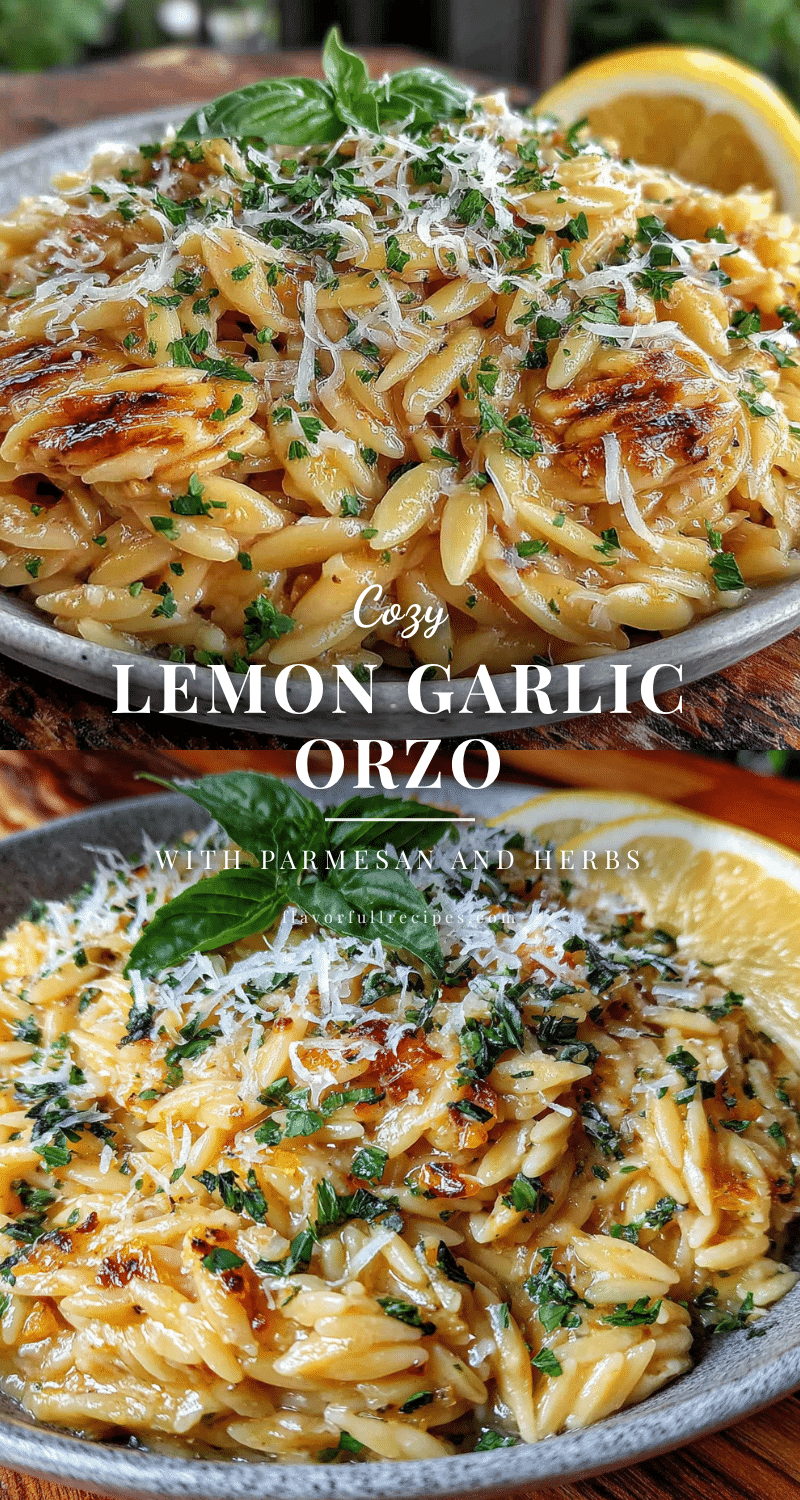

Cozy Lemon Garlic Orzo with Parmesan – Easy One-Pot Side Dish
- Total Time: 25 minutes
- Yield: 4 servings 1x
Description
This creamy, one-pot orzo is cooked in broth with garlic, lemon, and Parmesan for a luscious, risotto-like texture. Ready in 25 minutes, it’s the perfect comforting yet bright side dish for any meal.
Ingredients
- 1 cup (200g) orzo pasta
- 2 tablespoons (30g) unsalted butter
- 4 cloves garlic, minced
- 2 cups (480ml) low-sodium chicken or vegetable broth
- 1/2 cup (120ml) water
- 1/2 cup (50g) freshly grated Parmesan cheese
- 1/4 cup (60ml) heavy cream or half-and-half
- 1 tablespoon (15ml) fresh lemon juice
- 1 teaspoon lemon zest
- 3 tablespoons fresh parsley, finely chopped
- 1 tablespoon fresh dill, finely chopped
- 1/2 teaspoon salt
- 1/4 teaspoon black pepper
- Extra Parmesan and herbs for garnish
Instructions
- Melt the butter in a large pot over medium heat. Add the minced garlic and stir constantly for 30-45 seconds until fragrant but not brown.
- Add the orzo and stir to coat in the garlic butter. Toast for 2-3 minutes, stirring frequently, until the orzo turns golden and smells nutty.
- Pour in the broth and water. Stir, scraping the bottom of the pot. Bring to a gentle boil.
- Reduce heat to low, cover, and simmer for 12-15 minutes until the orzo is tender and most liquid is absorbed. Add 2-3 tablespoons warm water or broth if it looks dry before the orzo is cooked.
- Remove from heat. Stir in the heavy cream until combined.
- Add the grated Parmesan and stir continuously for about 30 seconds until melted and creamy. Add a tablespoon of warm water or broth if too thick.
- Stir in the lemon zest, lemon juice, parsley, and dill. Season with salt and pepper to taste.
- Let the orzo rest off the heat for 2-3 minutes. Serve garnished with extra Parmesan and fresh herbs.
Notes
Toast the orzo properly for depth of flavor. Grate your own Parmesan to avoid clumping. Add lemon at the end to preserve brightness. Adjust salt based on broth sodium. If leftovers thicken, stir in warm broth or milk when reheating.
- Prep Time: 10 minutes
- Cook Time: 15 minutes
- Category: Side Dish
- Cuisine: Italian
Nutrition
- Serving Size: 1 cup
- Calories: 380
- Sugar: 2
- Sodium: 580
- Fat: 18
- Saturated Fat: 10
- Carbohydrates: 45
- Fiber: 2
- Protein: 12
Keywords: lemon garlic orzo, one-pot orzo, creamy orzo, Parmesan orzo, easy side dish, 25-minute recipe