I wasn’t expecting cooking advice from the person fixing my leaky faucet, but there I was, standing in my kitchen with a wrench in one hand and a parsnip in the other. My plumber, a quiet man named Dave who usually just nodded and got to work, spotted the bag of root vegetables on my counter and stopped mid-sentence about pipe fittings. “You know,” he said, wiping his hands on his coveralls, “those are best with honey and mustard. My wife makes them every Thanksgiving, and they’re gone before the turkey.” I laughed, thinking it was an odd tip from an odd source, but I scribbled it down on a napkin anyway. That napkin sat on my fridge for three weeks before I finally gave in and tried it, mostly because I had a bag of carrots and parsnips threatening to go soft in the crisper drawer.
The first time I made these Easy Honey Dijon Roasted Carrots and Parsnips, I was skeptical. I mean, carrots and parsnips are fine, but they’re not exactly the star of the show, right? I tossed them in a simple honey-Dijon glaze, threw them in the oven, and honestly forgot about them for a few minutes while I cleaned up the mess I’d made. When I pulled the pan out, the smell hit me first—sweet and tangy with that roasty, caramelized edge that makes vegetables taste like candy. I burned my tongue on the first bite because I couldn’t wait. Let me tell you, I’ve made this dish at least twice a month ever since, and it’s become my go-to for weeknights when I need something fast that still feels special. Maybe you’ve been there—staring at a pile of root vegetables, wondering how to make them exciting. This is how.
Why You’ll Love This Recipe
These Easy Honey Dijon Roasted Carrots and Parsnips have earned a permanent spot in my dinner rotation, and I think they’ll earn one in yours too. I’ve tested this recipe about a dozen times—tweaking the honey-to-mustard ratio, adjusting the roasting time, even trying different pan sizes—and this version is the one that works every single time. It’s the kind of side dish that makes people ask for the recipe, which is funny because it’s almost embarrassingly simple.
- Quick & Easy: From prep to plate in about 30 minutes, with only 5 minutes of active work. Perfect for those nights when you’re running late and need something on the table fast.
- Simple Ingredients: You probably have honey and Dijon mustard in your fridge right now. Carrots and parsnips are cheap and available year-round at any grocery store.
- Perfect for Weeknights or Holidays: This dish is fancy enough for Thanksgiving but fast enough for a Tuesday. It bridges that gap effortlessly.
- Crowd-Pleaser: I’ve served this to picky kids, vegetable-skeptical adults, and my mother-in-law who “doesn’t do cooked carrots.” Every single person went back for seconds.
- Unbelievably Delicious: The honey caramelizes in the oven, the Dijon adds a subtle kick, and the roasting brings out the natural sweetness of the vegetables. It’s comfort food that happens to be good for you.
What makes this recipe different from every other roasted carrot recipe out there? It’s the balance. Most versions are either too sweet or too tangy, but this one hits that perfect middle ground. The Dijon mustard isn’t just there for flavor—it helps the honey cling to the vegetables and creates a glaze that caramelizes beautifully without burning. I’ve tried versions with maple syrup, brown sugar, and even agave, but honey and Dijon together create something special. It’s not just another side dish; it’s the one that makes you close your eyes after the first bite.
What Ingredients You Will Need
This recipe uses simple, wholesome ingredients to deliver bold flavor and satisfying texture without the fuss. Most of these are pantry staples, which makes this dish perfect for those nights when you need to throw something together without a trip to the store.
- Carrots: 1 pound, peeled and cut into 3-inch sticks. Look for carrots that are firm and bright orange—avoid any that are limp or have cracks. I prefer using whole carrots rather than baby carrots because they have better flavor and hold up better during roasting.
- Parsnips: 1 pound, peeled and cut into 3-inch sticks. Parsnips should be firm and cream-colored, not too thick. If they’re very thick, cut them in half lengthwise before cutting into sticks so they cook evenly alongside the carrots.
- Honey: 3 tablespoons. Use a good-quality honey for the best flavor—I like local wildflower honey when I can find it. If your honey is crystallized, warm it gently in the microwave for 10 seconds to loosen it up.
- Dijon Mustard: 2 tablespoons. I recommend Grey Poupon or Maille for the best texture and flavor. The mustard adds a tangy depth that balances the sweetness of the honey.
- Olive Oil: 2 tablespoons. Extra virgin olive oil works well, but you can also use avocado oil for a more neutral flavor. The oil helps the glaze coat the vegetables and promotes even browning.
- Salt: 1/2 teaspoon, or to taste. I use fine sea salt for even distribution. Kosher salt works too, but you might need a bit more.
- Black Pepper: 1/4 teaspoon, freshly ground. Freshly ground pepper makes a noticeable difference here—the pre-ground stuff just doesn’t have the same punch.
- Fresh Thyme: 1 teaspoon, chopped (optional but recommended). Thyme adds an earthy note that complements the sweetness of the vegetables. You can substitute with 1/2 teaspoon dried thyme if that’s what you have.
Substitution Notes: If you don’t have parsnips, you can use all carrots—just increase the carrots to 2 pounds. For a vegan version, swap the honey with maple syrup or agave nectar. I’ve tried it with maple syrup, and honestly, it’s just as good, just slightly different in flavor. If you’re avoiding mustard, you can use whole-grain mustard for a different texture, or skip it altogether and add an extra tablespoon of honey and a teaspoon of apple cider vinegar for acidity.
Equipment Needed
You don’t need much for this recipe, which is part of why I love it. Here’s what you’ll need:
- Baking Sheet: A large rimmed baking sheet (half-sheet pan size, about 18×13 inches) works best. The rim is important to catch any glaze that drips off during roasting. I’ve used jelly roll pans and even a 9×13 baking dish in a pinch, but a proper baking sheet gives you the best caramelization because the vegetables have more room to spread out.
- Parchment Paper or Aluminum Foil: Lining your baking sheet makes cleanup almost effortless. I prefer parchment paper because the vegetables don’t stick as much, but foil works fine if you give it a light spray of cooking oil.
- Chef’s Knife: A sharp chef’s knife makes quick work of peeling and cutting the vegetables. If your knife is dull, you’ll struggle with the parsnips—they can be a bit tough.
- Vegetable Peeler: A standard Y-peeler or straight peeler works. I’ve used the same $5 peeler for years, and it’s never let me down.
- Mixing Bowl: A medium bowl for tossing the vegetables with the glaze. Any bowl will do, but a wider bowl makes it easier to coat everything evenly.
- Measuring Spoons: For the honey, mustard, and oil. Eyeballing it works in a pinch, but measuring ensures consistent results.
Budget-Friendly Tip: If you don’t have a baking sheet, a cast-iron skillet works beautifully for this recipe. The vegetables will be even more caramelized because cast iron holds heat so well. Just make sure your skillet is large enough to hold everything in a single layer.
Preparation Method
Let’s get cooking. This whole process takes about 30 minutes, and most of that is hands-off oven time. Here’s how to make these Easy Honey Dijon Roasted Carrots and Parsnips:
- Preheat your oven to 425°F (220°C). Getting the oven nice and hot is crucial—this high heat is what creates that beautiful caramelization. While the oven heats up, line your baking sheet with parchment paper or foil for easy cleanup.
- Prep the vegetables. Peel the carrots and parsnips, then cut off the tops and tails. Cut them into sticks about 3 inches long and roughly 1/2 inch thick. Try to make them uniform in size so they cook evenly. If some pieces are much thicker than others, they’ll end up either undercooked or burnt. I usually cut the thicker ends in half lengthwise to keep things consistent. You should have about 4 cups of vegetable sticks total.
- Make the glaze. In your mixing bowl, whisk together the honey, Dijon mustard, olive oil, salt, pepper, and fresh thyme (if using). Whisk until everything is well combined—the mixture should look smooth and emulsified. Taste it quickly (just a tiny bit) to check the balance. It should be sweet with a tangy kick. If it tastes too sweet for you, add another 1/2 teaspoon of mustard.
- Toss the vegetables. Add the carrot and parsnip sticks to the bowl with the glaze. Use your hands or a spatula to toss everything together until every piece is well coated. Don’t be shy—get in there and make sure the glaze gets into all the nooks and crannies. This is the most important step for getting that glossy, caramelized finish.
- Arrange on the baking sheet. Spread the vegetables in a single layer on your prepared baking sheet. Make sure they’re not crowded—if they’re piled on top of each other, they’ll steam instead of roast, and you’ll miss out on that caramelization. If your baking sheet is too small, use two sheets or roast in batches. Leave a little space between each piece if you can.
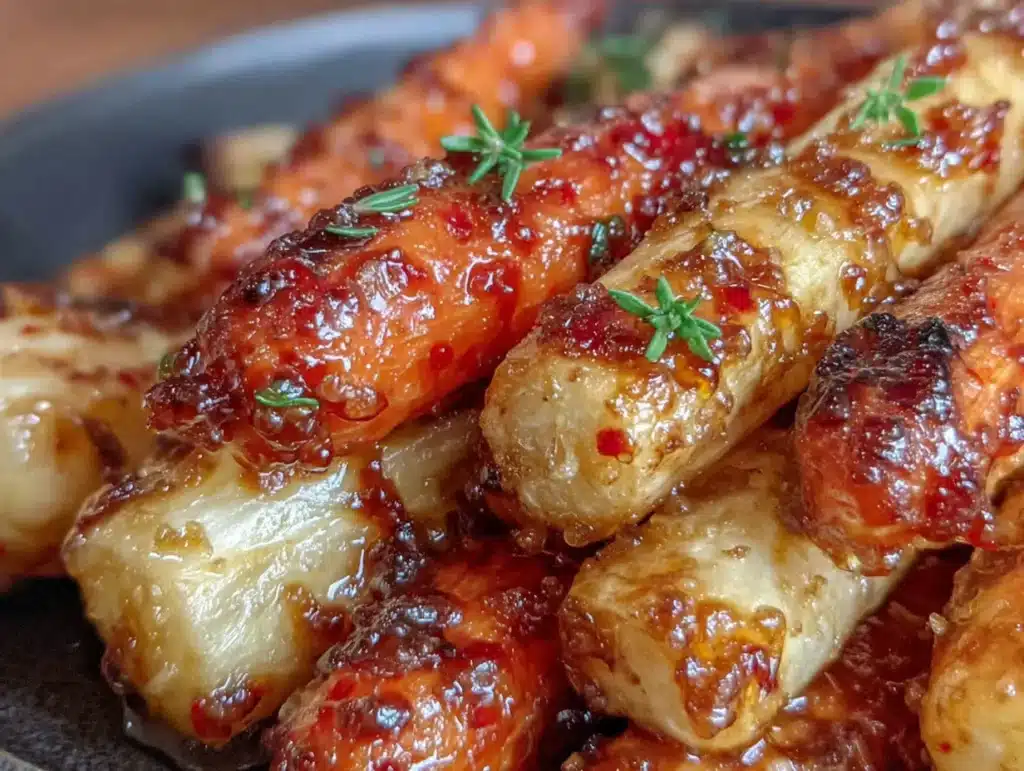
- Roast for 20-25 minutes. Place the baking sheet in the preheated oven and roast for 10 minutes. After 10 minutes, remove the pan from the oven and use a spatula to flip the vegetables. This ensures even browning. Return to the oven and roast for another 10-15 minutes. The vegetables are done when they’re tender enough to pierce with a fork and the edges are golden brown and caramelized. Some spots might look a little charred—that’s good, that’s where the flavor is.
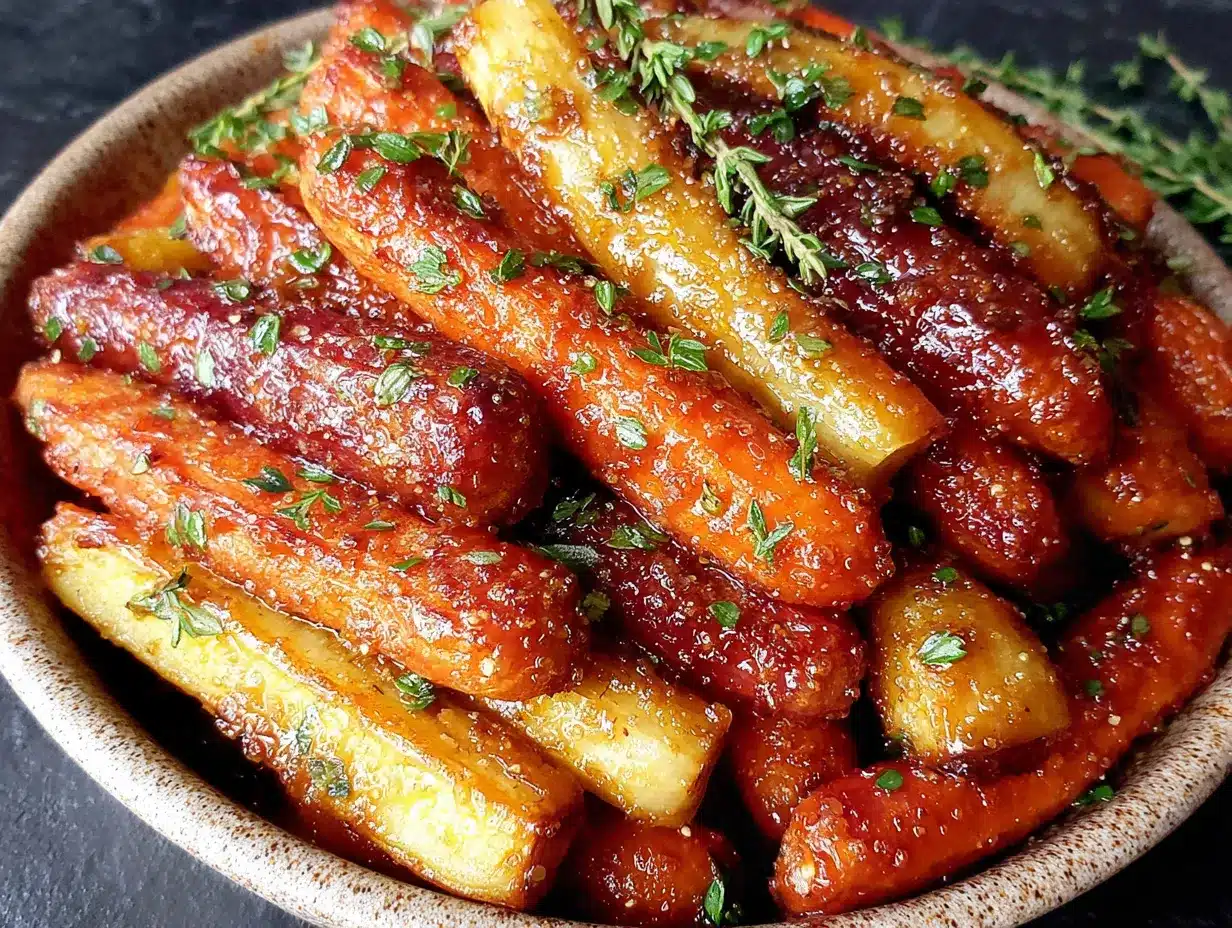
- Finish and serve. Remove from the oven and let the vegetables rest on the pan for 2-3 minutes. This allows the glaze to set slightly. Transfer to a serving platter and drizzle any remaining glaze from the pan over the top. If you have extra fresh thyme, sprinkle it over the top for a pretty finish. Serve immediately while they’re still warm and the edges are crispy.
Sensory Cues: At the 10-minute mark, your kitchen should smell sweet and slightly tangy—that honey-mustard aroma is unmistakable. When you flip the vegetables, they should look slightly translucent on the edges and feel a bit soft when pressed. By the 20-minute mark, the edges should be dark golden brown, and you might see little bubbles of caramelized glaze on the pan. The carrots will be bright orange and the parsnips will be a creamy ivory color with brown edges.
Prep Tip: You can cut the vegetables and make the glaze up to 24 hours ahead. Store them separately in the fridge, then toss and roast when you’re ready. This makes this dish perfect for meal prep or holiday cooking when you’re juggling multiple dishes.
Cooking Tips & Techniques
I’ve made this recipe enough times to learn a few things the hard way. Here are my best tips for getting perfect results every time:
- Don’t skip the flipping. I know it’s tempting to just let them roast undisturbed, but flipping halfway through ensures even caramelization. The first time I made these, I forgot to flip them, and the bottom of the vegetables were almost burnt while the tops were pale. Lesson learned.
- Space them out. Crowding the pan is the number one mistake people make with roasted vegetables. If they’re too close together, they release steam and end up soggy instead of crispy. If you’re doubling the recipe, use two pans.
- Cut uniformly. I cannot stress this enough. If some pieces are thicker than others, the thin ones will burn while the thick ones are still raw. Take the extra 30 seconds to make sure your cuts are even.
- Use room-temperature honey. Cold honey is thick and difficult to mix. If your honey has been in the fridge, warm it up slightly before measuring. A quick 10-second zap in the microwave does the trick.
- Watch the last 5 minutes. Ovens vary, and the line between perfectly caramelized and burnt is thin. Check your vegetables at the 20-minute mark. If they look done, take them out. You can always put them back for a few more minutes, but you can’t un-burn them.
My Biggest Failure: I once tried to make this recipe with baby carrots because I was in a hurry and didn’t want to peel anything. Big mistake. Baby carrots have a higher water content and released so much liquid that the glaze turned into a soupy mess. The vegetables steamed instead of roasted, and I ended up with sad, soggy carrots. Stick with whole carrots and parsnips—the extra 5 minutes of peeling is worth it.
Variations & Adaptations
One of the best things about this recipe is how adaptable it is. Here are some variations I’ve tried and loved:
- Spicy Honey Dijon: Add 1/4 teaspoon of cayenne pepper or red pepper flakes to the glaze. The heat contrasts beautifully with the sweetness of the honey. I made this version for a game day gathering, and it was a hit with the spice lovers.
- Herb-Infused: Swap the thyme for rosemary or sage. Rosemary pairs particularly well with roasted root vegetables. Use about 1 teaspoon of fresh rosemary, finely chopped. I’ve also tried it with dried oregano in a pinch, and it worked surprisingly well.
- Balsamic Twist: Replace the Dijon mustard with 1 tablespoon of balsamic vinegar and 1 tablespoon of Dijon. The balsamic adds a deep, tangy sweetness that’s incredible with the roasted vegetables. This version is my go-to for fall dinner parties.
- Add Other Vegetables: Sweet potatoes, beets, or turnips work beautifully in this recipe. Just cut them to the same size as the carrots and parsnips. Beets will turn everything pink, so keep that in mind if you’re going for presentation.
- Garlic Lover’s Version: Add 3-4 cloves of garlic, smashed, to the baking sheet. The garlic roasts alongside the vegetables and becomes sweet and jammy. I’ve been known to eat the roasted garlic cloves straight off the pan—no regrets.
Dietary Adaptations: For a low-FODMAP version, skip the garlic and use garlic-infused olive oil instead. For Whole30, use compliant Dijon mustard and swap the honey for date syrup. For keto, reduce the honey to 1 tablespoon and add an extra tablespoon of olive oil.
Serving & Storage Suggestions
These Easy Honey Dijon Roasted Carrots and Parsnips are incredibly versatile when it comes to serving. Here’s how to make the most of them:
- Serving Temperature: Serve them warm, straight from the oven. The edges are at their crispiest right after roasting. They’re also good at room temperature, which makes them perfect for potlucks or buffets.
- Presentation: Arrange the vegetables on a white platter to make the colors pop. Drizzle any remaining glaze from the pan over the top, and garnish with a sprinkle of fresh thyme or a pinch of flaky sea salt. A few cracks of fresh black pepper on top adds a nice finishing touch.
- Complementary Dishes: These pair beautifully with roasted chicken, grilled steak, pan-seared salmon, or pork chops. They’re also great alongside a hearty grain bowl or stuffed into a wrap with leftover protein. For a vegetarian meal, serve them over a bed of quinoa with a dollop of Greek yogurt.
- Storage: Store leftovers in an airtight container in the refrigerator for up to 4 days. The vegetables will soften over time, but they’ll still be delicious. I often make a double batch on Sunday and use them throughout the week in salads, grain bowls, or as a quick side.
- Reheating: The best way to reheat these is in the oven or air fryer. Spread them on a baking sheet and warm at 350°F (175°C) for 5-7 minutes. The microwave works in a pinch, but the vegetables will be softer and lose some of their caramelized edges. If you’re in a hurry, a hot skillet with a splash of water works too.
- Freezing: I don’t recommend freezing these, as the vegetables will become mushy when thawed. If you have a large batch, it’s better to store them in the fridge and use them within a few days.
Flavor Development: These vegetables actually taste even better the next day. The flavors meld together overnight, and the honey-mustard glaze soaks into the vegetables. I’ve been known to eat them cold, straight from the fridge, as a snack.
Nutritional Information & Benefits
This dish isn’t just delicious—it’s packed with nutrients that make you feel good about eating it. Here’s what you’re getting in each serving (based on 4 servings):
| Nutrient | Amount per Serving |
|---|---|
| Calories | 165 |
| Total Fat | 7g |
| Saturated Fat | 1g |
| Carbohydrates | 25g |
| Fiber | 5g |
| Sugar | 14g |
| Protein | 2g |
| Vitamin A | 180% DV |
| Vitamin C | 20% DV |
| Potassium | 450mg |
Health Benefits: Carrots are famous for their high vitamin A content, which supports eye health and immune function. Parsnips are rich in fiber and folate, and they contain more vitamin C than carrots. The honey provides natural energy, while the olive oil offers heart-healthy monounsaturated fats. Together, these ingredients create a side dish that’s as nourishing as it is delicious.
Dietary Considerations: This recipe is naturally gluten-free, dairy-free, and nut-free. For a lower-sugar option, reduce the honey to 2 tablespoons—the natural sweetness of the carrots and parsnips will still shine through.
Personal Note: I love that this dish lets me get my vegetables in without feeling like I’m eating a “healthy” meal. It’s real food that happens to be good for you, and that’s my favorite kind of cooking.
Conclusion
These Easy Honey Dijon Roasted Carrots and Parsnips have become a staple in my kitchen for good reason. They’re fast, simple, and somehow manage to feel both cozy and impressive at the same time. Whether you’re feeding your family on a busy Tuesday or bringing a dish to a holiday gathering, this recipe delivers every single time. The honey-mustard glaze turns humble root vegetables into something you’ll actually crave—I know I do.
I hope you give this recipe a try and make it your own. Maybe you’ll add a little extra mustard, or toss in some garlic, or serve it alongside your favorite protein. That’s the beauty of cooking—you get to tweak things until they feel like yours. And honestly, that’s where the real magic happens.
If you make these Easy Honey Dijon Roasted Carrots and Parsnips, I’d love to hear about it. Drop a comment below and let me know how they turned out, or share your own twist on the recipe. Did you add something unexpected? Serve it with something amazing? I’m always looking for new ideas, and this community is full of creative cooks. Happy roasting!
Frequently Asked Questions
Can I make this recipe ahead of time?
Absolutely. You can cut the vegetables and mix the glaze up to 24 hours in advance. Store them separately in the fridge, then toss and roast when you’re ready. The roasted vegetables are best served fresh, but they reheat well in the oven.
Can I use baby carrots instead of whole carrots?
I don’t recommend it. Baby carrots have a higher water content and won’t caramelize as well. They also tend to release more liquid, which can make the glaze watery. Stick with whole carrots for the best results.
How do I know when the vegetables are done?
The vegetables should be tender enough to pierce easily with a fork, and the edges should be golden brown and caramelized. Some spots might look a little charred—that’s actually where the flavor is. Start checking at the 20-minute mark.
Can I freeze these roasted vegetables?
I don’t recommend freezing them. The vegetables will become mushy when thawed due to their high water content. If you have leftovers, store them in the fridge for up to 4 days and reheat in the oven or air fryer.
What can I use instead of Dijon mustard?
Whole-grain mustard works well for a different texture. Yellow mustard will work in a pinch but has a milder flavor. If you’re avoiding mustard altogether, you can skip it and add an extra tablespoon of honey plus a teaspoon of apple cider vinegar for acidity.
Pin This Recipe!
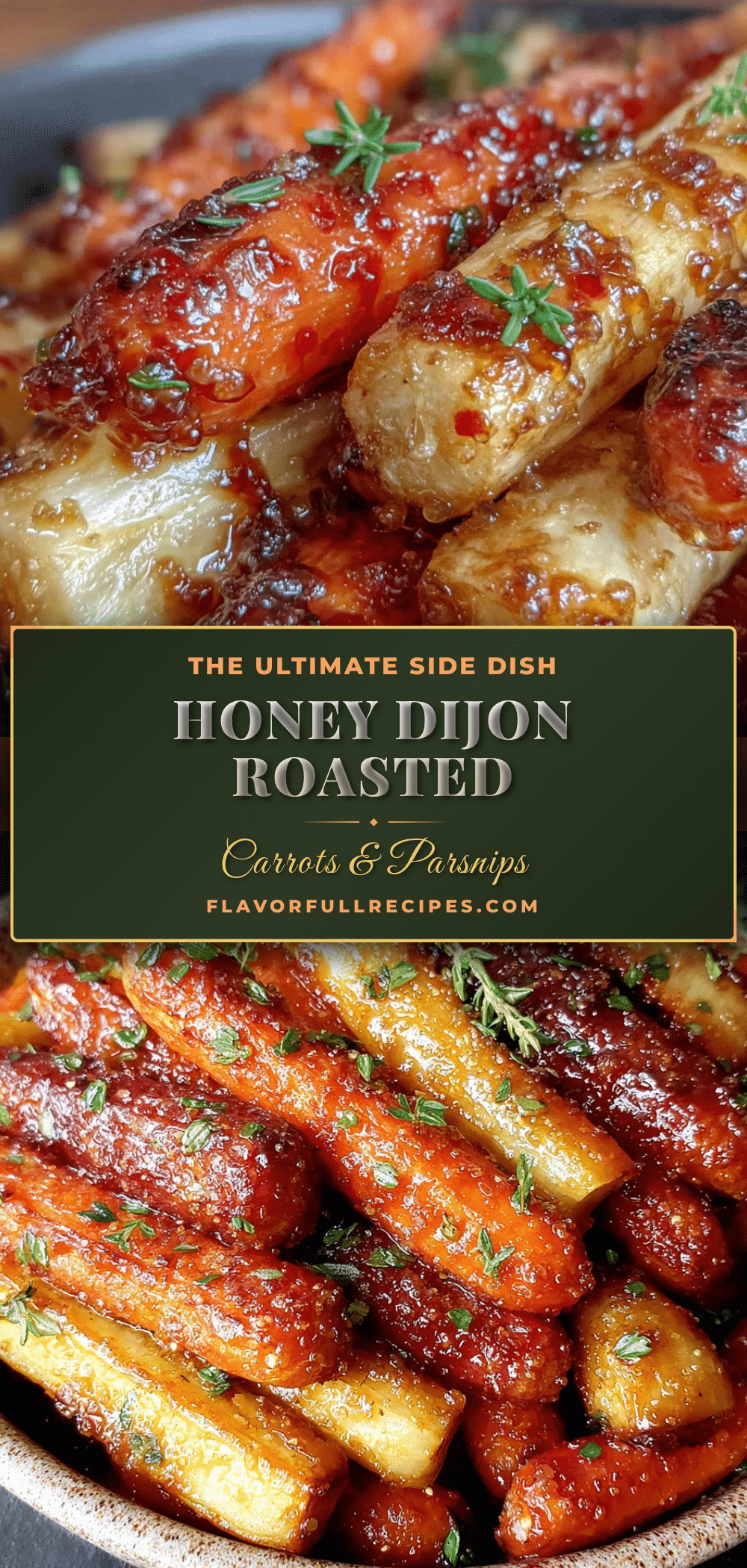

Easy Honey Dijon Roasted Carrots and Parsnips
- Total Time: 30 minutes
- Yield: 4 servings 1x
Description
These Easy Honey Dijon Roasted Carrots and Parsnips are a quick and delicious side dish, perfect for weeknights or holidays. The honey-mustard glaze caramelizes beautifully in the oven, turning humble root vegetables into a sweet and tangy crowd-pleaser.
Ingredients
- 1 pound carrots, peeled and cut into 3-inch sticks
- 1 pound parsnips, peeled and cut into 3-inch sticks
- 3 tablespoons honey
- 2 tablespoons Dijon mustard
- 2 tablespoons olive oil
- 1/2 teaspoon fine sea salt
- 1/4 teaspoon freshly ground black pepper
- 1 teaspoon fresh thyme, chopped (optional)
Instructions
- Preheat your oven to 425°F (220°C). Line a large rimmed baking sheet with parchment paper or aluminum foil.
- Peel the carrots and parsnips, then cut off the tops and tails. Cut them into sticks about 3 inches long and roughly 1/2 inch thick, making them uniform in size.
- In a mixing bowl, whisk together the honey, Dijon mustard, olive oil, salt, pepper, and fresh thyme (if using) until well combined and emulsified.
- Add the carrot and parsnip sticks to the bowl with the glaze. Toss everything together until every piece is well coated.
- Spread the vegetables in a single layer on the prepared baking sheet, ensuring they are not crowded.
- Roast for 10 minutes. Remove the pan from the oven and flip the vegetables using a spatula. Return to the oven and roast for another 10-15 minutes, until the vegetables are tender and the edges are golden brown and caramelized.
- Remove from the oven and let the vegetables rest on the pan for 2-3 minutes. Transfer to a serving platter, drizzle any remaining glaze from the pan over the top, and garnish with extra fresh thyme if desired. Serve immediately.
Notes
For best results, cut vegetables uniformly to ensure even cooking. Don’t crowd the pan to avoid steaming. Flip halfway through for even caramelization. Use room-temperature honey for easier mixing. Vegetables can be prepped up to 24 hours ahead. Leftovers can be stored in the fridge for up to 4 days and reheated in the oven or air fryer.
- Prep Time: 5 minutes
- Cook Time: 25 minutes
- Category: Side Dish
- Cuisine: American
Nutrition
- Serving Size: 1 serving (about 1 c
- Calories: 165
- Sugar: 14
- Sodium: 450
- Fat: 7
- Saturated Fat: 1
- Carbohydrates: 25
- Fiber: 5
- Protein: 2
Keywords: roasted carrots, roasted parsnips, honey dijon, easy side dish, Thanksgiving side, root vegetables, caramelized vegetables