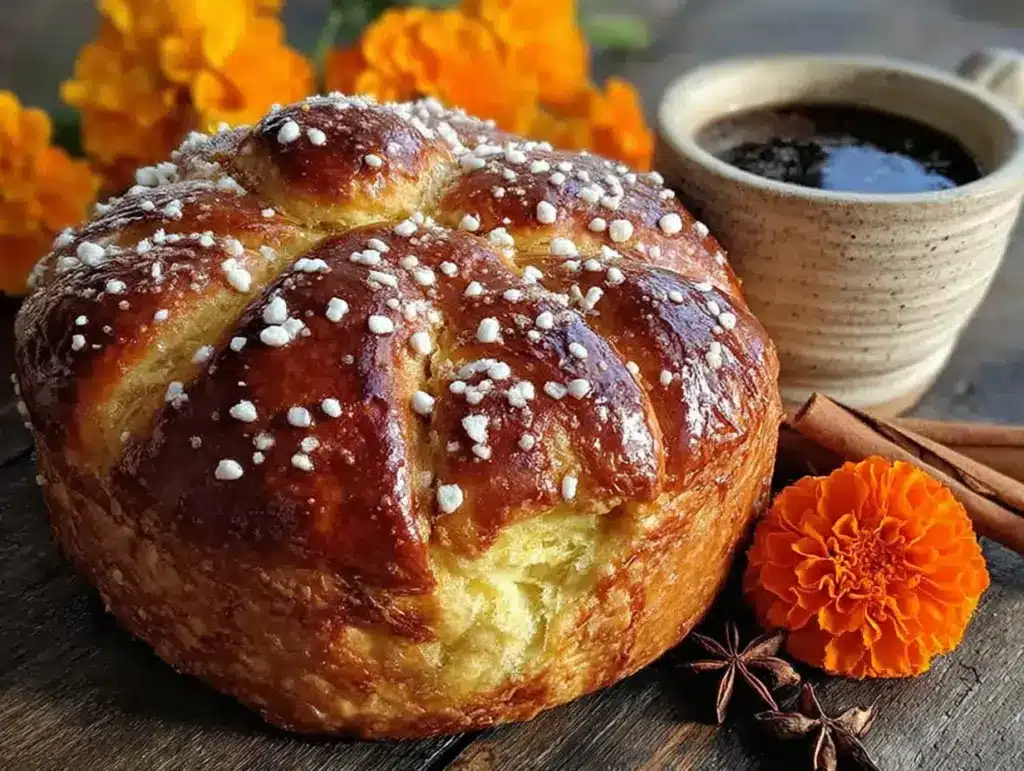
This was supposed to be a simple brioche. I had the butter softening on the counter, the eggs at room temperature, and a very specific vision of a golden, buttery loaf for Sunday morning toast. But somewhere between measuring the flour and realizing I was out of vanilla extract, the whole plan went sideways. I grabbed the orange blossom water instead—a bottle I’d bought on a whim months ago for a cocktail I never made—and dumped it in before my brain caught up with my hands. The dough felt different. Sticky, almost fragile. I was already running late for a phone call with my mom, so I just covered the bowl, muttered something unkind under my breath, and walked away. What came out of the oven two hours later was nothing like the brioche I planned. It was softer, more fragrant, with this delicate floral aroma that filled my entire apartment. I sat there on the kitchen floor, tearing off pieces of that warm, slightly lopsided loaf, and honestly, I almost cried. It was better. So much better. That happy accident became the foundation for this cozy homemade Pan de Muerto, a bread that tastes like memory and comfort wrapped in a golden crust.
Maybe you’ve been there—staring at a bowl of dough that looks nothing like the picture in your head, convinced you’ve ruined everything. Let me tell you, sometimes the best recipes come from those moments of panic. This Pan de Muerto is that recipe for me. It’s the bread I make when I need to feel connected to something bigger than my to-do list, when the weather turns cold, or when I just want the kitchen to smell like warmth and belonging. It’s not fussy, it’s not perfect, and that’s exactly why I keep making it.
Why You’ll Love This Recipe
I’ve tested this recipe more times than I care to count—through sticky summer humidity, dry winter air, and one particularly chaotic afternoon when my toddler “helped” with the kneading. Each time, this bread delivered. It’s forgiving in a way that makes you feel like a better baker than you probably are, and that’s a beautiful thing.
- Simple Ingredients: No need to hunt down specialty stores. Flour, butter, eggs, yeast, sugar, and that secret weapon—orange blossom water or zest. You probably have most of it already.
- Perfect for Day of the Dead: Whether you’re setting up an ofrenda or just want to honor loved ones with something made by hand, this bread carries tradition without requiring a culinary degree.
- Crowd-Pleaser: I’ve brought this to potlucks and family dinners, and it disappears every single time. Kids love the soft, slightly sweet crumb, and adults appreciate the nuanced floral notes.
- Unbelievably Delicious: The texture is what gets me every time—pillowy, tender, with a crust that gives just enough resistance before giving way to pure softness. It’s comfort food in bread form.
- Make-Ahead Friendly: The dough actually tastes better after a slow overnight rise in the fridge. It develops this depth of flavor that shortcuts just can’t replicate.
What makes this version different? It’s the orange blossom water, honestly. That accidental swap taught me something important: the best Pan de Muerto doesn’t just taste good—it smells like a memory you didn’t know you had. This recipe uses a blend of butter and a touch of oil to keep the crumb soft for days, and the shaping is simpler than the traditional bone-and-skull design so you can actually enjoy the process instead of stressing over it.
This is the bread you make when you want to slow down. When you need to feel the dough under your hands and remember that some things are worth the time. It’s cozy, it’s nostalgic, and honestly, it’s the best thing that ever came out of a kitchen accident.
What Ingredients You Will Need
This recipe uses simple, pantry-friendly ingredients to create a bread that feels special without requiring a trip to a specialty store. Each component plays a role in building that soft, slightly sweet crumb and aromatic finish that makes Pan de Muerto so distinctive.
- All-purpose flour (4 cups / 500g) – Provides structure without being too chewy. I prefer King Arthur Flour for consistent results, but any brand works. Spoon and level your flour for accuracy.
- Active dry yeast (2 ¼ teaspoons / 7g, or one packet) – The engine of your rise. Make sure it’s not expired. If you use instant yeast, you can skip the blooming step and add it directly to the dry ingredients.
- Whole milk (½ cup / 120ml), warmed to about 110°F – Wakes up the yeast and adds tenderness. If you only have 2% milk, it’ll still work, but whole milk gives a richer crumb.
- Granulated sugar (½ cup / 100g) – Sweetens the dough and helps with browning. Don’t reduce it too much; the sugar also feeds the yeast and keeps the bread soft.
- Unsalted butter (6 tablespoons / 85g), softened – Adds richness and that melt-in-your-mouth texture. I use Kerrygold when I want extra flavor, but any unsalted butter works fine.
- Vegetable oil (2 tablespoons / 30ml) – This is my little trick. The oil keeps the bread moist longer than butter alone. Use a neutral oil like avocado or grapeseed.
- Large eggs (3, at room temperature) – Two go into the dough, one for the egg wash. Cold eggs can shock the yeast, so leave them out for 30 minutes before starting.
- Orange blossom water (2 tablespoons) – The star of the show. It gives that floral, almost perfumed aroma that defines authentic Pan de Muerto. Find it in the international aisle or a Latin grocery store. If you can’t find it, use 1 tablespoon of orange zest plus 1 tablespoon of fresh orange juice.
- Orange zest (from 1 large orange) – Adds brightness and balances the floral notes. Zest before juicing the orange, and try to avoid the bitter white pith.
- Salt (1 teaspoon / 6g) – Enhances everything. Don’t skip it, even in sweet dough.
- For the topping: ¼ cup / 50g granulated sugar mixed with 1 teaspoon orange zest (optional, for sprinkling after baking) – Adds sparkle and a citrusy finish.
Substitution guidance: For a dairy-free version, use melted coconut oil instead of butter and oat milk instead of whole milk. The texture will be slightly less tender but still delicious. If you’re avoiding eggs, try using ¼ cup of applesauce plus 1 tablespoon of cornstarch as a replacement, though the crumb will be denser.
Equipment Needed
You don’t need a fancy bakery setup for this bread, but a few tools make the process smoother. I’ve made Pan de Muerto with nothing but a wooden spoon and my hands, and it turned out just fine—but if you have these items, you’ll save yourself some elbow grease.
- Stand mixer with dough hook – Optional but helpful. Kneading by hand takes about 12-15 minutes; the mixer does it in 8. If you’re kneading by hand, use a rhythmic folding and pressing motion rather than aggressive punching.
- Large mixing bowl – Glass or stainless steel works best. Avoid plastic, which can retain grease and affect future rises.
- Measuring cups and spoons – For accuracy, especially with the yeast and salt. A kitchen scale is even better for the flour.
- Instant-read thermometer – Takes the guesswork out of milk temperature (110°F is the sweet spot) and tells you when the bread is done (190°F internally).
- Baking sheet – Lined with parchment paper or a silicone mat. I prefer parchment because it makes cleanup effortless.
- Plastic wrap or a clean kitchen towel – For covering the dough during rises. A damp towel can also work, but make sure it’s not too wet or the dough will get sticky.
- Pastry brush – For the egg wash. A silicone brush is easier to clean, but a natural bristle brush works fine.
- Wire cooling rack – Prevents the bottom from getting soggy. If you don’t have one, let the bread cool on its side, rotating occasionally.
I’ve used a cheap hand-me-down mixer for years, and it handles this dough beautifully. Don’t feel pressured to buy expensive equipment—your hands are the best tools you have.
Preparation Method
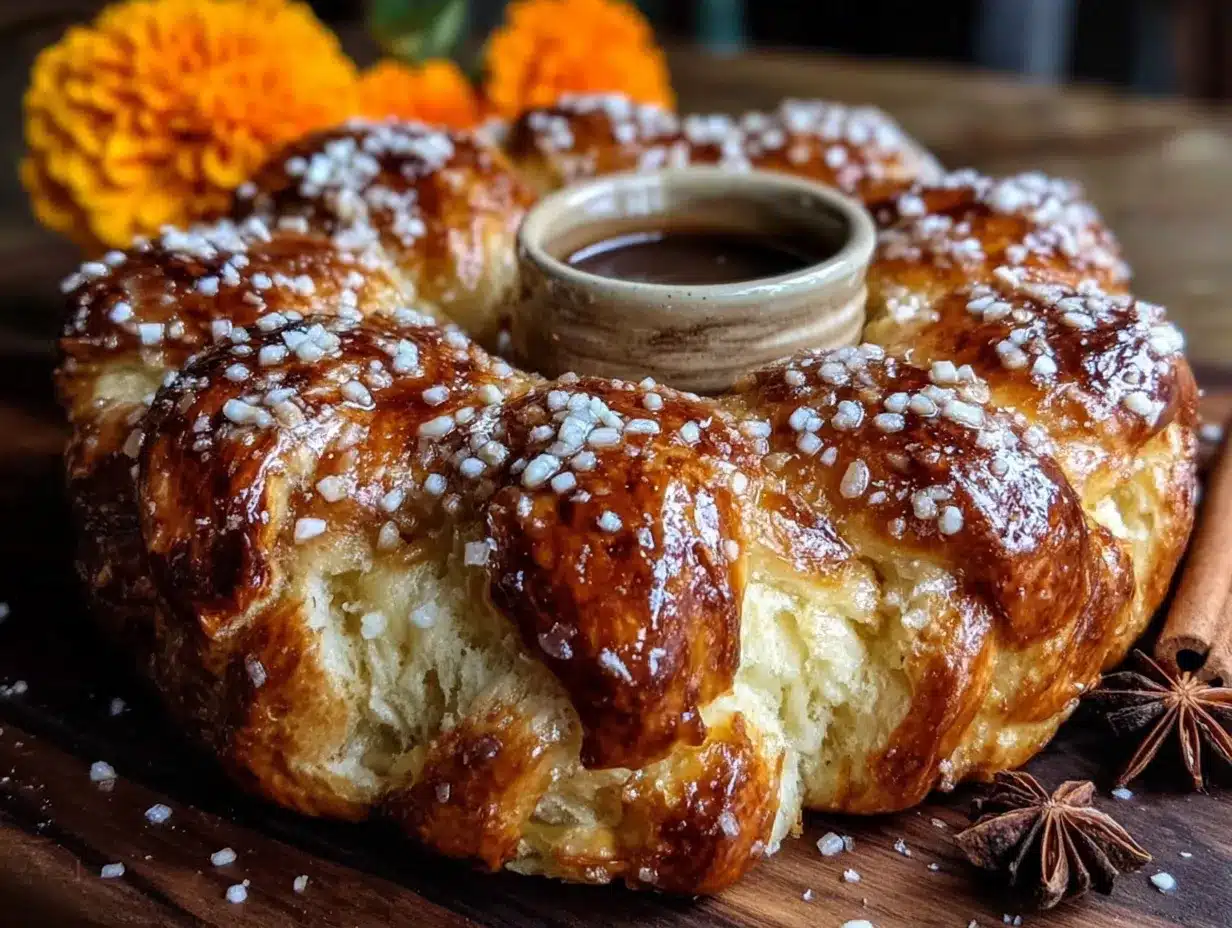
- Bloom the yeast: In a small bowl, combine the warmed milk (110°F), 1 tablespoon of the sugar, and the active dry yeast. Stir gently and let it sit for 5-10 minutes until it becomes frothy and smells like toast. If it doesn’t foam, your yeast might be dead—start over with fresh yeast.
- Mix the dry ingredients: In the bowl of your stand mixer (or a large mixing bowl), whisk together the remaining sugar, flour, salt, and orange zest. Make a well in the center.
- Combine the wet ingredients: In a separate bowl, whisk together 2 eggs, the orange blossom water, and the bloomed yeast mixture. Pour this into the well of dry ingredients.
- Start mixing: Using the dough hook on low speed, mix until a shaggy dough forms, about 2 minutes. Scrape down the sides as needed. The dough will look rough—don’t panic.
- Add the fats: With the mixer running on low, add the softened butter and oil, one tablespoon at a time. This takes patience—about 4-5 minutes. The dough will look greasy and might even separate slightly. Keep going. It will come together into a smooth, supple ball.
- Knead: Increase speed to medium and knead for 6-8 minutes (or 12-15 minutes by hand). The dough should be soft, slightly tacky but not sticky, and pass the windowpane test—stretch a small piece thin enough to see light through without it tearing.
- First rise: Shape the dough into a ball and place it in a lightly oiled bowl, turning to coat. Cover with plastic wrap or a damp towel and let it rise in a warm, draft-free spot for 1.5 to 2 hours, until doubled in size. I usually set it in the oven with the light on (but the oven off).
- Deflate and divide: Gently punch down the dough to release the gas. Turn it out onto a lightly floured surface. Cut off about ¼ of the dough (about 200g) and set it aside for the decorative pieces. Divide the remaining dough into two equal pieces for the main loaves.
- Shape the loaves: Roll each main piece into a smooth ball. Place them on the prepared baking sheet, spaced at least 4 inches apart. Flatten slightly into rounds about 6 inches wide.
- Shape the decorations: Divide the reserved dough into 6 pieces. Roll 4 pieces into ropes about 6 inches long for the “bones.” Roll the remaining 2 pieces into small balls for the “skulls.”
- Attach the decorations: Gently press the ropes onto each loaf in an X pattern, crossing at the center. Place a small ball in the center of each X. Don’t press too hard—the decorations should sit on top, not sink in.
- Second rise: Cover the loaves loosely with plastic wrap and let them rise for 45-60 minutes, until puffy and nearly doubled. They should feel light and airy when gently poked.
- Preheat and egg wash: About 15 minutes before the second rise ends, preheat your oven to 350°F (175°C). Whisk the remaining egg with 1 tablespoon of water. Gently brush the loaves with the egg wash, being careful not to deflate the decorations.
- Bake: Place the baking sheet on the middle rack and bake for 20-25 minutes, rotating halfway through. The bread should be deep golden brown, and the internal temperature should reach 190°F. If the top browns too quickly, tent loosely with foil for the last 5 minutes.
- Cool and finish: Let the loaves cool on the baking sheet for 5 minutes, then transfer to a wire rack. While still warm, brush with melted butter and sprinkle generously with the orange-scented sugar. Let cool completely before slicing—if you can wait that long.
Sensory cues: During kneading, the dough should feel like a baby’s earlobe—soft, warm, and slightly elastic. When it’s proofed, it should hold a gentle indentation when poked. The finished bread should sound hollow when tapped on the bottom.
Cooking Tips & Techniques
I’ve messed up this recipe in almost every way possible, so let me save you the trouble. First, don’t rush the butter incorporation. I once dumped all the butter in at once and ended up with a greasy, sad dough that never rose properly. Adding it slowly lets the gluten develop evenly.
Temperature matters more than you think. If your kitchen is cold (below 70°F), your rise time will stretch to 3 hours or more. I’ve used the “oven with a bowl of hot water” trick more times than I can count—place a pan of boiling water on the lower rack and your dough on the upper rack, and it creates a perfect proofing environment.
Here’s a mistake I made just last month: I forgot the salt. The bread rose beautifully but tasted flat and almost greasy. Salt isn’t just for flavor—it strengthens the gluten structure and controls yeast activity. Don’t skip it.
For consistent results, weigh your flour. A cup of flour can vary by 30 grams depending on how you scoop it, and that difference can turn your dough from soft to stiff. I use a $15 kitchen scale and it’s honestly the best investment I’ve made in my baking.
If your dough feels too sticky during kneading, resist the urge to add more flour. Wet your hands slightly instead—it’ll help the dough release without drying it out. If it’s too dry, add milk one teaspoon at a time until it softens.
Multitasking tip: While the dough is on its first rise, clean your kitchen and set out your topping ingredients. While it bakes, make a cup of tea and sit down for five minutes. This bread is about slowing down, after all.
Variations & Adaptations
One winter, I didn’t have orange blossom water and the store was closed, so I used rose water instead. It was different—more delicate, almost romantic—and my neighbor asked for the recipe. That’s the beauty of this bread: it welcomes tinkering.
- Citrus Twist: Swap the orange blossom water for lemon zest and lemon extract. The bread takes on a brighter, sharper flavor that pairs beautifully with a dark chocolate spread.
- Spiced Version: Add 1 teaspoon of cinnamon, ½ teaspoon of nutmeg, and ¼ teaspoon of cloves to the dry ingredients. This turns it into a holiday bread that smells like Christmas morning.
- Vegan Adaptation: Use melted coconut oil instead of butter, flax eggs (2 tablespoons ground flax + 6 tablespoons water) instead of eggs, and oat milk instead of whole milk. The texture is denser but still satisfying, and the coconut flavor actually complements the orange beautifully.
- Gluten-Free Option: Substitute a 1:1 gluten-free flour blend that contains xanthan gum. The dough will be stickier and won’t rise as high, so shape it into smaller rolls instead of large loaves. Bake at 325°F for 18-20 minutes.
- Stuffed Pan de Muerto: After the first rise, flatten each portion, place a spoonful of dulce de leche or chocolate-hazelnut spread in the center, and seal the dough around it before shaping. It’s a gooey, decadent surprise.
I’ve tried the stuffed version with pumpkin puree mixed with a little brown sugar, and it tasted like fall in a bread roll. Don’t be afraid to experiment—this dough is forgiving.
Serving & Storage Suggestions
Pan de Muerto is best served warm, within an hour of baking, when the crust is still slightly crisp and the inside is pillowy soft. I like to tear it apart with my hands rather than slicing—it feels more communal, more honest. Serve it alongside a cup of Mexican hot chocolate or a strong coffee with cinnamon.
For a Day of the Dead ofrenda, place the bread on a plate next to marigolds, photos, and a glass of water. It’s a beautiful way to honor loved ones while sharing something made with intention.
Storage: Keep leftover bread in an airtight container at room temperature for up to 3 days. The orange flavor actually deepens on day two, so don’t be discouraged if it’s not all gone immediately. To refresh, wrap in foil and warm in a 300°F oven for 5-7 minutes.
Freezing: Wrap the cooled, unsugared loaf tightly in plastic wrap, then foil, and freeze for up to 3 months. Thaw overnight at room temperature, then reheat and add the sugar topping. I’ve done this multiple times, and it tastes just as fresh.
Reheating: Skip the microwave—it makes the bread rubbery. Instead, slice and toast lightly, or warm the whole loaf in the oven. The texture comes back to life beautifully.
Flavors develop over time, so if you can resist eating it all immediately, you’ll notice the orange blossom notes become more pronounced on the second day. It’s a bread that rewards patience, which feels fitting for a recipe born from an accident.
Nutritional Information & Benefits
Let’s be real: this is a celebration bread, not a health food. But that doesn’t mean it’s without merit. Each serving (about 1/8 of a loaf) contains approximately 310 calories, 12g fat, 44g carbohydrates, 7g protein, and 18g sugar. It’s a source of energy and comfort, meant to be enjoyed mindfully.
The eggs provide high-quality protein and choline, which supports brain health. The butter adds fat-soluble vitamins A, D, and E, while the orange zest contributes a small amount of vitamin C and antioxidants. The orange blossom water, while used in small amounts, has been traditionally associated with calming properties—fitting for a bread meant to soothe the soul.
Dietary considerations: This recipe contains gluten, dairy, and eggs. For allergen-friendly versions, see the variations section above. It is vegetarian and can be made vegan with the substitutions listed.
I don’t believe in guilt around food, especially food made with love. This bread is about connection, not numbers. Eat it, share it, and let it nourish you in ways that can’t be measured.
Conclusion
This Pan de Muerto started as a mistake—a distracted pour of orange blossom water into what was supposed to be plain brioche dough. But sometimes the best things in life come from getting it wrong. This bread has become my go-to for cozy evenings, for honoring those I’ve lost, and for reminding myself that perfection is overrated.
I hope you make this recipe your own. Add a little more zest if you like it citrusy, shape it into rolls instead of loaves, or stuff it with something sweet. The dough will guide you—it always does. And when you pull that golden loaf from the oven and the smell fills your kitchen, I hope you feel the same warmth I felt sitting on my kitchen floor that day.
If you try this recipe, I’d love to hear about it. Leave a comment below with your favorite variation, or tag me in your photos. Let’s keep this tradition alive, one imperfect, beautiful loaf at a time.
Frequently Asked Questions
Can I make Pan de Muerto without a stand mixer?
Absolutely. Knead by hand for 12-15 minutes until the dough is smooth and elastic. It’s a great arm workout, and honestly, there’s something meditative about working dough with your hands. Just be patient with the butter incorporation—it’ll feel messy at first, but it comes together.
Why didn’t my dough rise?
Several possible culprits: your yeast might be expired, your milk was too hot (over 120°F kills yeast), or your kitchen was too cold. Check the expiration date, use a thermometer for the milk, and find a warm spot for rising. If all else fails, try a new packet of yeast.
Can I use all-purpose flour instead of bread flour?
Yes, and I actually prefer all-purpose for this recipe. It gives a softer, more tender crumb that’s traditional for Pan de Muerto. Bread flour would make it chewier, which isn’t what we’re going for here.
How do I know when the bread is fully baked?
Use a thermometer—190°F internal temperature is your target. If you don’t have one, tap the bottom of the loaf; it should sound hollow. The crust should be deep golden brown, and the bread should feel light for its size.
Can I freeze the dough instead of the baked bread?
Yes, and this is actually my preferred method for meal prep. After the first rise, punch down the dough, shape it into a ball, wrap tightly in plastic, and freeze for up to 2 months. Thaw overnight in the refrigerator, then proceed with shaping and the second rise. The flavor is even better.
Pin This Recipe!
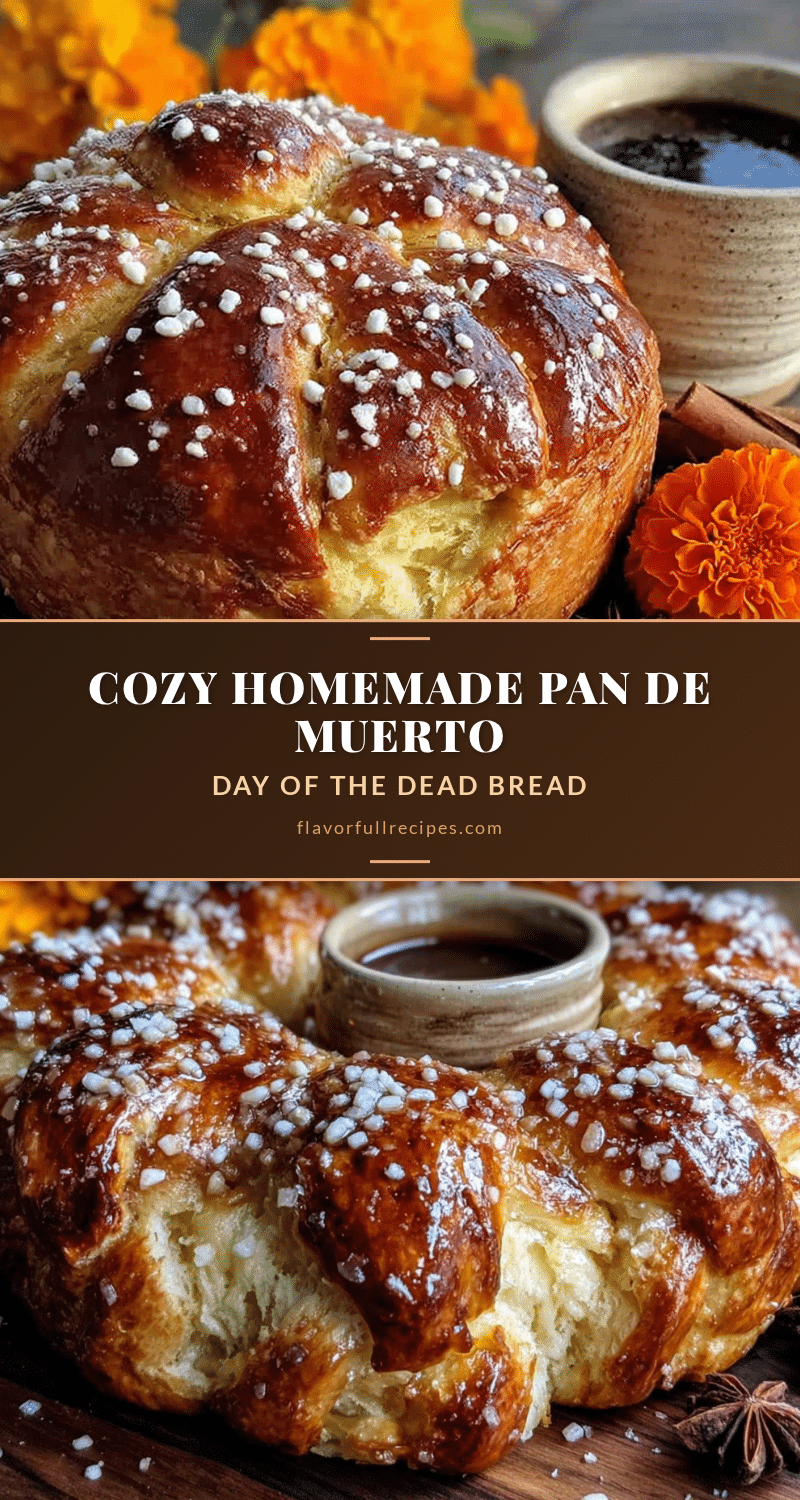

Best Homemade Pan de Muerto – Easy Day of the Dead Bread
- Total Time: 3 hours 25 minutes (including rising time)
- Yield: 2 loaves (8 servings each) 1x
Description
A soft, slightly sweet bread infused with orange blossom water and orange zest, perfect for Day of the Dead celebrations or any cozy occasion. This forgiving recipe yields a pillowy crumb and a golden crust, born from a happy kitchen accident.
Ingredients
- 4 cups (500g) all-purpose flour
- 2 ¼ teaspoons (7g) active dry yeast (one packet)
- ½ cup (120ml) whole milk, warmed to 110°F
- ½ cup (100g) granulated sugar
- 6 tablespoons (85g) unsalted butter, softened
- 2 tablespoons (30ml) vegetable oil (neutral, like avocado or grapeseed)
- 3 large eggs, at room temperature (2 for dough, 1 for egg wash)
- 2 tablespoons orange blossom water
- Zest of 1 large orange
- 1 teaspoon (6g) salt
- For topping: ¼ cup (50g) granulated sugar mixed with 1 teaspoon orange zest (optional)
Instructions
- Bloom the yeast: In a small bowl, combine warmed milk (110°F), 1 tablespoon of the sugar, and the active dry yeast. Stir gently and let sit for 5-10 minutes until frothy.
- Mix dry ingredients: In the bowl of a stand mixer (or large mixing bowl), whisk together remaining sugar, flour, salt, and orange zest. Make a well in the center.
- Combine wet ingredients: In a separate bowl, whisk together 2 eggs, orange blossom water, and bloomed yeast mixture. Pour into the well of dry ingredients.
- Start mixing: Using the dough hook on low speed, mix until a shaggy dough forms, about 2 minutes. Scrape down sides as needed.
- Add fats: With mixer on low, add softened butter and oil, one tablespoon at a time (about 4-5 minutes). Dough will look greasy but will come together into a smooth ball.
- Knead: Increase speed to medium and knead for 6-8 minutes (12-15 minutes by hand). Dough should be soft, slightly tacky, and pass the windowpane test.
- First rise: Shape dough into a ball, place in a lightly oiled bowl, cover with plastic wrap or a damp towel, and let rise in a warm, draft-free spot for 1.5 to 2 hours until doubled.
- Deflate and divide: Punch down dough. Cut off about ¼ (200g) for decorations. Divide remaining dough into two equal pieces for loaves.
- Shape loaves: Roll each main piece into a smooth ball. Place on a parchment-lined baking sheet, spaced 4 inches apart. Flatten slightly into 6-inch rounds.
- Shape decorations: Divide reserved dough into 6 pieces. Roll 4 into 6-inch ropes for ‘bones’ and 2 into small balls for ‘skulls’.
- Attach decorations: Gently press ropes onto each loaf in an X pattern, crossing at center. Place a small ball in the center of each X.
- Second rise: Cover loaves loosely with plastic wrap and let rise for 45-60 minutes until puffy and nearly doubled.
- Preheat and egg wash: 15 minutes before second rise ends, preheat oven to 350°F (175°C). Whisk remaining egg with 1 tablespoon water. Gently brush loaves with egg wash.
- Bake: Place baking sheet on middle rack and bake for 20-25 minutes, rotating halfway. Bread should be deep golden brown and internal temperature 190°F. Tent with foil if browning too quickly.
- Cool and finish: Let loaves cool on baking sheet for 5 minutes, then transfer to a wire rack. While still warm, brush with melted butter and sprinkle with orange-scented sugar. Cool completely before slicing.
Notes
For a dairy-free version, use melted coconut oil instead of butter and oat milk instead of whole milk. For an egg-free version, use ¼ cup applesauce plus 1 tablespoon cornstarch. If dough feels sticky during kneading, wet your hands slightly instead of adding more flour. For a cold kitchen, place a pan of boiling water on the lower oven rack and dough on the upper rack to create a perfect proofing environment. The bread tastes even better on day two as the orange flavor deepens.
- Prep Time: 30 minutes
- Cook Time: 25 minutes
- Category: Bread
- Cuisine: Mexican
Nutrition
- Serving Size: 1/8 of a loaf
- Calories: 310
- Sugar: 18
- Sodium: 210
- Fat: 12
- Saturated Fat: 6
- Carbohydrates: 44
- Fiber: 1
- Protein: 7
Keywords: Pan de Muerto, Day of the Dead bread, orange blossom bread, Mexican sweet bread, brioche, holiday bread, traditional bread