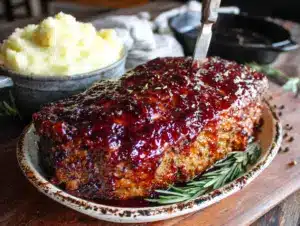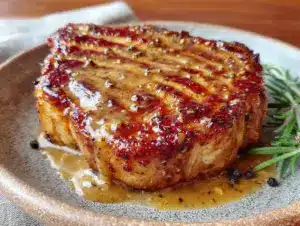
This was supposed to be a meatball recipe. I had it all planned out—a big batch of Italian-style meatballs to freeze for those nights when cooking feels like the last thing you want to do. But somewhere between grabbing the wrong pan and my oven deciding it wanted to run twenty degrees cooler than usual, the plan fell apart. I shaped the mixture into a loaf instead, figuring I’d slice it later and pretend that was the goal all along. Then I looked in the fridge and spotted a half-empty bottle of brown sugar someone had left after a baking project. On a whim, I brushed it over the top. What came out of that oven was nothing like the plan—and honestly, way better.
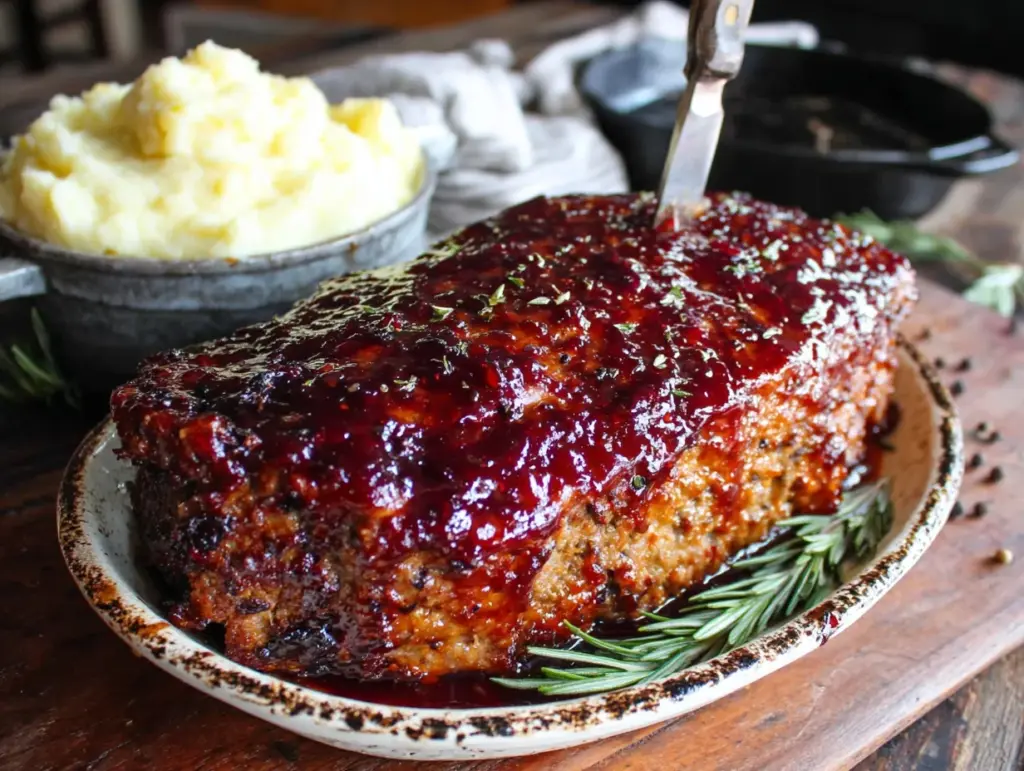
The smell alone stopped me mid-sentence. That sweet, sticky glaze bubbling around the edges of the meatloaf, mingling with the savory juices underneath—it was the kind of kitchen moment that makes you forget you were ever frustrated in the first place. I remember standing there with the oven door open, just staring at it, thinking, “How did this even happen?” I mean, I’d made meatloaf before, plenty of times. But this one felt different. It had that golden-brown crust, that caramelized edge that catches the light, and a center so tender it barely held together when I sliced into it. Maybe you’ve been there—you try to make something specific, the universe throws a curveball, and you end up with a happy accident that becomes your new favorite thing.
That first bite was quiet vindication. The glaze wasn’t just sweet; it had this deep, almost smoky richness that paired perfectly with the savory beef. My family, who usually nods politely at my experiments, actually asked for seconds. And then thirds. I scribbled notes on a napkin while I ate—adjust the glaze ratio, try a different binder, maybe add a touch of mustard next time. Over the next few weeks, I made it three more times, tweaking and tasting until it felt just right. This cozy classic beef meatloaf with brown sugar glaze is the result of that distracted, slightly disastrous afternoon. And honestly? I’m glad the meatballs never happened.
Why You’ll Love This Recipe
Let me tell you why this particular meatloaf has earned a permanent spot in my weekly rotation. I’ve tested it on picky eaters, holiday guests, and even my neighbor who claims she “doesn’t really like meatloaf.” She asked for the recipe before she finished her plate. That’s the kind of power this dish has.
- Quick & Easy: From start to table in about an hour, with only 15 minutes of active prep. Perfect for those busy weeknights when you need something hearty without the hassle.
- Simple Ingredients: You probably have most of these in your kitchen right now. No fancy trips to specialty stores—just good, honest pantry staples that come together beautifully.
- Perfect for Cozy Nights: This is the definition of comfort food. Rainy Sundays, chilly evenings, or any time you need a meal that feels like a warm hug on a plate.
- Crowd-Pleaser: I’ve served this at family dinners, potlucks, and even a small dinner party. Every single time, it gets rave reviews. Kids love the sweet glaze, adults love the savory depth.
- Unbelievably Delicious: The texture is what gets me every time—tender, moist, and perfectly sliceable. And that brown sugar glaze? It caramelizes into this incredible crust that’s sweet, tangy, and utterly addictive.
What makes this version different from all the others? It’s the balance. Most meatloaf recipes lean too heavy on the ketchup or end up dry and crumbly. I spent weeks perfecting the ratio of binders to meat, the ideal glaze consistency, and the right oven temperature to get that caramelized exterior without drying out the inside. The secret is in the combination of a panade (that’s bread and milk mixture) and a touch of Worcestershire sauce for depth. Plus, the brown sugar glaze isn’t just slapped on top—it’s brushed on in two stages, creating layers of flavor that build as it bakes.
This isn’t just another meatloaf recipe. It’s the one that makes you close your eyes after the first bite. It’s comfort food reimagined—familiar but somehow better than you remember. Perfect for impressing guests without stress, or turning a simple Tuesday dinner into something memorable.
What Ingredients You Will Need
This recipe uses simple, wholesome ingredients to deliver bold flavor and satisfying texture without the fuss. Most of these are pantry staples, which means you can whip this up on a whim without a special grocery trip.
For the Meatloaf
- 2 pounds ground beef (80/20 blend) – The 80/20 ratio gives you enough fat for flavor and moisture without being greasy. I prefer grass-fed beef from local farms when I can find it, but any good-quality ground beef works beautifully.
- 1 cup plain breadcrumbs – These help bind the mixture and absorb moisture. Panko breadcrumbs work too, but they create a slightly looser texture. (Use gluten-free breadcrumbs if needed.)
- 1/2 cup whole milk – This creates a panade with the breadcrumbs, keeping the meatloaf tender and moist. You can substitute with 2% or even unsweetened almond milk in a pinch.
- 1 medium yellow onion, finely diced – Adds sweetness and moisture. I recommend grating the onion on a box grater for the most even distribution—it practically melts into the meat.
- 2 large eggs, lightly beaten – The binder that holds everything together. Make sure they’re at room temperature for easier mixing.
- 3 cloves garlic, minced – Fresh garlic makes a difference here. The jarred stuff works in a pinch, but fresh gives you that pungent, aromatic kick.
- 2 tablespoons Worcestershire sauce – Adds umami depth that makes the beef taste beefier. Lea & Perrins is my go-to brand.
- 1 tablespoon Dijon mustard – Don’t skip this! It adds a subtle tang that cuts through the richness. (Yellow mustard works too, but Dijon is smoother.)
- 1 teaspoon kosher salt – I use Diamond Crystal brand because it’s less salty by volume, giving me more control. Adjust based on your salt preference.
- 1/2 teaspoon black pepper – Freshly ground is always better. It makes a noticeable difference in the final flavor.
- 1/2 teaspoon smoked paprika – Adds a subtle smokiness that complements the brown sugar glaze perfectly. Regular paprika works if that’s what you have.
- 1/4 teaspoon dried thyme – A little earthy, a little floral. It’s subtle but adds complexity. (Fresh thyme works too—use 1 teaspoon, finely chopped.)
For the Brown Sugar Glaze
- 1/2 cup packed light brown sugar – The star of the show. Light brown sugar gives you that molasses sweetness without overpowering. Dark brown sugar works but creates a deeper, more intense flavor.
- 1/4 cup ketchup – Use a good-quality ketchup. I prefer Heinz for its balanced sweetness and tang. (Organic brands work well too.)
- 1 tablespoon apple cider vinegar – This cuts the sweetness and adds a bright note. White vinegar works in a pinch, but apple cider gives a rounder flavor.
- 1 teaspoon Worcestershire sauce – Doubles down on the umami. Yes, it’s in both the meatloaf and the glaze—that’s intentional for layered flavor.
- 1/2 teaspoon garlic powder – Not the same as fresh garlic, but it dissolves smoothly into the glaze. Onion powder works as a substitute.
Ingredient Selection Tips
When choosing your ground beef, look for meat that’s bright red without any gray spots. If you can, ask your butcher to grind it fresh—it makes a noticeable difference in texture. For the brown sugar, make sure it’s packed firmly into the measuring cup. I’ve learned the hard way that loosely packed sugar throws off the glaze consistency. And please, don’t skip the Worcestershire sauce in the glaze. It sounds odd, I know, but that savory-sweet balance is what makes this meatloaf unforgettable.
Equipment Needed
You don’t need a fancy kitchen to pull this off. Here’s what you’ll need:
- 9×5-inch loaf pan – This is the standard size for a 2-pound meatloaf. If you only have an 8×4-inch pan, reduce the cooking time by about 10 minutes and check for doneness earlier.
- Large mixing bowl – Go for something big enough to really get your hands in there. I use a ceramic bowl because it doesn’t retain heat, but stainless steel works fine.
- Small saucepan – For making the glaze. Any small pot works—just make sure it’s not nonstick if you plan to whisk vigorously.
- Whisk – For combining the glaze ingredients smoothly. A fork works in a pinch, but a whisk gives you a silkier result.
- Pastry brush – For applying the glaze. I prefer silicone brushes because they don’t shed bristles. If you don’t have one, use the back of a spoon to spread the glaze evenly.
- Meat thermometer – This is non-negotiable for me. An instant-read thermometer takes the guesswork out of doneness. I’ve ruined too many meatloaves by relying on timing alone.
- Parchment paper – Lining the loaf pan makes cleanup infinitely easier. You can skip it if you grease the pan well, but trust me—use the parchment.
- Cooling rack – Placing the meatloaf on a rack after baking allows air to circulate, preventing the bottom from getting soggy. If you don’t have one, transfer the meatloaf to a cutting board immediately.
Preparation Method
Let me walk you through this step by step. I’ve included all the little details I wish someone had told me when I first started making meatloaf.
- Preheat your oven to 350°F (175°C). Position the rack in the center of the oven. While it’s heating, line your 9×5-inch loaf pan with parchment paper, leaving some overhang on the long sides—this makes lifting the meatloaf out later a breeze.
- Make the panade. In your large mixing bowl, combine 1 cup breadcrumbs and 1/2 cup milk. Let it sit for 5 minutes until the breadcrumbs have absorbed the liquid and turned into a paste. This is the secret to a tender meatloaf—the panade keeps the meat from tightening up as it cooks.
- Prepare the aromatics. While the panade rests, finely dice your onion and mince the garlic. I like to grate the onion on a box grater for the most even distribution—it practically dissolves into the meat. If you’re sensitive to onion texture, this is a game-changer.
- Mix the meatloaf base. To the panade, add 2 pounds ground beef, the diced onion, minced garlic, 2 beaten eggs, 2 tablespoons Worcestershire sauce, 1 tablespoon Dijon mustard, 1 teaspoon kosher salt, 1/2 teaspoon black pepper, 1/2 teaspoon smoked paprika, and 1/4 teaspoon dried thyme. Use your hands to gently mix everything together. I know it’s messy, but hands are the best tool here—they let you feel when everything is evenly combined without overworking the meat. Overmixing makes meatloaf tough, so stop as soon as you don’t see any streaks of breadcrumb mixture.
- Shape and bake. Transfer the mixture to your parchment-lined loaf pan. Press it in gently, making sure there are no air pockets. Smooth the top with your hands or a spatula. Bake for 40 minutes at 350°F (175°C).
- Make the glaze. While the meatloaf bakes, combine 1/2 cup packed light brown sugar, 1/4 cup ketchup, 1 tablespoon apple cider vinegar, 1 teaspoon Worcestershire sauce, and 1/2 teaspoon garlic powder in a small saucepan. Whisk over medium heat until the sugar dissolves and the mixture is smooth, about 2-3 minutes. Remove from heat and set aside.
- First glaze application. After 40 minutes, remove the meatloaf from the oven. Brush or spoon about half the glaze evenly over the top. Return to the oven and bake for another 15 minutes.
- Second glaze application. After 15 minutes, brush the remaining glaze over the top. Bake for another 10-15 minutes, until the internal temperature reaches 160°F (71°C) when measured at the center. The glaze should be bubbling and caramelized—that’s how you know it’s perfect.
- Rest before slicing. Remove the meatloaf from the oven and let it rest in the pan for 10 minutes. Then, using the parchment overhang, lift it out and transfer to a cutting board or cooling rack. Let it rest another 5 minutes before slicing. This resting period is crucial—it allows the juices to redistribute so your slices hold together beautifully.
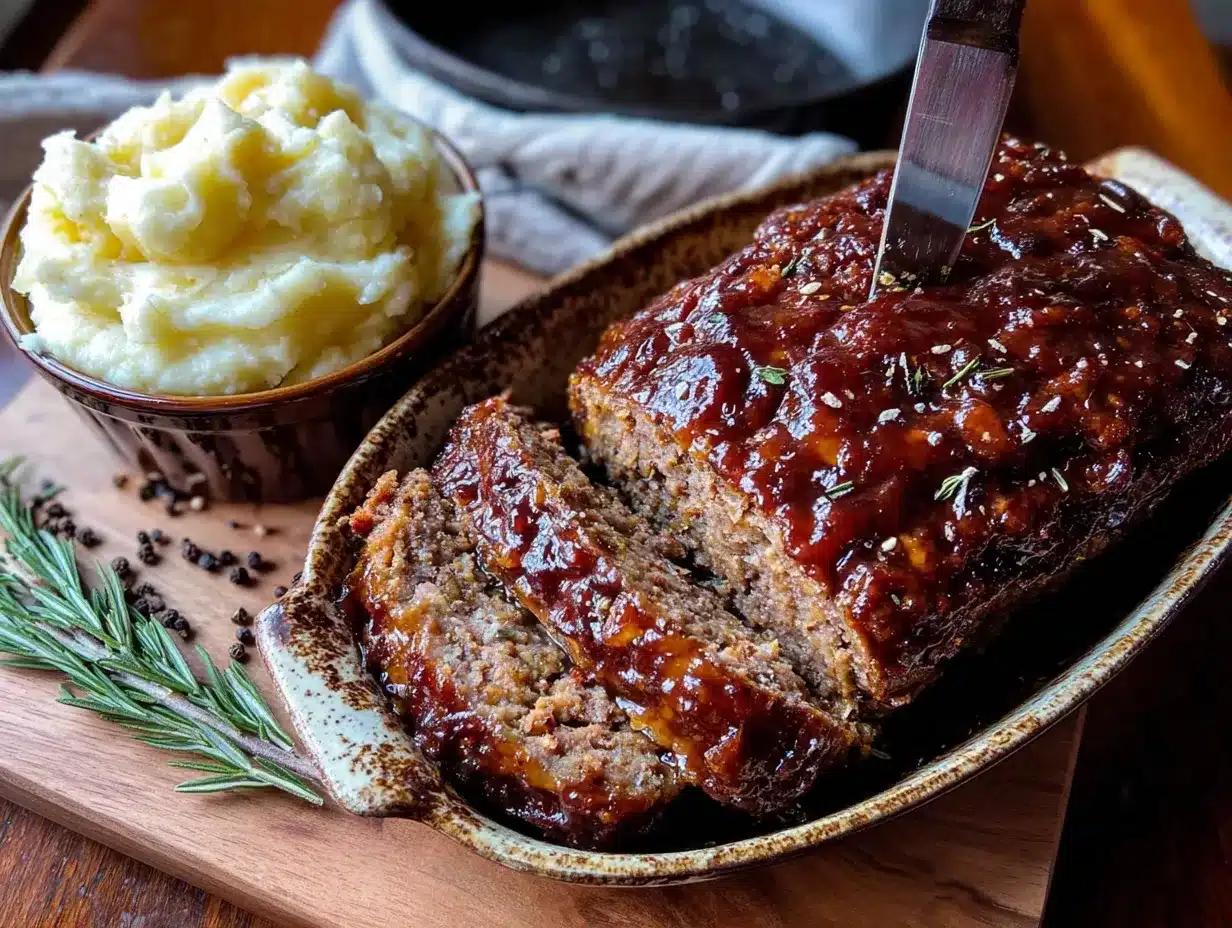
- Slice and serve. Use a sharp knife to cut 1-inch thick slices. The glaze should be sticky and caramelized, the interior tender and moist. Serve with mashed potatoes, roasted vegetables, or a simple green salad.
Cooking Tips & Techniques
I’ve made this recipe at least a dozen times, and I’ve learned a few things along the way. Here are my best tips for getting it right every time.
Don’t overmix the meat. This is the number one mistake I see people make. Mix just until the ingredients are combined—overworking the meat activates the proteins and makes the meatloaf dense and tough. I use a light hand and stop the moment everything looks evenly distributed. Your hands are the best tools here; you can feel when it’s ready.
Use a meat thermometer. I cannot stress this enough. Oven temperatures vary, pan sizes differ, and even the shape of your meatloaf affects cooking time. The only reliable way to know when it’s done is to check the internal temperature. 160°F (71°C) is your target. I’ve pulled meatloaves out at 155°F thinking they’d be fine, and they were still a bit too soft in the center. Trust the thermometer, not the timer.
Let it rest. I know it’s tempting to slice into that beautiful loaf immediately, but patience pays off. Resting allows the juices to redistribute throughout the meatloaf. If you cut too soon, those juices run out onto the cutting board, leaving you with a drier meatloaf. Fifteen minutes total—ten in the pan, five out—is the sweet spot.
Line your pan with parchment. I learned this one the hard way after a particularly stubborn meatloaf refused to leave the pan in one piece. Parchment paper with overhang makes lifting it out effortless. Plus, cleanup is a dream. Just make sure the parchment is long enough to grab onto—about 2 inches of overhang on each side.
Brush the glaze in stages. This is the technique that really sets this recipe apart. Applying the glaze in two layers creates that thick, caramelized crust that’s slightly sticky and deeply flavorful. If you dump it all on at once, it just runs off and pools at the bottom. Patience with the glaze pays off big time.
Variations & Adaptations
One of the things I love about this recipe is how adaptable it is. Here are some ways to make it your own.
Turkey or chicken version. Swap the ground beef for ground turkey or chicken. Since poultry is leaner, add 2 tablespoons of olive oil or an extra egg to keep it moist. You might also want to increase the smoked paprika to 1 teaspoon for more flavor depth. The cooking time stays about the same, but check for doneness at 155°F for poultry.
Gluten-free adaptation. Replace the breadcrumbs with gluten-free panko or crushed pork rinds for a low-carb option. I’ve tried both, and they work surprisingly well. The pork rinds add a subtle savory note that complements the beef nicely. Just make sure to let the panade sit a few extra minutes so the crumbs have time to absorb the milk.
Spicy twist. Add 1-2 tablespoons of sriracha or your favorite hot sauce to the meat mixture, and stir 1/2 teaspoon of cayenne pepper into the glaze. The heat cuts through the sweetness beautifully. I made this version for a game day party, and it disappeared faster than the original—which says a lot.
Cheese-stuffed meatloaf. Press half the meat mixture into the pan, create a shallow well down the center, and fill with 1/2 cup shredded cheddar or mozzarella. Top with the remaining meat mixture, seal the edges, and bake as directed. The melted cheese center is pure indulgence. Just be careful when slicing—the cheese will be molten hot.
Mini meatloaves. Instead of one large loaf, divide the mixture into 6-8 individual portions and shape into small loaves on a parchment-lined baking sheet. Reduce the baking time to about 25-30 minutes, applying the glaze in the last 10 minutes. These are perfect for meal prep or feeding a crowd.
Serving & Storage Suggestions
This meatloaf is incredibly versatile when it comes to serving. Here’s how to make the most of it.
Serving temperature and presentation. Serve the meatloaf warm, sliced into 1-inch thick pieces. Arrange the slices on a platter with the glaze side facing up so everyone can see that beautiful caramelized crust. A sprinkle of fresh parsley or chives adds a pop of color and freshness.
What to serve with it. Classic pairings include creamy mashed potatoes, roasted green beans, or a simple side salad. For something different, try it with garlic butter rice or roasted sweet potatoes. The sweet-savory glaze also pairs beautifully with tangy coleslaw or pickled vegetables—the acidity cuts through the richness.
Storage instructions. Leftover meatloaf keeps well in the refrigerator for up to 4 days. Wrap it tightly in plastic wrap or aluminum foil, or store slices in an airtight container. I actually think the flavors deepen overnight, making next-day meatloaf sandwiches something to look forward to.
Freezing tips. You can freeze the whole meatloaf (baked or unbaked) for up to 3 months. To freeze baked meatloaf, let it cool completely, wrap tightly in plastic wrap, then foil, and place in a freezer bag. Thaw overnight in the refrigerator before reheating. For unbaked meatloaf, shape it in the pan, wrap well, and freeze. Thaw in the refrigerator, then bake as directed, adding about 10 minutes to the cooking time.
Reheating methods. The best way to reheat is in a 300°F (150°C) oven for about 15-20 minutes, covered with foil to prevent the glaze from burning. You can also microwave individual slices for 1-2 minutes, but the glaze won’t be as crispy. For a quick stovetop option, slice the meatloaf and pan-fry in a little butter until heated through—the edges get wonderfully crispy.
How flavors develop. If you can resist eating it all at once, try some the next day. The glaze continues to soak into the meatloaf, creating an even more cohesive flavor. I’ve had people tell me they prefer the leftovers—and honestly, I get it.
Nutritional Information & Benefits
Here’s the nutritional breakdown per serving (based on 8 servings):
- Calories: 410
- Protein: 28g
- Fat: 22g
- Carbohydrates: 24g
- Fiber: 1g
- Sugar: 16g
- Sodium: 680mg
Health benefits of key ingredients. Beef is an excellent source of iron, zinc, and B vitamins, particularly B12, which supports energy and brain function. The onions and garlic provide prebiotic fiber that supports gut health, while the eggs add high-quality protein and choline for brain health. The brown sugar glaze is definitely a treat, but the small amount used per serving keeps it reasonable.
Dietary considerations. This recipe is naturally grain-free if you use gluten-free breadcrumbs, and it can be made low-carb by substituting the breadcrumbs with almond flour or crushed pork rinds. It’s not suitable for vegetarian or vegan diets, but the turkey variation offers a lighter option. The main allergens are gluten (from breadcrumbs), dairy (from milk), and eggs.
My personal perspective. I don’t believe in labeling foods as “good” or “bad.” This meatloaf is a comfort food that brings people together, and that has its own kind of nutritional value. Balance is key—enjoy a generous slice with a big side of vegetables, and you’ve got a meal that nourishes both body and soul.
Conclusion
This cozy classic beef meatloaf with brown sugar glaze started as a complete accident, but it’s become one of those recipes I turn to again and again. It’s the kind of dish that feels both familiar and special—perfect for a quiet Sunday dinner or a gathering with friends. The sweet, sticky glaze, the tender, savory meat, the way it makes your kitchen smell like comfort itself—there’s nothing quite like it.
I hope you give this recipe a try and make it your own. Maybe you’ll add a little extra garlic, swap in a different glaze, or stuff it with cheese. That’s the beauty of a good base recipe—it leaves room for your creativity. And if you do make it, I’d love to hear how it turned out. Drop a comment below, share a photo, or tell me about your own happy accident in the kitchen. Those are the stories that make cooking so much more than just following instructions.
Here’s to cozy nights, good food, and the beautiful mess of trying something new. Happy cooking, friend.
Frequently Asked Questions
Can I make this meatloaf ahead of time?
Absolutely. You can assemble the meatloaf up to 24 hours in advance and keep it covered in the refrigerator. Just add about 10 minutes to the baking time since you’re starting from cold. The glaze is best made fresh, but you can prepare it a day ahead and store it in the fridge—just reheat it gently before using.
Why did my meatloaf turn out dry?
Dry meatloaf usually comes from one of three things: using meat that’s too lean (go for 80/20), overmixing the ingredients, or overcooking it. The panade (breadcrumb and milk mixture) is your best defense against dryness, and a meat thermometer ensures you pull it at the right moment. If you’re using lean ground beef, consider adding an extra egg or a tablespoon of olive oil.
Can I use ground pork or veal instead of beef?
Yes, you can absolutely mix things up. A combination of beef and pork (1 pound each) creates a wonderfully flavorful and tender meatloaf. Ground veal works too, but it’s milder in flavor. Just keep the total weight at 2 pounds and adjust the seasoning to taste. If using all pork, reduce the salt slightly since pork is naturally saltier.
What’s the best way to reheat leftover meatloaf without drying it out?
My go-to method is the oven. Wrap individual slices in foil and heat at 300°F (150°C) for about 10-15 minutes. The foil traps steam, keeping the meatloaf moist while the glaze re-caramelizes slightly. For a quicker option, slice the meatloaf and pan-fry in a little butter over medium heat for 2-3 minutes per side—the edges get wonderfully crispy.
Can I double this recipe for a crowd?
Definitely. Double all the ingredients and bake in two 9×5-inch loaf pans rather than one giant loaf. A larger loaf takes much longer to cook through and tends to dry out on the outside before the center is done. Two smaller loaves bake in about the same time as one, making them much easier to manage. Just make sure they’re not touching in the oven so air can circulate properly.
Pin This Recipe!
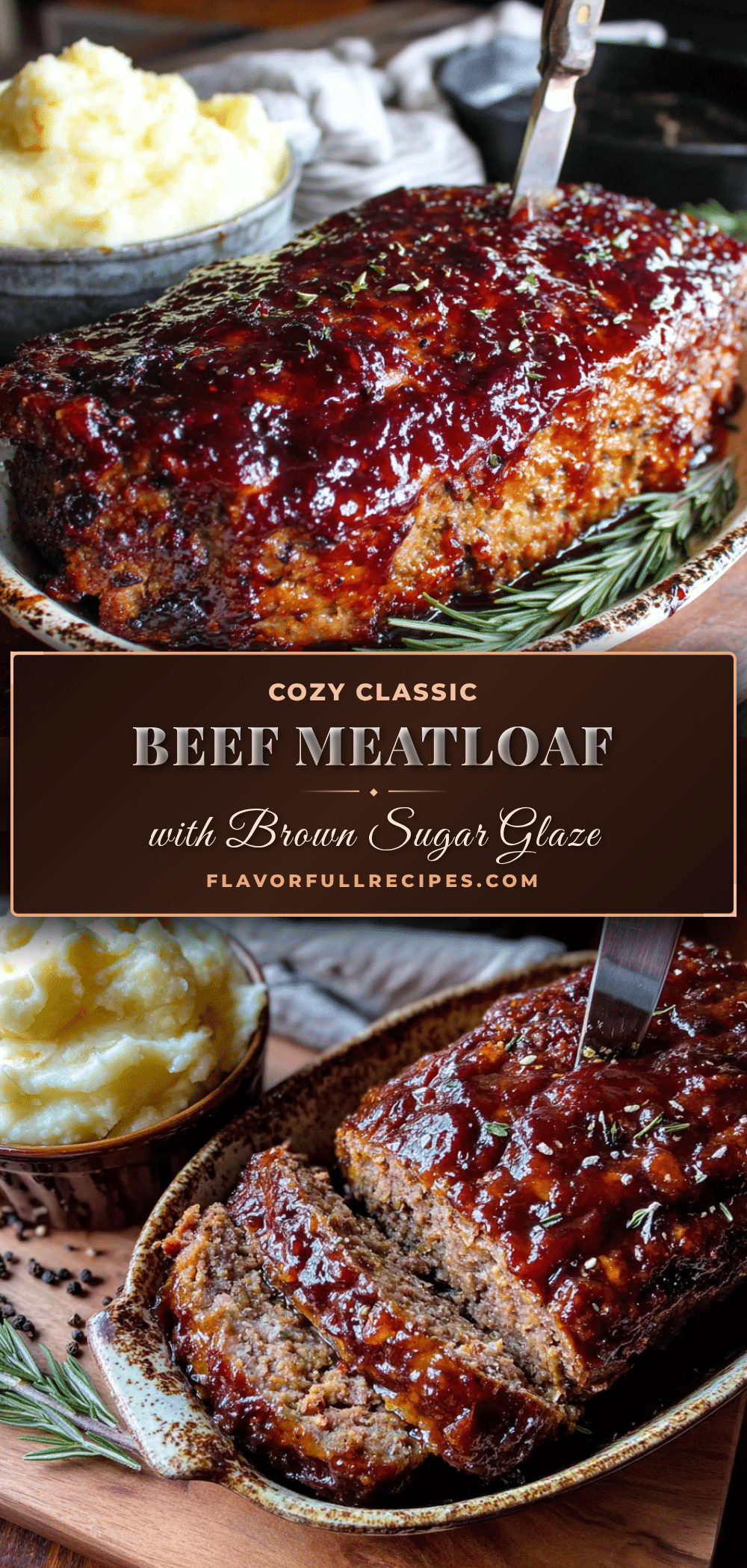
Homemade Classic Beef Meatloaf with Brown Sugar Glaze
- Total Time: 1 hour 20 minutes
- Yield: 8 servings 1x
Description
A tender, savory beef meatloaf topped with a sweet and tangy brown sugar glaze that caramelizes into an irresistible crust. This comforting dish is perfect for cozy nights and family dinners.
Ingredients
- 2 pounds ground beef (80/20 blend)
- 1 cup plain breadcrumbs
- 1/2 cup whole milk
- 1 medium yellow onion, finely diced
- 2 large eggs, lightly beaten
- 3 cloves garlic, minced
- 2 tablespoons Worcestershire sauce
- 1 tablespoon Dijon mustard
- 1 teaspoon kosher salt
- 1/2 teaspoon black pepper
- 1/2 teaspoon smoked paprika
- 1/4 teaspoon dried thyme
- 1/2 cup packed light brown sugar
- 1/4 cup ketchup
- 1 tablespoon apple cider vinegar
- 1 teaspoon Worcestershire sauce
- 1/2 teaspoon garlic powder
Instructions
- Preheat your oven to 350°F (175°C). Position the rack in the center of the oven. Line a 9×5-inch loaf pan with parchment paper, leaving overhang on the long sides.
- In a large mixing bowl, combine 1 cup breadcrumbs and 1/2 cup milk. Let sit for 5 minutes until the breadcrumbs absorb the liquid and form a paste (panade).
- While the panade rests, finely dice the onion and mince the garlic. For best results, grate the onion on a box grater.
- To the panade, add the ground beef, diced onion, minced garlic, beaten eggs, 2 tablespoons Worcestershire sauce, Dijon mustard, kosher salt, black pepper, smoked paprika, and dried thyme. Gently mix with your hands until just combined; do not overmix.
- Transfer the mixture to the parchment-lined loaf pan. Press gently to remove air pockets and smooth the top. Bake for 40 minutes.
- While the meatloaf bakes, make the glaze: In a small saucepan, combine brown sugar, ketchup, apple cider vinegar, 1 teaspoon Worcestershire sauce, and garlic powder. Whisk over medium heat until sugar dissolves and mixture is smooth, about 2-3 minutes. Remove from heat.
- After 40 minutes, remove the meatloaf from the oven. Brush or spoon about half the glaze evenly over the top. Return to the oven and bake for 15 minutes.
- After 15 minutes, brush the remaining glaze over the top. Bake for another 10-15 minutes, until the internal temperature reaches 160°F (71°C) at the center.
- Remove from the oven and let rest in the pan for 10 minutes. Then, using the parchment overhang, lift the meatloaf out and transfer to a cutting board or cooling rack. Let rest another 5 minutes before slicing.
- Slice into 1-inch thick slices and serve warm.
Notes
For a tender meatloaf, do not overmix the meat. Use a meat thermometer to ensure doneness at 160°F. Let the meatloaf rest before slicing to allow juices to redistribute. The glaze is applied in two stages for a thick, caramelized crust.
- Prep Time: 15 minutes
- Cook Time: 65 minutes
- Category: Main Course
- Cuisine: American
Nutrition
- Serving Size: 1 slice (1/8 of reci
- Calories: 410
- Sugar: 16
- Sodium: 680
- Fat: 22
- Saturated Fat: 8
- Carbohydrates: 24
- Fiber: 1
- Protein: 28
Keywords: meatloaf, beef meatloaf, brown sugar glaze, comfort food, classic meatloaf, easy dinner